

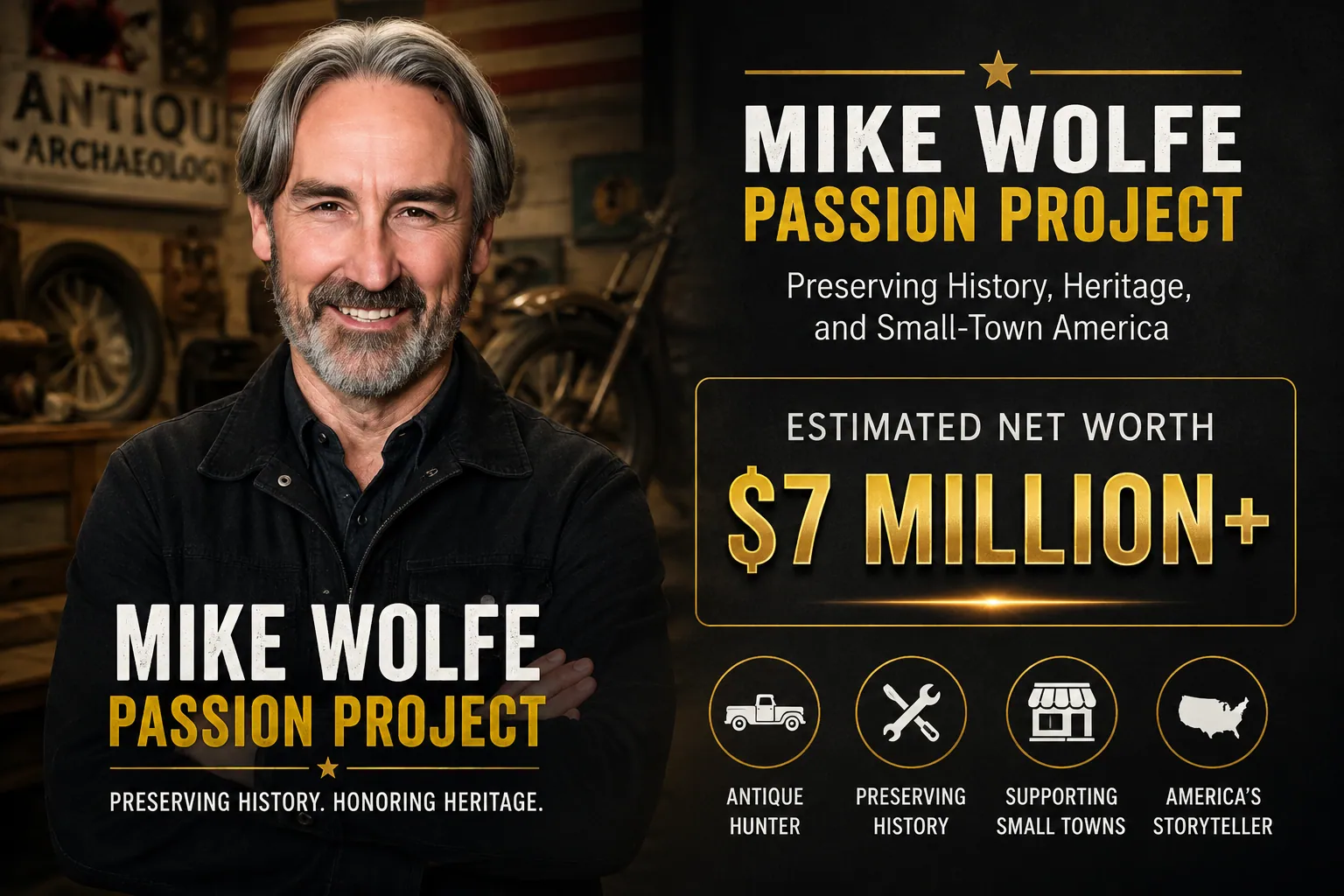
Mike wolfe passion project is more than a catchy search phrase; it describes Mike Wolfe’s long-running mission to save forgotten American stories through antiques, historic buildings, vintage objects, small-town spaces, and community-centered restoration. Most people first discovered Wolfe through American Pickers, where he traveled across the country searching barns, sheds, garages, and old properties for “rusty gold.” But his deeper work goes beyond television. It is about historic preservation, vintage Americana, community heritage, and the belief that old things still have value when someone takes the time to understand their story.
Today, the phrase Mike Wolfe passion project is often connected with his work in Columbia, Tennessee, his Two Lanes lifestyle vision, Antique Archaeology, restored spaces, and his commitment to small-town revival. For fans, collectors, travelers, and preservation lovers, Wolfe’s project represents something emotional: saving what might otherwise be demolished, forgotten, or thrown away.
What Is the Mike Wolfe Passion Project?
The Mike Wolfe passion project is best understood as a broad preservation mission, not just one single business or building. It includes his love for antiques, his role on American Pickers, his Antique Archaeology brand, the Two Lanes lifestyle concept, and his restoration work in historic towns such as Columbia, Tennessee and Le Claire, Iowa.
At its heart, the project is about finding value in places and objects that many people overlook. Wolfe has built his career around storytelling through objects. A faded sign, old motorcycle, rusty gas pump, vintage toy, or abandoned storefront may look ordinary to some people, but to him it can reveal something about American history, local families, craftsmanship, small businesses, and everyday life.
The HISTORY Channel’s official profile describes Wolfe as a lifelong picker who has searched for hidden treasure since childhood and sees beauty in long-lost things, including the stories of the people who made, used, and saved them. That idea explains why his passion project feels bigger than collecting. It is about preserving local identity, protecting cultural heritage, and turning forgotten places into meaningful spaces again.
From American Pickers to a Bigger Preservation Mission
For many viewers, American Pickers Mike Wolfe is the starting point. The show introduced millions of people to the world of forgotten antiques, rusty relics, vintage Americana, and hidden historical treasures. Wolfe’s work on the show made picking feel less like simple buying and selling and more like a search for the stories buried inside old barns, sheds, warehouses, and private collections.
The reason this matters for SEO and reader intent is simple: people searching “Mike Wolfe passion project beyond American Pickers” want to know what he is doing outside the TV format. The answer is that Wolfe has taken the same instincts from the road and applied them to historic preservation, small-town revival, and adaptive reuse.
On American Pickers, the object is often the star. In Wolfe’s broader preservation work, the building, street, town, and community become part of the story too. His passion project is not only about buying an old sign; it is also about asking where that sign came from, who painted it, what business it represented, and how it connects to a disappearing piece of small-town America.
That shift is important. It turns Wolfe from just a collector into a preservationist, storyteller, and entrepreneur who uses nostalgia, history, and commerce to keep old places alive.
Historic Preservation: Saving Buildings, Objects, and Stories
A major part of the Mike Wolfe historic preservation story is his focus on saving older buildings and giving them new purpose. This is where terms like adaptive reuse, restored façades, authentic materials, patina, and craftsmanship become important.
Historic preservation is not just about making an old building look pretty. It is about respecting what already exists. A brick wall, a hand-painted sign, an old service station canopy, or a weathered wooden floor can carry decades of local memory. When those details are removed, a town may lose part of its identity.
Wolfe’s approach fits the idea of reuse instead of demolition. Rather than tearing everything down and replacing it with generic new construction, restoration can protect architectural heritage while giving a property a modern role. This is why his work connects strongly with Main Street revitalization, heritage tourism, and community-centered restoration.
There is also a sustainability angle. Reusing buildings can reduce waste, preserve materials, and maintain the visual character of historic districts. In this sense, the Mike Wolfe preservation mission is not only emotional; it also supports a practical model for saving old spaces while making them useful again.
Columbia, Tennessee and the Restored Gas Station Project
One of the most talked-about examples of Mike Wolfe Columbia Tennessee work is his restored gas station project. In May 2025, entertainment outlets reported that Wolfe revealed the restoration of an old gas station in downtown Columbia, describing it as a community space. His own Instagram post from 2024 referred to a 1940s ESSO Service Station Preservation Project in downtown Columbia, Tennessee.
This project matters because it clearly shows how the Mike Wolfe restored gas station idea fits into his larger passion project. An old gas station is not just a building. It represents roadside Americana, car culture, travel, working-class history, and the visual memory of American backroads. Restoring a place like that can turn a forgotten property into a community gathering space with new life.
The project also connects with Revival Columbia Tennessee, outdoor seating, lighting, food, cocktails, and social use. Instead of treating preservation as something frozen in the past, this kind of restoration makes history active again. People can gather, visit, take photos, eat, talk, and experience the space.
For readers asking “what is Mike Wolfe doing in Columbia Tennessee?”, the answer is that Columbia has become one of the strongest real-world examples of his passion project: old buildings, small-town charm, vintage design, and local community energy working together.
Two Lanes, Antique Archaeology, and the Business Side
The Two Lanes brand is another key part of the Mike Wolfe passion project and Two Lanes connection. Two Lanes reflects the backroads lifestyle that Wolfe has built his public identity around: slower travel, small towns, old roads, local makers, curated goods, and stories from places people often drive past.
This lifestyle side becomes even clearer through Two Lanes Guesthouse in Columbia, Tennessee. Visit Columbia describes it as a unique Main Street loft vacation rental where fans of American Pickers can see picks from the show used as decor. The guesthouse is located above a bicycle shop inside a two-story brick building dating back to 1857, and the loft is about 1,100 square feet.
That detail is useful because it shows how Wolfe combines hospitality, Americana style, vintage signs, industrial rusted picks, and heritage tourism. It is not simply a place to stay; it is a living display of object-based storytelling.
Antique Archaeology is the business foundation behind much of Wolfe’s public brand. It connects antiques, collectibles, online selling, retail, and American Pickers recognition. In 2025, Wolfe closed the Nashville Antique Archaeology store after nearly 15 years, while reports noted that he planned to continue picking, selling online, and operating the original Le Claire, Iowa store.
That move makes the passion project feel like a new chapter rather than an ending. It suggests a shift from traditional retail toward online storytelling, curated goods, community development, and selected restoration projects.
How the Project Supports Small-Town Revival
One of the strongest angles competitors often mention but do not fully explain is small-town revival. The Mike Wolfe small town revival concept is important because restored places can affect more than one building. They can support a downtown’s identity, attract visitors, help local businesses, and inspire other property owners to care about preservation.
When a historic structure is restored, it can become a reason for people to walk a street again. A guesthouse may bring overnight visitors. A restored gas station may become a photo spot or gathering place. A bicycle shop, café, retail space, or community event venue may create foot traffic for nearby businesses. This is where heritage tourism, downtown revitalization, and local economy impact become part of the story.
Wolfe’s passion project also speaks to local artisans and traditional trades. Restoration depends on people who understand wood, metal, signs, masonry, paint, lighting, and old materials. Blacksmiths, woodworkers, sign-writers, builders, and local craftsmen are often the hidden force behind beautiful historic spaces.
That is why the project is not only about Mike Wolfe as a celebrity. It is also about a larger ecosystem of small-business owners, makers, travelers, fans, collectors, and community builders who believe old places still matter.
Is It a Business, a Personal Mission, or Both?
A common searcher question is whether the Mike Wolfe passion project is a business, a personal mission, or a TV-related project. The clearest answer is: it is both a business and a mission.
It has business elements because Wolfe is connected with Antique Archaeology, Two Lanes, guesthouse hospitality, curated goods, online selling, and restored commercial spaces. These ventures involve branding, retail, tourism, and entrepreneurship.
But it is not only commercial. The emotional center is historic preservation, storytelling, and legacy building. Wolfe’s work is built around the belief that objects and buildings can carry memory. A restored gas station, an old sign, or a vintage motorcycle can become a bridge between generations.
This is where the term preservation entrepreneurship fits naturally. Wolfe uses business tools to support preservation goals. That does not weaken the mission; it may help make the mission sustainable. A building that earns money, attracts visitors, or supports local commerce has a better chance of surviving than one that is admired but abandoned.
Mike Wolfe Passion Project Timeline
| Year / Period | Key Development |
| Childhood and early years | Wolfe develops an interest in picking, old objects, and hidden treasure. HISTORY describes him as searching for hidden treasure since he was four. |
| 2010 | American Pickers becomes the show that introduces Wolfe’s picking style to a wide audience. |
| 2010s | Antique Archaeology grows as a public-facing brand connected with antiques, collectibles, and Wolfe’s TV identity. |
| 2020s | Wolfe’s work increasingly connects with Two Lanes, Columbia projects, guesthouse hospitality, and historic restoration. |
| 2025 | His restored Columbia gas station receives attention, and the Nashville Antique Archaeology store closure marks a shift toward a new chapter. |
| 2026 and beyond | The passion project continues to be understood as a broader preservation mission involving buildings, objects, travel, community, and storytelling. |
This timeline helps readers understand that how did the Mike Wolfe passion project begin is not answered by one launch date. It grew from decades of picking, collecting, traveling, and saving stories.
Can Fans Visit Mike Wolfe’s Passion Project Locations?
Yes, some locations connected with the Mike Wolfe passion project can be visited, though availability and access can change. The strongest visitor-based locations include Columbia, Tennessee, Le Claire, Iowa, Two Lanes Guesthouse, and spaces connected with Antique Archaeology.
For fans interested in Columbia, the Two Lanes Guesthouse is a direct example of Wolfe’s style and storytelling. Visit Columbia lists the guesthouse at 11 Public Square, Columbia, TN 38401, and describes it as a Main Street loft vacation rental decorated with picks from the show.
Le Claire, Iowa remains important because of the original Antique Archaeology connection. Nashville is still part of the history, but the store closure in 2025 means readers should check current details before planning a visit.
This visitor angle gives the article an advantage because many fans are not only asking “what is the project?” They also want to know where is Mike Wolfe’s passion project located and whether they can experience it in person.
Why This Story Matters Beyond Celebrity News
The biggest content gap in many articles is that they treat the Mike Wolfe passion project like simple celebrity news. That misses the deeper value. This story matters because it connects several important themes: American material culture, historic Main Street restoration, community pride, local storytelling, and sustainable restoration.
In many towns, old buildings sit empty because they are expensive, complicated, or risky to repair. Owners may face budget constraints, permit issues, structural problems, and uncertainty about whether the project will succeed. When someone restores one of those buildings, the result can shift how people see the whole street.
Wolfe’s projects also show that preservation does not have to feel dusty or academic. It can be emotional, visual, social, and useful. A vintage sign can become part of a guesthouse. An old service station can become a gathering place. A forgotten downtown building can become a destination.
That is the competitive edge for this article: the Mike Wolfe passion project is not just about Wolfe. It is about how old American places can be saved, reused, and loved again.
FAQs About Mike Wolfe Passion Project
What is the Mike Wolfe passion project?
The Mike Wolfe passion project is his broader mission to preserve American stories through antiques, historic buildings, restored spaces, Two Lanes, Antique Archaeology, and small-town revitalization. It is not just one project; it is a collection of connected efforts.
Is Mike Wolfe’s passion project connected to American Pickers?
Yes. American Pickers helped introduce Wolfe’s love for antiques, forgotten objects, and storytelling. His passion project expands that same idea into historic preservation, building restoration, and community spaces.
What is Two Lanes by Mike Wolfe?
Two Lanes is part of Wolfe’s backroads lifestyle vision. It connects travel, vintage Americana, curated goods, local makers, road trip culture, and stories from small-town America.
Where is Mike Wolfe’s restored gas station?
The restored gas station most often discussed is in downtown Columbia, Tennessee. Wolfe has referred to it as a 1940s ESSO Service Station Preservation Project, and media coverage described it as a restored community space.
Did Mike Wolfe close Antique Archaeology Nashville?
Yes. Reports in 2025 stated that Wolfe closed the Antique Archaeology Nashville store after nearly 15 years, while continuing to pick, sell online, and operate the original Le Claire, Iowa location.
Can fans visit Mike Wolfe’s passion project locations?
Fans can visit some connected locations, such as Two Lanes Guesthouse in Columbia and places associated with Antique Archaeology, but they should always check current hours, booking details, and availability before traveling.
Conclusion: Why Mike Wolfe’s Passion Project Matters
The Mike Wolfe passion project matters because it turns antiques, buildings, signs, streets, and forgotten objects into living stories. It shows that historic preservation is not only about saving the past; it is also about creating meaningful spaces for the present.
Through American Pickers, Wolfe helped people see value in rusty relics and old objects. Through Two Lanes, Antique Archaeology, Columbia projects, restored spaces, and small-town investments, he has expanded that idea into a wider mission. His work connects vintage Americana, community heritage, Main Street revitalization, craftsmanship, and preserving local identity.
Disclaimer:
This article is for general informational purposes only. Details, experiences, availability, and individual interpretations may vary based on personal preferences, location, timing, and specific circumstances.