

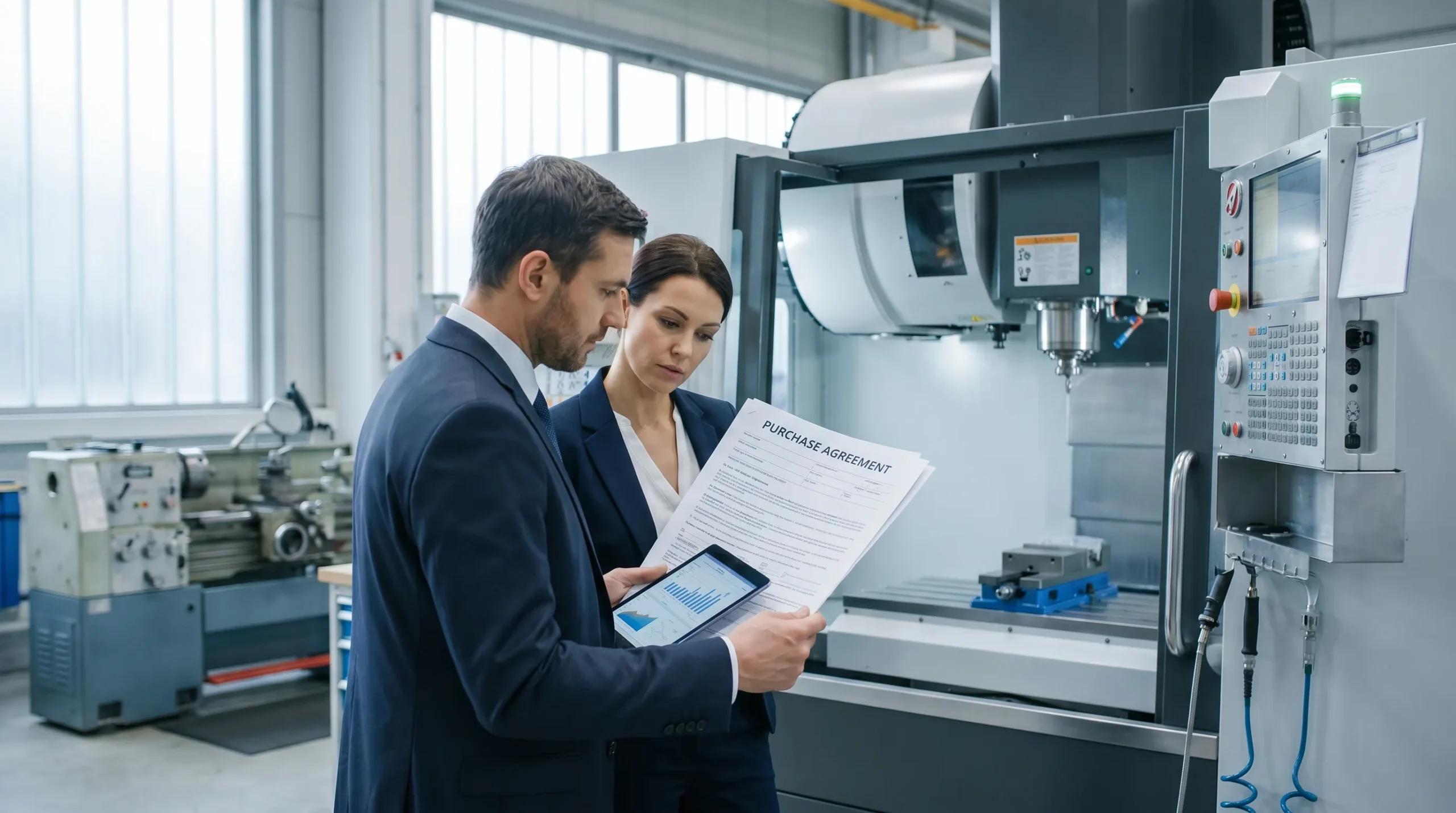
Which of the following is the disadvantage of CNC machine is a common question in manufacturing classes, exams, interviews, and beginner-level machining discussions. The most widely accepted one-line answer is high initial cost. In many MCQ, viva questions, and interview questions, this is the correct answer disadvantage of CNC machine because it is the most obvious and widely recognized drawback.
But the full picture is a little broader.
A CNC machine—short for Computer Numerical Control machine—is known for precision, accuracy, repeatability, and automation. It can produce high-quality parts, reduce human error, and support mass production with excellent consistency. That is why CNC machining is so popular in the manufacturing industry, including automotive, aerospace, electronics, medical manufacturing, gear production, and custom fabrication.
Still, every machine has trade-offs. While the main disadvantage of CNC machines is usually the high upfront investment, other drawbacks include maintenance and repair costs, training and skill requirements, limited flexibility for one-off designs, dependence on electricity, operator error, program errors in CNC machining, and even size limitations of CNC in certain projects. So if you are asking what is the main disadvantage of a CNC machine, the short answer is simple. If you want the real-world answer, you need the full explanation.
Which of the Following Is the Disadvantage of CNC Machine?
If this question appears in a test and asks for the best short answer for CNC machine disadvantage, the safest answer is:
The main disadvantage of a CNC machine is its high initial cost.
That is why many learners search for which of the following is the disadvantage of CNC machine answer, disadvantage of CNC machine MCQ, or one-line answer for disadvantage of CNC machine. They want a direct answer, not a long technical discussion.
However, in practical manufacturing, disadvantages of CNC machines go beyond cost alone. A company may also struggle with maintenance, downtime, the need for trained personnel, the learning curve of CAD/CAM software and G-code programming, energy consumption of CNC machines, and limited efficiency for one-time prototype work or very small production runs.
So the best way to understand the question is this:
- If the question wants a single exam answer, choose high initial cost.
- If the question wants a full explanation, discuss cost, maintenance, training, flexibility, electricity, and machine limitations together.
This distinction matters because many people confuse main disadvantage vs secondary disadvantages of CNC machine. Cost is the main answer most people expect, but it is not the only issue.
Why High Initial Cost Is Considered the Main Disadvantage
There are several reasons why high initial cost is usually treated as the main disadvantage of CNC machine.
First, the machine itself is expensive. A CNC setup is not just a metal box with moving parts. It includes computer-controlled machines, cutting tools, drills, lasers in some systems, sensors, software, and digital controls. Even a standard machine can require a major upfront investment, while advanced four-axis machines and five-axis machines cost even more.
Second, the buyer often pays for much more than the machine. The real CNC machine setup cost usually includes CAD/CAM software, tool holders, replacement parts, workholding systems, installation, calibration, safety setup, and operator training. This is where many businesses discover the hidden costs of CNC machines. What looked affordable at first becomes a serious financial burden after software subscriptions, tooling upgrades, and staffing are added.
Third, there is the issue of CNC machine depreciation. Like other forms of manufacturing technology, CNC equipment can become outdated as software changes, controllers improve, and production demands shift. A shop that invests heavily today may need more upgrades tomorrow to stay competitive.
This is especially important for small businesses, startups, and small workshops. A large manufacturer may spread the cost across a high-volume production run operating 24/7, or 24 hours a day, 7 days a week. But a small shop doing irregular work may struggle to recover the cost quickly. That is why many owners ask about ROI of CNC machines for small businesses and whether CNC machine return on investment makes sense for low-volume work.
In simple words, high initial cost is the disadvantage of CNC machine because it affects every other part of ownership: buying, learning, operating, maintaining, and upgrading the equipment.
Other Major Disadvantages of CNC Machines
Even though cost is the top answer, it is not the whole answer. To understand what are the disadvantages of using a CNC machine, you need to look at the broader operational picture.
1. Maintenance and Repair Costs
One of the biggest problems after purchase is maintenance and repair costs. A CNC machine depends on accuracy, alignment, lubrication, electronic controls, and clean operation. If any critical part fails, the machine may stop completely, leading to downtime, lost productivity, and lost revenue.
Unlike simpler manual tools, CNC systems often require specialized technicians or trained in-house staff to handle breakdowns. Repairs may involve electronic boards, spindle parts, software issues, or mechanical wear. Even waiting for replacement parts can slow down production. For some businesses, the real problem is not just the repair bill—it is the interruption to the entire production process.
This is why CNC machine maintenance and repair costs are often listed right after initial cost when people discuss CNC machine disadvantages.
2. Training and Skill Requirements
Another major drawback is the need for skilled operators. People sometimes assume that because the machine is automated, it requires less knowledge. In reality, good CNC machine operators need to understand setup, tooling, machine behavior, part tolerances, and often G-code or the logic behind CAD/CAM software.
There is a real learning curve. A company may need trained personnel, programmers, and supervisors who understand how to translate a digital blueprint or CAD drawing into a reliable machining process. This makes training and skill requirements a serious issue, especially for shops that want quick results.
That is why searchers often ask why CNC machines require skilled operators or look for training requirements for CNC machine operators. The machine reduces repetitive handwork, but it increases the importance of technical knowledge.
3. Limited Flexibility for One-Off or Custom Jobs
CNC machines are excellent for repeat production, but they are not always ideal for one-time unique part jobs. If a project changes often, requires fast improvisation, or involves handcrafted adjustment, manual machining may be more practical.
This is where limited flexibility becomes important. A CNC machine shines in controlled, repeatable production. But for one-time prototype work, extremely low-volume orders, or artistic modifications, the programming and setup time can feel excessive. That is why some people ask are CNC machines good for one-off designs or whether a CNC machine is not cost-effective for low-volume production.
In other words, CNC is powerful, but not always flexible in the way a skilled manual machinist can be.
4. Dependence on Electricity and Higher Energy Use
A CNC machine depends heavily on stable power. If there are power fluctuations, outages, or unstable industrial electricity, production can stop. In regions with inconsistent electrical supply, that can be a major operational risk.
This is why dependence on electricity is a real disadvantage. Some shops need industrial generators or battery storage systems to protect against interruptions. That adds cost again. On top of that, energy consumption of CNC machines can be high, especially in long production runs or larger equipment.
So when people ask why CNC machines depend on electricity or why CNC machines consume a lot of energy, the concern is not only about the utility bill. It is also about reliability, continuity, and production planning.
5. Operator Error and Program Errors
Automation improves consistency, but it does not eliminate mistakes. A wrong tool offset, incorrect fixture setup, or small programming issue can ruin parts, waste material, and damage equipment. This is where operator error and program errors in CNC machining become serious.
A wrong command in machine language or G-code programming can lead to poor accuracy, damaged tools, and quality issues. If the error is repeated across many cycles, the cost becomes even higher because multiple parts may be defective before the mistake is caught.
This explains how operator error affects CNC machining accuracy and how program errors affect CNC machining. CNC reduces some types of human error, but the remaining errors can be more expensive when they happen at scale.
6. Size Limitations for Some Projects
Not every part fits every machine. Some jobs are limited by the machine enclosure, spindle travel, and X, Y and Z axes movement. Larger or unusually shaped parts may require specialized equipment or a different manufacturing method.
This is why size limitations of CNC matter. A machine with limited travel distance may be perfect for small precision work but unsuitable for large components. Even advanced four-axis machines and five-axis machines have physical boundaries.
So when people ask can large parts be machined with CNC, the answer is yes—but only if the machine and setup are built for it.
CNC Machine Disadvantages vs CNC Machine Limitations
Many people use the words disadvantages, limitations, and drawbacks as if they mean the same thing. They are close, but not identical.
A disadvantage usually describes something negative about ownership or use. For example, high initial cost, maintenance, training, and electricity dependence are disadvantages because they make the machine harder or more expensive to use.
A limitation usually describes something the machine cannot do easily or efficiently. For example, size limitations of CNC milling machines, poor fit for low-volume custom work, and restrictions related to setup time are better described as limitations.
Understanding this difference helps when comparing limitations of CNC machining with disadvantages of CNC machines. It also helps you answer exam and interview questions more clearly. If someone asks for the difference between CNC machine disadvantages and limitations, a simple answer is this:
- Disadvantages are the burdens of using the machine.
- Limitations are the boundaries of what the machine can do well.
That small distinction makes your explanation sound much more accurate.
CNC vs Manual Machining: When CNC Is Not the Best Choice
CNC is impressive, but manual machines vs CNC machines is still a useful comparison. A CNC system is best when you need precision, repeatable output, and efficient production over time. But there are situations where manual work makes more sense.
If the job is highly customized, low in quantity, or likely to change several times, a skilled machinist using traditional machining may finish it faster and more cheaply. The reason is simple: CNC requires setup, programming, verification, and tool preparation. On a very small job, that setup overhead can outweigh the benefits of automation.
This is why people ask about CNC vs manual machining cost comparison and when manual machining is better than CNC. A manual machine may be a smarter choice for repair work, one-off fabrication, quick modifications, or simple jobs where tight automation is not necessary.
For a small shop with a limited budget, this matters even more. A business may not need a machine capable of running multiple machines under one system or supporting large production workflows. It may simply need flexible craftsmanship at a lower cost.
So while CNC dominates modern industry, it is not always the best answer for every shop, project, or budget.
When the Investment in CNC Machines Makes Sense
After discussing the disadvantages, it is fair to ask when CNC becomes the right choice.
The answer is usually tied to scale, precision, and repeat production. CNC makes the most sense when a company needs repeatability, tight tolerances, consistent output, shorter lead times, and reliable production quality. It is especially useful in industries like automotive, aerospace, electronics, medical equipment, and other sectors where part consistency matters.
Imagine a manufacturer producing the same component hundreds or thousands of times. In that case, the high cost of setup is spread across many units. The machine can run for long periods, support mass production, and help achieve stable output with fewer manual variations. That is where the CNC machine return on investment starts to look much stronger.
A practical case study is a mid-sized supplier producing identical metal brackets for the automotive sector. If the business runs frequent orders, needs strict tolerances, and wants predictable delivery, CNC provides a real advantage. The upfront investment may still be high, but over time the business gains speed, precision, and reliable repeat production.
So yes, CNC has disadvantages—but it also has clear value when the workload is right.
Quick Answer Table: Main Disadvantage vs Other Common Drawbacks
Below is a simple table for readers who want the answer fast.
| Disadvantage | Why it matters | Who is most affected | Main answer or secondary answer |
| High initial cost | Machine, tooling, software, setup, training are expensive | Small businesses, startups, new workshops | Main answer |
| Maintenance and repair costs | Breakdowns cause downtime and extra expense | Busy production shops | Secondary |
| Training and skill requirements | Needs skilled operators and programming knowledge | Beginners, understaffed shops | Secondary |
| Limited flexibility | Less efficient for one-off or changing designs | Custom job shops | Secondary |
| Dependence on electricity | Power issues can stop production | Regions with unstable supply | Secondary |
| Operator/program errors | Mistakes can waste material and damage parts | Shops without strong process control | Secondary |
| Size limitations | Large parts may not fit machine travel or enclosure | Specialized fabrication work | Secondary |
If someone asks for the disadvantage of CNC machine in simple words, the table makes the answer very clear: the biggest drawback is cost, but there are several other important issues too.
Frequently Asked Questions
Is high initial cost the correct answer?
Yes. If the question is phrased as an MCQ or asks for the main disadvantage of a CNC machine, high initial cost is usually the most accepted answer.
What are the 5 disadvantages of CNC machines?
A common list includes high initial cost, maintenance and repair costs, training and skill requirements, dependence on electricity, and limited flexibility for one-off designs.
Are CNC machines expensive to maintain?
They can be. CNC machine maintenance often involves specialized service, calibration, electronic components, and parts replacement. Repair delays may also increase downtime costs.
Do CNC machines require skilled operators?
Yes. Even though CNC is automated, good performance still depends on trained personnel, proper setup, tooling knowledge, and sometimes familiarity with CAD/CAM software and G-code.
When is manual machining better than CNC?
Manual machining is often better for simple repairs, very small production runs, custom adjustments, or jobs that change frequently and do not justify full CNC setup.
What is the biggest limitation of CNC machining?
That depends on the project. For some jobs, the biggest limitation is size. For others, it is lack of flexibility for low-volume custom work.
Can CNC machines make one-off custom parts?
Yes, but they may not always be the most efficient choice. For highly customized or one-time parts, programming and setup may take more effort than the part itself.
Conclusion
The answer to which of the following is the disadvantage of cnc machine is usually high initial cost. That is the best short answer, the most common MCQ answer, and the clearest response for beginners.
But in real manufacturing, the full answer is broader. Disadvantages of CNC machines also include maintenance and repair costs, training and skill requirements, limited flexibility, dependence on electricity, operator error, and certain limitations of CNC machining such as part size or low-volume inefficiency.
So the smartest way to think about CNC is not as perfect or flawed, but as highly effective for the right job. It offers outstanding precision, repeatability, and production consistency, but it demands serious investment and planning. For large, repeatable, high-accuracy work, CNC can be ideal. For low-budget, one-off, or highly customized projects, other methods may be more practical.
In simple terms, why high initial cost is considered the main disadvantage is easy to understand: it is the first barrier most users face, and it influences nearly every other ownership decision that follows.
Disclaimer:
This article is for general informational purposes only and is not a substitute for professional training, financial planning, or technical guidance on CNC machine acquisition. While CNC machines offer precision and repeatability, their high initial cost, maintenance, training requirements, and operational limitations mean potential buyers should carefully evaluate suitability, budget, and production needs before purchase.