

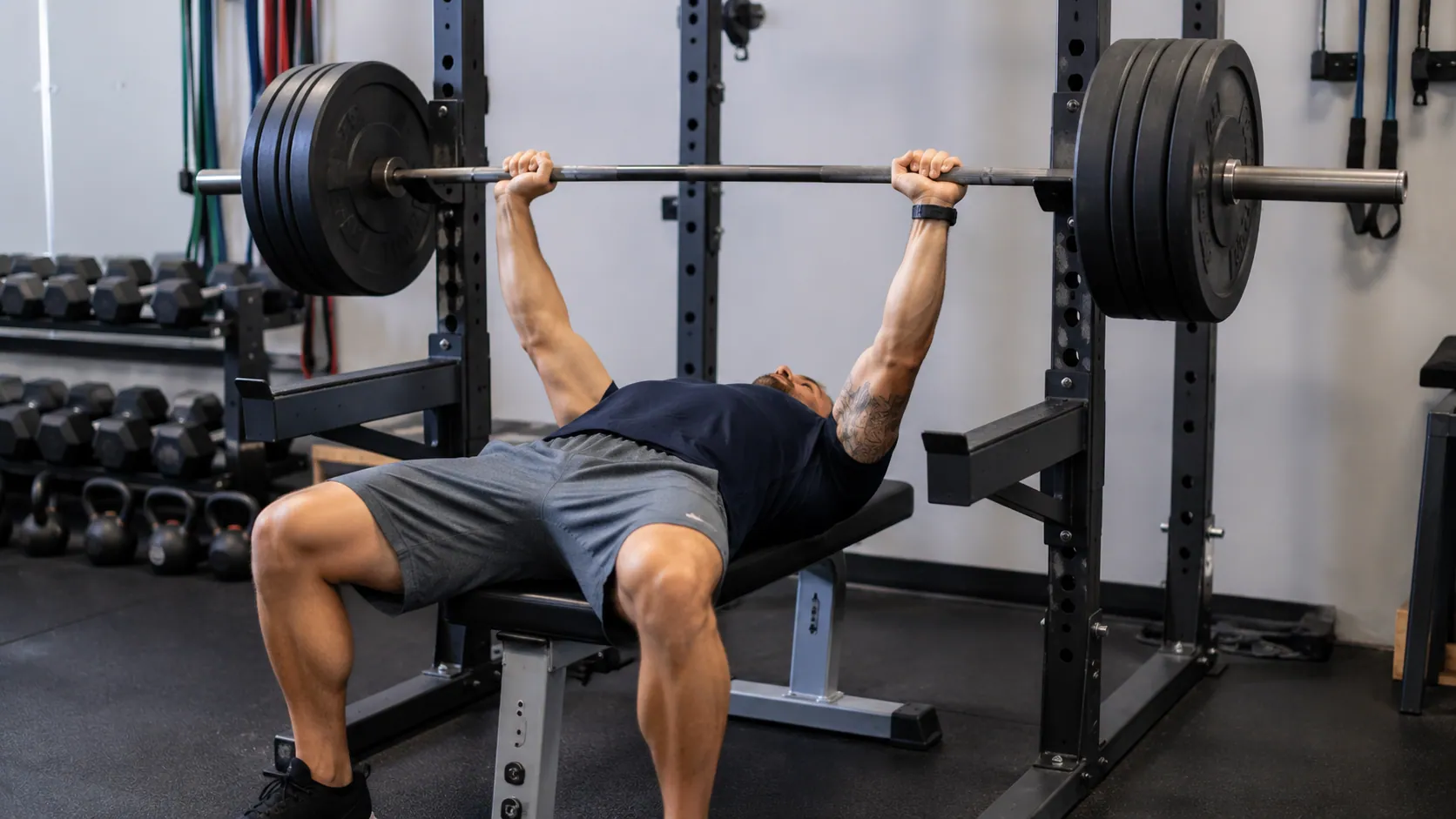
How heavy is the bar on a bench press is one of the most common questions beginners ask when they first start lifting, and the simple answer is: a standard bench press bar usually weighs 45 lb, or about 20 kg. That means even before you add any weight plates, you are already lifting the weight of the bar itself.
However, not every bar in the gym weighs the same. A standard Olympic bench press bar is usually 45 pounds / 20 kilograms, but a women’s Olympic bar, training bar, standard home gym bar, EZ bar, shorter bar, or Smith machine bar may weigh less or feel different. This is why it helps to understand the type of bar you are using before tracking your bench press progress.
For most people, especially beginner lifters, the most important thing to know is this: yes, you count the bar when bench pressing. If you lift an empty 45 lb bar, your bench press is 45 lb. If you add plates, you add the weight of the bar plus the plates on both sides.
How Much Does a Bench Press Bar Weigh?
The most common bench press bar weight is 45 lb, which is about 20.4 kg. In many gyms, especially commercial gyms, the bench press station uses a standard Olympic barbell. This is the long bar you usually see on flat bench press racks, squat racks, and power racks.
In metric gyms, the bar may be labeled as 20 kg, which converts to about 44 lb. In U.S. gyms, people commonly round this to 45 lb. So if someone says the bar weighs 44 lb, 45 lb, 20 kg, or 20.4 kg, they are usually talking about the same standard Olympic-style bar.
A standard Olympic bench press bar is usually about 7 feet long, has 2-inch sleeves for Olympic plates, and often has a shaft diameter around 28–29 mm. These details matter because they help separate an Olympic bar from a lighter standard barbell or a shorter home gym bar.
In most regular gym situations, you can safely assume the bench press bar is 45 lb / 20 kg, but it is still smart to check if the bar looks unusually short, thin, fixed to a machine, or unlabeled.
Bench Press Bar Weight Chart by Bar Type
Not all bars are built for the same purpose. Some are made for heavy strength training, some for Olympic weightlifting, some for beginners, and some for home gyms. The table below shows the most common bar types and their usual weights.
| Bar Type | Common Weight | Common Use |
| Men’s Olympic bench press bar | 45 lb / 20 kg | Standard bench press, squat, deadlift, powerlifting |
| Women’s Olympic bar | 33 lb / 15 kg | Olympic lifting, smaller hands, lighter starting weight |
| Training / technique bar | 5–15 kg / 11–33 lb | Beginners, rehab, form practice |
| Standard home gym bar | 10–18 kg / 22–40 lb | Home gyms and beginner sets |
| EZ curl bar | Often 15–25 lb, fixed versions vary | Biceps, triceps, accessory exercises |
| Fixed barbell | Often 10–50 kg / 22–110 lb | Preloaded gym bars |
| Short barbell | Often 15–35 lb | Small gyms, home gyms, specialty use |
| Powerlifting bar / thick bar | Around 20–25 kg / 44–55 lb | Heavy strength training |
| Smith machine bar | Varies by machine | Machine bench press, guided lifts |
This chart is useful because many people ask, “Are all bench press bars 45 pounds?” The answer is no. The standard bench press bar weight is usually 45 lb, but many gym bars and home gym bars can be lighter or heavier depending on design.
Are All Bench Press Bars 45 Pounds?
No, all bench press bars are not 45 pounds. The common Olympic barbell used for bench press is usually 45 lb / 20 kg, but different bars can weigh very different amounts.
A women’s Olympic bar usually weighs 15 kg / 33 lb and often has a slightly smaller diameter, around 25 mm, which can be easier to grip for people with smaller hands. A training bar or technique bar may weigh only 11–33 lb, making it helpful for beginners, teenagers, rehab work, or anyone learning proper form.
A standard home gym bar may weigh somewhere around 22–40 lb, depending on the brand and length. Some shorter bars in gyms may weigh 35 lb, while certain heavier specialty bars or power bars may weigh closer to 55 lb.
This is why it is risky to assume every gym bar is exactly 45 lb. If you are tracking your lifts carefully, trying to hit a new PR, or following a structured progressive overload plan, knowing the actual bar weight matters.
Olympic Barbell vs Standard Barbell
A big reason people get confused about gym bar weight is that they mix up an Olympic barbell with a standard barbell.
An Olympic barbell is the bar most often used in commercial gyms. It usually weighs 45 lb / 20 kg, is around 7 feet long, and has 2-inch sleeve diameter ends that fit Olympic weight plates. Olympic bars are made for heavier lifting and are common in bench press stations, squat racks, and powerlifting setups.
A standard barbell, on the other hand, is often found in home gyms or beginner weight sets. These bars are usually lighter, shorter, and use smaller plates. A standard barbell may weigh 10–18 kg / 22–40 lb, though the exact weight depends on the brand.
| Feature | Olympic Barbell | Standard Barbell |
| Common Weight | 45 lb / 20 kg | Often 22–40 lb |
| Length | Around 7 feet | Usually shorter |
| Sleeve Size | 2-inch sleeves | Often smaller |
| Plate Type | Olympic plates | Standard plates |
| Common Location | Commercial gyms | Home gyms |
If you are bench pressing at a commercial gym, you are probably using an Olympic bench press bar. If you are lifting at home, especially with a starter weight set, your bar may not be the standard 45 pound bench press bar.
Do You Count the Bar When Bench Pressing?
Yes, you should count the bar when bench pressing because the bar is part of the weight you are lifting. If the bar weighs 45 lb and you lift it with no plates, your bench press is 45 lb.
This is one of the most common beginner mistakes. Some new lifters only count the plates and forget the bar, but that makes their training log inaccurate. If you want to track your progress, compare lifts, or follow a program, you need to include the bar weight.
For example, if you use a 45 lb bar and add one 25 lb plate on each side, your total bench press weight is:
| Bar + Plates | Total Weight |
| 45 lb bar only | 45 lb |
| 45 lb bar + 10 lb + 10 lb | 65 lb |
| 45 lb bar + 25 lb + 25 lb | 95 lb |
| 45 lb bar + 45 lb + 45 lb | 135 lb |
So when someone says they bench 135 lb, that usually means a 45 lb Olympic barbell plus one 45 lb plate on each side.
As a simple rule, your total bench press weight is always:
Bar weight + plates on the left side + plates on the right side
How to Calculate Total Bench Press Weight
Learning how to calculate total bench press weight is easy once you remember that plates go on both sides of the bar.
The formula is:
Total bench press weight = bar weight + left-side plates + right-side plates
If your gym uses pounds, the most common bar is 45 lb. If your gym uses kilograms, the most common bar is 20 kg. Then you add the plates on both sides.
Here are a few examples:
| Bar Weight | Plates Added | Total Weight |
| 45 lb | No plates | 45 lb |
| 45 lb | 5 lb + 5 lb | 55 lb |
| 45 lb | 10 lb + 10 lb | 65 lb |
| 45 lb | 25 lb + 25 lb | 95 lb |
| 45 lb | 45 lb + 45 lb | 135 lb |
| 20 kg | 10 kg + 10 kg | 40 kg |
| 20 kg | 20 kg + 20 kg | 60 kg |
This is also why plate math can be confusing at first. If you put a 25 lb plate on each side, you are not adding 25 lb total. You are adding 50 lb because there is one plate on the left and one on the right.
A simple beginner tip is to write your lifts as total weight, not just plate weight. For example, instead of writing “25s on each side,” write 95 lb bench press. This makes your training log cleaner and helps you track progressive overload more accurately.
How Heavy Is the Bar on a Smith Machine Bench Press?
A Smith machine bar is different from a free-weight bench press bar. While a standard Olympic bench press bar usually weighs 45 lb / 20 kg, a Smith machine bar can vary a lot depending on the machine.
Some Smith machines use a counterbalance system, which reduces the effective starting weight of the bar. That means the bar may look heavy, but it may feel lighter than a normal Olympic barbell. On some machines, the starting resistance may feel close to 45 lb. On others, it may feel closer to 15–25 lb.
This is why Smith machine bench press weight should not always be compared directly with a free-weight bench press. If you bench 135 lb on a Smith machine, it may not feel the same as benching 135 lb with a free barbell because the movement path, stabilization, and bar resistance are different.
To find the actual Smith machine effective weight, check the machine label, look for manufacturer information, or ask gym staff. Many machines list the starting resistance somewhere on the frame.
How to Tell How Much Your Gym’s Bench Press Bar Weighs
If you are unsure about the bar weight at the gym, do not guess. There are a few simple ways to check.
First, look at the barbell end cap label. Many quality bars have the brand, model, or weight printed on the end. You can also check for manufacturer markings on the shaft or sleeves.
Second, compare the bar’s size. A standard Olympic bar is usually about 7 feet long and has 2-inch sleeves. If the bar is much shorter, thinner, or uses smaller plates, it may not be a standard 45 lb Olympic barbell.
Third, ask a trainer or gym staff. There is nothing embarrassing about asking. In fact, it is smarter than guessing and recording the wrong weight.
Fourth, if allowed, you can use a scale. One method is to weigh yourself, then weigh yourself while holding the bar, and subtract the difference. This is not always perfect, but it can give you a reasonable estimate.
This matters most when dealing with unlabeled gym bars, standard home gym bars, fixed barbells, and Smith machine bars.
Why Some Bench Press Bars Feel Heavier Than Others
Sometimes two bars may weigh the same but feel different in your hands. This does not always mean the bar is heavier. The feeling can come from the bar’s thickness, grip, knurling, balance, stiffness, or how tired you are.
A bar with sharper aggressive knurling may feel more secure but rougher on your palms. A bar with mild knurling may feel smoother but harder to grip. A thicker bar can challenge your grip more, especially if you have smaller hands. A bar with different bar stiffness or bar whip may also feel different during the lift.
Grip width also affects how heavy the bench press feels. A wide grip may place more stress on the chest and shoulders, while a close-grip bench press shifts more work to the triceps. Poor setup, tired shoulders, or unstable wrists can make the same weight feel much heavier.
So if one 45 lb barbell feels different from another, the reason may not be the weight. It may be the build, grip, or your bench press setup.
What If the Empty Bench Press Bar Is Too Heavy?
If the empty 45 lb bench press bar feels too heavy, that is completely normal for many beginners. It does not mean you are weak or doing something wrong. It simply means you should start with a lighter option and build strength gradually.
A beginner can start with a training bar, technique bar, dumbbell bench press alternative, machine chest press, or resistance band chest press. Push-up progressions can also help build upper-body strength before moving to the Olympic bar.
For example, someone who cannot bench the empty bar safely might begin with two 10 lb dumbbells, a light machine chest press, or incline push-ups. Over time, they can increase resistance and eventually move to the empty bar.
The goal is not to impress anyone on day one. The goal is safe lifting, good form, and consistent progress. As the common coaching idea says, “Start where you are, not where your ego wants you to be.”
If you are new to lifting, focus on control, a stable setup, and gradual progression. A 45 lb empty bar bench press is a good milestone, but it is not the only place to start.
Bench Press Bar Weight in Pounds and Kilograms
Because some gyms use pounds and others use kilograms, it helps to know the common conversions. This is especially useful if you travel, train in different gyms, or follow online programs.
| Pounds | Kilograms |
| 45 lb | 20.4 kg |
| 44 lb | 20 kg |
| 35 lb | 15.9 kg |
| 33 lb | 15 kg |
| 25 lb | 11.3 kg |
| 15 lb | 6.8 kg |
The most important conversion is this: 45 lb equals about 20.4 kg, and 20 kg equals about 44 lb. In everyday gym language, these are often treated as the same standard Olympic bar weight.
A 15 kg women’s Olympic bar equals about 33 lb, while a 35 lb bar equals about 15.9 kg. These small differences matter if you are tracking exact strength numbers, but for casual beginners, the main goal is to know which type of bar you are using.
Beginner Bench Press Safety Tips Before Adding Weight
Before adding plates to the bar, make sure your setup is safe. The bench press is a great compound exercise for the chest, triceps, and shoulders, but poor form or too much weight can increase the risk of shoulder strain, wrist discomfort, or failed reps.
Start with a weight you can control. If the empty bar is challenging, use a lighter option. If you are lifting heavy, use a spotter or bench inside a rack with safety pins or bench press safety arms.
Keep your feet planted, your upper back tight, and your wrists stacked over your elbows. Lower the bar with control and press it smoothly. Avoid bouncing the bar off your chest. Beginners should also avoid the suicide grip or thumbless grip because it can increase the risk of the bar slipping.
Use collars or clips when appropriate, especially if the bar may tilt or plates may slide. Some lifters avoid collars in certain solo bench situations so they can dump plates in an emergency, but beginners are usually better off lifting with a spotter and proper safety equipment.
The best safety rule is simple: own the weight before you add more weight.
Common Mistakes When Counting Bench Press Weight
One of the most common mistakes is forgetting to count the bar. If you use a 45 lb bar and add two 25 lb plates, the total is not 50 lb. It is 95 lb because you count the bar and both plates.
Another mistake is counting only one side of the bar. If you add a 10 lb plate to each side, you added 20 lb total, not 10 lb.
Some people also assume every bar is 45 lb, which can make their training log inaccurate. This is especially true with Smith machine bars, shorter bars, fixed barbells, and home gym bars.
Another mistake is comparing different lifts as if they are the same. A Smith bench is not exactly the same as a free-weight bench press because the machine guides the bar path and may reduce the starting resistance. A dumbbell bench press also feels different because each arm must stabilize its own weight.
If you care about accurate progress, write down the bar type, total weight, reps, and sets. This makes it easier to track PRs, avoid confusion, and build strength with progressive overload.
FAQ About Bench Press Bar Weight
How heavy is the bar on a bench press without plates?
A standard bench press bar without plates usually weighs 45 lb / 20 kg. This is the typical Olympic barbell used in most commercial gyms. However, some bars may weigh 33 lb, 35 lb, or less depending on the bar type.
Is the bench press bar 45 pounds?
Most standard Olympic bench press bars are 45 pounds, or about 20.4 kilograms. In metric gyms, the bar may be listed as 20 kg, which is about 44 lb.
How much does a women’s Olympic bar weigh?
A women’s Olympic bar usually weighs 15 kg / 33 lb. It is also commonly thinner than a men’s Olympic bar, often around 25 mm in diameter, which can make it easier to grip.
How much does a training bar weigh?
A training bar or technique bar can weigh anywhere from 5 to 15 kg, or about 11 to 33 lb. These bars are useful for beginners, rehab work, warm-ups, and learning proper bench press form.
Can a gym bar weigh 35 pounds?
Yes, some gym bars can weigh 35 lb, especially shorter bars, specialty bars, or non-standard bars. This is why checking the label, asking gym staff, or identifying the bar type is helpful.
Do collars count in bench press weight?
If you are tracking exact lifting totals, you can count collars, especially in competition-style training. However, most casual gym lifters do not count small collars unless they are specifically tracking precise numbers.
Should beginners start with the empty bar?
Beginners can start with the empty bar if they can control it safely. If 45 lb feels too heavy, it is better to start with dumbbells, a machine chest press, push-up progressions, or a lighter technique bar.
Conclusion
So, how heavy is the bar on a bench press? In most gyms, the standard bench press bar weighs 45 lb / 20 kg, and yes, you should count the bar as part of your total bench press weight. Still, not every bar is the same. A women’s Olympic bar, training bar, standard home gym bar, EZ bar, or Smith machine bar may weigh differently.
The safest approach is to know your bar, count your plates correctly, and track your lifts honestly. Whether you are pressing the empty bar, building toward 135 lb, or learning proper form for the first time, accurate bench press bar weight knowledge helps you train smarter, safer, and with better progress.
Disclaimer: This article is for general informational and educational purposes only. Bench press bar weights can vary depending on the type of bar, gym equipment, manufacturer, or machine setup. Always verify the actual bar weight, use proper lifting technique, and follow appropriate safety precautions or professional guidance when strength training.