

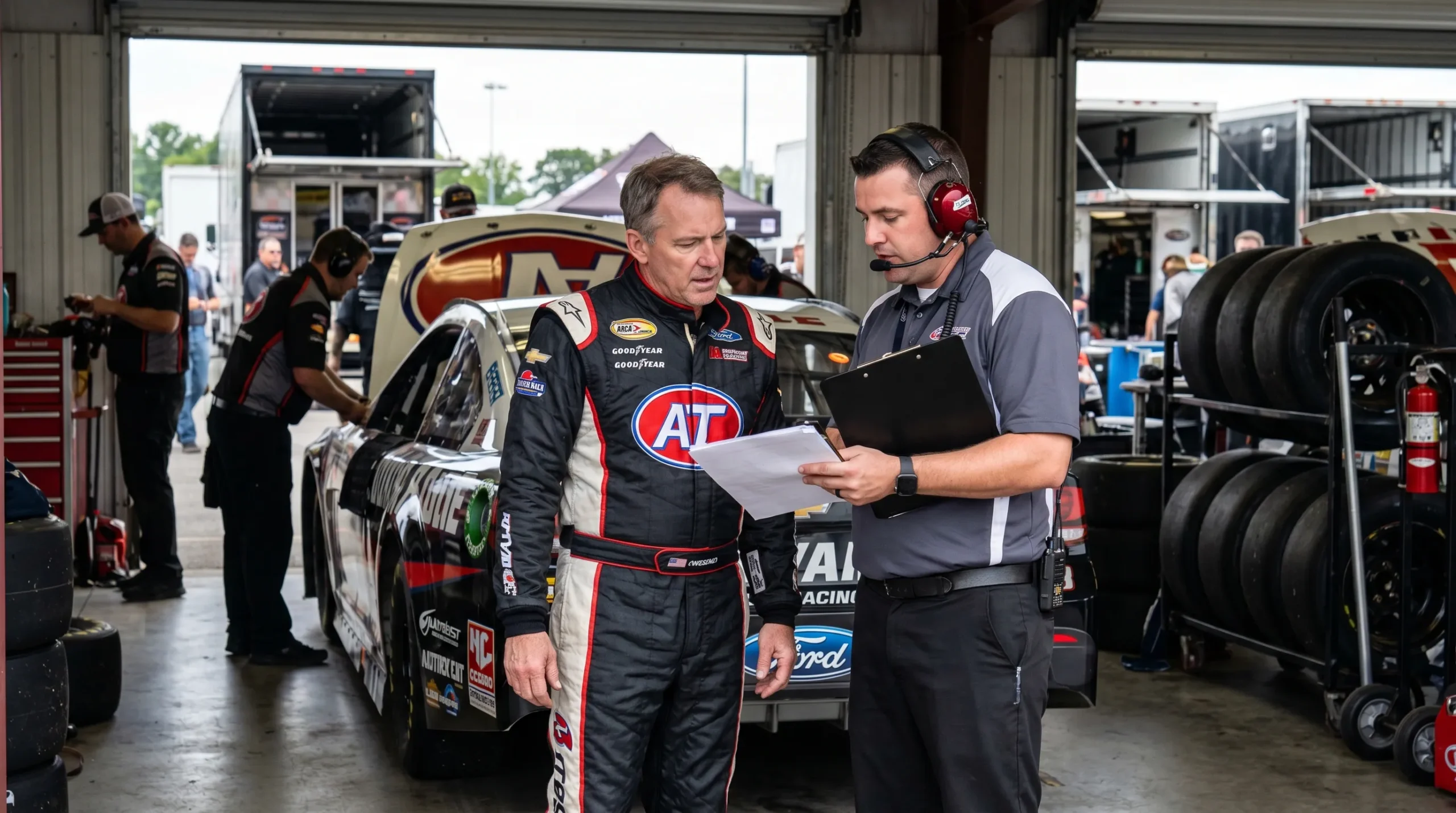
Can a arca team owner race the car? Yes — an ARCA team owner can race the car, but owning the team does not automatically make that person eligible to drive. In the ARCA Menards Series, ARCA Menards Series East, and ARCA Menards Series West, the series formally recognizes a Driver/Owner role, which means one person can act as both the car owner and the driver. But that does not mean any team owner can simply buy a car, show up at Daytona, Phoenix, or Sonoma Raceway, and race without further approval. ARCA minimum driver requirements, Competition Committee approval, rookie tests, experience standards, and race-week paperwork still matter.
That is why this question matters so much. Most people searching can an ARCA team owner race, can a team owner race his own car in ARCA, or can an ARCA car owner also be the driver are not asking a trivia question. They are really asking whether ARCA owner-driver rules allow someone to own and drive the same car, what kind of Driver/Owner license or membership is needed, and whether a new entrant without prior ARCA Menards Series experience can actually get approved. Official ARCA materials make clear that owner-driver participation is allowed, but it is also regulated.
The short version is simple: yes, an owner can drive in ARCA, but the owner still has to be approved as a driver. That distinction is the key to understanding how ARCA Driver/Owner participation works.
Yes — ARCA Allows Owner-Drivers, but There Are Conditions
The clearest answer is that ARCA allows owner-drivers. This is not a gray area or an unofficial workaround. ARCA’s membership materials include a formal Driver/Owner category, which shows that the series expects some participants to serve in both roles. ARCA also publishes a Driver Owner Agreement, which reinforces that the concept is built into the series structure rather than being something unusual.
At the same time, that recognition does not mean ownership alone is enough. A lot of readers assume that if you own the team, own the car, and pay the bills, you are automatically allowed to race. That is not how it works. ARCA owner-driver eligibility depends on more than who signs the checks. The series still treats the person as a driver who must satisfy experience and approval requirements. Event paperwork states that drivers without previous ARCA Menards Series experience must meet minimum driver requirements approved by the Competition Committee.
That is the difference between “can an owner drive in ARCA?” and “does owning the team let you race automatically?” The answer to the first question is yes. The answer to the second is no.
This matters because ARCA sits in a unique place in stock car racing development. Competitor articles often talk about the series as a NASCAR feeder series, a racing ladder, and an accessible step for grassroots racing, family teams, and local racers trying to move upward. But those same broad themes can make ARCA look more open than it really is. It may be more accessible than higher levels of NASCAR, but it is still a national series with formal rules, official paperwork, and approval standards.
What “Driver/Owner” Means in ARCA
In plain English, Driver/Owner means one person holds both the owner role and the driver role for the same entry. The owner side involves the team, the car, the entry, and the business side of competing. The driver side involves actually being approved to get behind the wheel, race safely, and compete under ARCA rules.
This is where a lot of confusion starts. Some people search ARCA owner-driver, others search driver-owner, and others type questions like can a ARCA team owner race the car without knowing the official term. ARCA’s paperwork uses Driver/Owner, while articles and profiles sometimes use owner-driver or team owner/driver. The wording changes, but the idea stays the same: one person can do both jobs.
Still, being a car owner and being a driver are not the same responsibility. A car owner may deal with funding, sponsor relationships, equipment, and entry logistics. A driver has to meet driving standards, follow race procedures, and satisfy approval requirements for specific events or track types. A Driver/Owner simply combines those two roles into one person. That is why ARCA owner responsibilities and ARCA driver responsibilities should never be treated as interchangeable.
This distinction is one of the biggest content gaps in competitor coverage. Many pieces explain ARCA as a development platform for young drivers, small budget teams, or development drivers, but they do not spell out the difference between owning a team and being approved to race. For a reader with actionable intent, that missing explanation is often the whole point of the search.
What an Owner-Driver Must Have Before Racing
If you want to know what an ARCA owner-driver needs to qualify, the answer starts with membership and ends with approval. The person must have the proper ARCA membership category, complete the required documentation, and meet series expectations as a driver. Official ARCA event materials show that drivers with no prior series experience must satisfy minimum driver requirements and may be subject to evaluation by the Competition Committee.
That means ARCA driver approval is not automatic. A new team owner cannot assume that buying the equipment solves the hardest part. In many ways, the driving approval is the more important hurdle. ARCA can require rookie meetings, tests, or other pre-event steps, especially when a driver is new to the series or facing a demanding track environment.
There is also a practical difference between being a strong driver at a local level and being approved for ARCA competition. Competitor content often frames ARCA as the place where short track racers can grow toward NASCAR Craftsman Truck Series, NASCAR Xfinity Series, or even the NASCAR Cup Series. That is true in broad developmental terms, but it does not erase the formal approval process. ARCA may be a bridge for grassroots racers, yet it still expects entrants to demonstrate readiness.
So, for anyone asking do ARCA owner-drivers need Competition Committee approval, the safest answer is: they may, especially if they lack ARCA experience or are entering an event where the series wants additional review. Ownership does not waive the series experience requirement.
Do You Need Separate Owner and Driver Licenses in ARCA?
A common follow-up question is do ARCA team owners need a driver license too, or can one document cover both roles? ARCA’s official membership structure answers this by offering Driver, Owner, and Driver/Owner categories. In other words, the series recognizes separate roles, but it also recognizes that one person may legally combine them.
That matters because it shows ARCA does not treat owner-driver participation as an odd exception. It is part of the structure. For someone who will both own and drive, the combined Driver/Owner category is the logical path. That is why searches such as what is the difference between ARCA owner and driver licenses or do you need separate owner and driver licenses in ARCA are so important. The official setup suggests that ARCA wants these responsibilities clearly identified rather than informally blended.
The practical takeaway is straightforward. If you are only financing or entering the car, you focus on the Owner side. If you are only driving, you focus on the Driver side. If you will do both, the Driver/Owner structure exists for that exact scenario. What it does not do is remove driver approval standards.
Can a New Team Owner Race Without Prior ARCA Experience?
This is the question that separates theory from reality. Can a new owner race in ARCA without prior series experience? Possibly, but not simply because they own the car. A newcomer still has to satisfy ARCA as a driver. Official event documents make clear that participants without prior ARCA Menards Series experience must meet minimum driver requirements and may need approval before competing.
This is especially important for readers coming from weekly racing programs, local short tracks, or regional racing backgrounds. Many competitor articles celebrate ARCA as an entry point for teams, a place for family teams, and a bridge from local tracks to national exposure. That framing is useful, but it can also create the false impression that the leap is casual. It is not. A new owner-driver must still prove readiness.
For some drivers, that may mean attending a rookie meeting. For others, it may mean a rookie test before practice or before qualifying. The exact expectation can vary, but the principle stays the same: no prior ARCA Menards Series experience means ARCA will look closely at whether the driver is prepared.
So if the real question is can a new team owner just buy in and race, the best answer is that buying in is only part of the process. ARCA still controls who is race-ready.
Does Track Type Matter for Owner-Driver Approval?
Yes, track type matters, and this is one of the most overlooked parts of ARCA owner-driver rules. Approval is not just about whether someone can drive in general. It can also depend on where they want to drive.
A race at Daytona or Talladega is very different from a short track event, and both are different again from a road course such as Sonoma Raceway, Lime Rock Park, or Watkins Glen International. Competitor content talks often about ARCA racing on superspeedways, short tracks, and road courses, but it rarely connects those track types to the owner-driver approval question.
That gap matters because a reader may assume that if ARCA approves an owner-driver once, approval applies everywhere. In practice, ARCA eligibility by track type is a smarter way to think about it. A driver’s background, experience, and comfort level can matter more at certain venues. Superspeedway racing places unique demands on racecraft and awareness. Road course events add a different technical challenge. Even shorter venues can require proof that a rookie or part-timer is ready for national-level competition.
This is why ARCA owner-driver at superspeedways, ARCA owner-driver at short tracks, and ARCA owner-driver on road courses are useful subtopics. They answer the real concern underneath the query: not just can I race, but can I race here?
Real Examples of ARCA Owner-Drivers
One reason this topic works so well is that there are real, current examples. Willie Mullins is the strongest case study because ARCA has identified him as an owner-driver and team owner/driver in official coverage. His story also makes the owner-driver idea easier to understand because he balances racing with operating his auto body repair business. In other words, he represents the kind of part-time, business-minded competitor many readers imagine when they search this topic.
That example matters for two reasons. First, it proves that active ARCA owner-driver examples exist in practice, not just on paper. Second, it shows that owner-driver participation fits ARCA’s broader identity as a home for grassroots racers, family teams, and experienced competitors running selective schedules. Competitor articles emphasize ARCA’s long history, its role in creating opportunities, and its appeal to racers working with realistic budgets. The Mullins example connects that broader identity to the exact owner-driver question.
ARCA has also published material around other drivers whose roles blur the line between ownership and participation, but Mullins is the cleanest illustration because the series uses the language directly. For SEO and trust, this kind of case study is powerful. It moves the article from abstract rule talk into a concrete answer.
How Much Does It Cost to Race ARCA as an Owner-Driver?
After eligibility, the next obvious question is cost. How much does an ARCA Driver/Owner license cost? ARCA’s official membership materials list fees for several categories, including Driver/Owner, Driver, Owner, Crew Chief, and Crew, with different amounts for the national series and East/West participation. Those published fee tables make it clear that Driver/Owner fees are a real, recognized part of the structure rather than something improvised.
Here is a simplified view of the published membership-style numbers referenced in the research:
| Role | National Series | East/West Example |
|---|---|---|
| Driver/Owner | $1,525 | $1,225 |
| Driver | $1,300 | $1,000 |
| Owner | $1,300 | $1,000 |
| Crew Chief | $1,000 | $700 |
| Crew | $950 | $650 |
ARCA materials also reference items such as an AMS Photo ID East Sticker $150 and AMS Photo ID West Sticker $300, depending on participation.
Of course, membership is only the first layer. Competitor coverage spends a lot of time on operating expenses, spec engine programs, Five Star Race Car Bodies, ARCA Illmor engine setups, and other cost-control measures because those shape how affordable ARCA is for small budget teams and family teams. One cited figure in competitor material mentions $100,000 per race, showing how quickly costs can rise depending on the level of effort and equipment.
So the honest answer is that the Driver/Owner license itself is not the biggest barrier. The real challenge is funding the broader race operation. Still, the published fee structure matters because it confirms that ARCA expects and supports the owner-driver model.
Why ARCA Appeals to Owner-Drivers and Family Teams
To understand why this keyword exists, it helps to understand ARCA’s identity. For decades, ARCA has sat between local grassroots competition and the upper levels of NASCAR. Competitor articles consistently describe it as a development platform, a racing ladder, and a place where young drivers, grassroots racers, and family teams can find opportunity. ARCA’s long history — often described through numbers like 1,501 races and 68 years — reinforces that image.
That environment naturally attracts owner-drivers. Someone who wants to build a program, race selectively, and control more of the business side may see ARCA as a more realistic entry point than immediately chasing the NASCAR Xfinity Series or NASCAR Cup Series. That does not make ARCA easy, but it does explain why searches like can a local racer own and drive an ARCA car make sense.
Competitor coverage also highlights ARCA’s mix of short tracks, superspeedways, and road courses, which gives owner-drivers different ways to plan a schedule. A part-time entrant may focus on the tracks that best match their background, budget, and goals. That flexibility helps explain why ARCA continues to appeal to entrants who are balancing competition with business and family realities.
Common Misunderstandings About ARCA Owner-Drivers
A few myths keep showing up around this topic.
The first is that owning the team automatically means you can race. It does not. Ownership and driver approval are related, but they are not the same.
The second is that a Driver/Owner category means fewer standards apply. It does not. A Driver/Owner is still a driver, which means ARCA can still require experience, testing, meetings, or approval.
The third is that part-time schedules mean loose rules. Again, not true. A part-time owner-driver still has to follow the same race-entry structure, paperwork expectations, and series rules.
These misunderstandings matter because they shape poor decisions. Someone may believe that forming a team is the hard part, when in reality the true challenge is becoming approved to drive the car safely and competitively.
Step-by-Step: How to Become an ARCA Owner-Driver
If you are serious about how to become an owner-driver in ARCA, the process is easier to understand when broken into steps.
First, decide which ARCA division fits your goals: the national ARCA Menards Series, ARCA Menards Series East, or ARCA Menards Series West. Second, review the current ARCA rule book, membership categories, and event documents. Third, apply using the correct Driver/Owner structure rather than treating ownership and driving as unrelated. Fourth, prepare the required paperwork, including entry documents and any related release or authorization forms. Fifth, communicate early with ARCA about your driving background so there is time to evaluate whether you meet minimum driver requirements. Sixth, be ready for rookie meetings, tests, or other approval steps if you are new to the series. Finally, choose events that match your experience instead of assuming every track is the right place to debut.
That process may sound formal, but it is actually helpful. It gives structure to a path that could otherwise feel vague. And it answers the most important version of the search query: yes, an owner can drive — but only after completing the same kind of real-world process ARCA expects from any legitimate driver.
Conclusion
So, can a arca team owner race the car? Yes. ARCA formally allows owner-drivers through its Driver/Owner structure, and real examples such as Willie Mullins prove that the model exists in today’s series. But the second half of the answer matters just as much: ownership alone is not enough. A team owner still has to qualify as a driver, meet minimum driver requirements, complete the right paperwork, and earn approval where needed.
Disclaimer:
This article is for general informational purposes only and is not a substitute for official ARCA Menards Series rules, licensing, or guidance. Owning an ARCA team does not automatically grant permission to race; driver approval, rookie tests, track-specific requirements, and competition committee clearance are still required. Always consult ARCA’s official membership materials and event documents before attempting to act as a Driver/Owner