

How do you light the pilot on a furnace is one of those questions people usually ask when the house is already cold, the vents are blowing cold air, and the home heating system is not doing its job. If you have an older gas furnace with a standing pilot light, the fix may be as simple as relighting a small flame. But if your system uses electronic ignition, smells like gas, or the pilot light keeps going out, you need to slow down and make sure you are dealing with the right problem safely.
This guide walks you through how to relight a furnace pilot light, where to find it, how long to hold the pilot button, what a healthy flame should look like, and when to stop and call a licensed HVAC professional. You will also learn the difference between a manual pilot light, an automatic pilot light, and a modern electronic ignition system, because many people try to relight a furnace that is not designed to be relit by hand at all.
First, make sure your furnace actually has a pilot light
Before you try to relight the pilot light on your furnace, confirm that your unit uses a standing pilot light. Many newer furnaces do not. Instead, they use electronic ignition, which turns on only when the thermostat is calling for heat.
In most cases, an older natural gas furnace is more likely to have a standing pilot. These are especially common in pre-2000 homes and older heating systems. A standing pilot is a small continuously burning flame that stays on all the time and helps ignite the main burner when your furnace starts. If your unit is newer, you may see a built-in igniter instead of a visible flame.
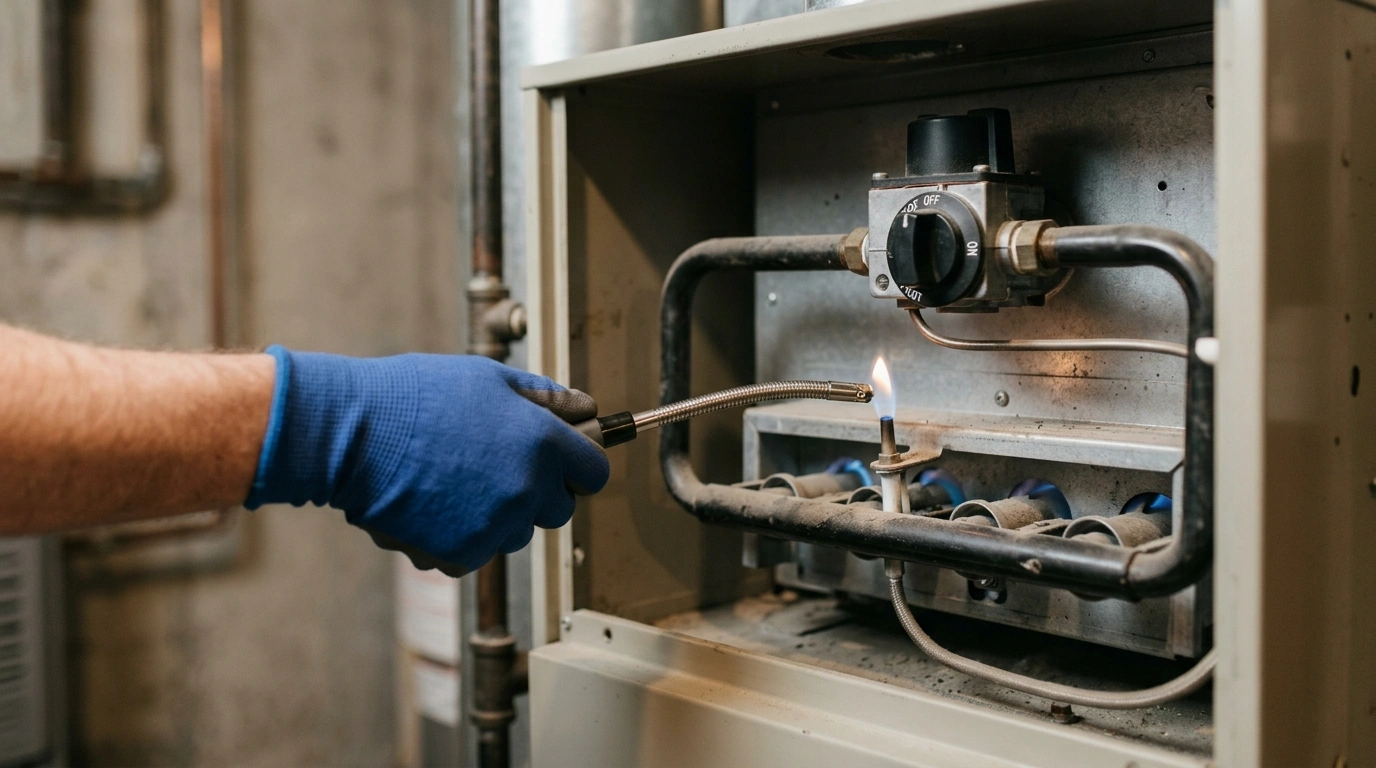
A quick way to check is to remove the lower access panel or removable access panel and look near the burner assembly. If you see a gas control valve with positions like On / Off / Pilot, that is a strong sign you have a manually relightable system. If there is no pilot assembly and no gas valve knob marked Pilot, your furnace may have modern electronic ignition furnaces components instead.
This matters because one of the biggest reasons people search does my furnace have a pilot light or furnace pilot light vs electronic ignition is simple confusion. If your unit uses electronic ignition, the problem is not really how do you light the pilot on a furnace. The real issue is why the furnace is not starting.
Safety comes first before you touch anything
A lot of homeowners want a fast DIY answer, but pilot light safety matters more than speed. A furnace is not the place to guess.
If you notice a strong gas odor or sulfur gas odor, hear hissing sounds, see heavy soot buildup, or suspect carbon monoxide leaks, do not try to relight anything. Leave the area, shut off the system if you can do so safely, and contact your gas company or a licensed HVAC professional. Make sure your CO detector is working too.
Another sign to stop is repeated failed attempts. If you already tried once or two tries and the pilot light is out on the furnace again, forcing it is not smart. Repeated failure often points to a dirty thermocouple, failing thermocouple, clogged pilot orifice, gas supply problem, or another issue inside the furnace.
Think of this as your basic furnace pilot light safety checklist:
| Stop and call for help if you notice… | Why it matters |
| Gas odor | Possible leak or unsafe ignition risk |
| Hissing sounds | Could mean gas is escaping |
| Heavy soot or corrosion | Possible combustion issue |
| No clear pilot access | You may have the wrong furnace type |
| Pilot won’t stay lit | Often points to a part failure |
| Signs of carbon monoxide risk | Immediate safety concern |
A good rule is this: if you are asking when not to relight a furnace pilot light, the answer is anytime the situation feels unsafe, unclear, or outside basic relighting steps.
Where is the pilot light on a furnace?
If you are wondering where is the pilot light on a furnace or how to find pilot light on furnace, you are not alone. This is one of the most common pain points for first-time homeowners and renters.
The furnace pilot light location is usually near the bottom front of an older furnace, behind an access panel. In many homes, the furnace sits in a basement, utility room, or closet. Once you open the panel, look for a gas line leading to the burners and a gas control knob with settings like On, Off, and Pilot. Close by, you may see the pilot button, a red reset button, or red ignition button.
If you cannot find it, check the furnace model label, door instructions, or the owner’s manual. That is often faster than guessing. Many people search where is the furnace pilot light located because the flame itself is small and easy to miss, especially in a dim area. A flashlight can help you spot the pilot assembly safely.
What to do before lighting the pilot
Before you start the actual relighting process, gather yourself and do the setup correctly. This is the part many quick guides skip, but it makes the rest of the job easier and safer.
Turn the thermostat off or all the way down so the furnace is not actively trying to run. Then switch off power to the furnace at the unit’s on-off switch or the furnace breaker in the breaker box. If your furnace has a gas valve, turn it to Off.
Now wait five minutes. This step matters. Anyone searching how long to wait after turning furnace gas off needs to know that this pause allows leftover gas to clear before you try to ignite anything.
While you wait, read any warning labels or safety labels on the furnace. If the instructions on your unit differ from a general guide, follow the furnace instructions first. You can also get your long lighter, grill lighter, or long match ready in case there is no built-in igniter.
This little prep stage is what makes safe furnace relighting steps actually safe.
How to light the pilot on a furnace step by step
Now let’s answer the main question directly: how do you light the pilot on a furnace?
The process is usually simple on a standing pilot light system.
First, make sure the thermostat is off and the power is off. Next, find the gas control valve and turn the gas valve knob to Off if it is not already there. Wait five minutes.
After that, turn the knob to Pilot. Press and hold the pilot button or red reset button. While holding it, use the built-in igniter, grill lighter, or long match to ignite the pilot. You should see a small blue flame appear.
Keep holding the button for about 30 seconds. Some systems may need at least 60 seconds. This gives the thermocouple time to sense the flame and tell the furnace that it is safe to keep gas flowing. Then release the button slowly.
If the flame stays on, turn the control knob from Pilot to On. Restore power, raise the thermostat, and listen for the furnace to start. You may hear the burners ignite and then feel warm air begin to move through the system.
That is the core answer to how to relight a furnace pilot light and how to turn the furnace pilot light back on.
For readers who like a quick summary, here is the sequence:
- Turn the thermostat down and shut off power
- Set the gas control knob to Off
- Wait five minutes
- Turn the knob to Pilot
- Press and hold the pilot button
- Ignite with a lighter or built-in igniter
- Hold for 30 to 60 seconds
- Release slowly
- Turn knob to On
- Restore power and test heat
This is why some pages describe it as how to relight a pilot light safely in 5 steps, even though the full process really has a few smaller sub-steps.
How long should you hold the pilot button down?
One of the most common follow-up questions is how long should you hold the pilot button down. The short answer is usually about 30 seconds, though some systems need at least 60 seconds.
That timing matters because the thermocouple needs enough time to heat up. If you release too fast, the flame may go out immediately, which makes people think the relighting failed when really the sensor never had time to do its job.
If you are wondering how long to hold the red reset button when lighting a furnace, think in the 30 to 60 second range unless your furnace label says something different. If it still goes out after that, the issue may not be your timing at all.
What a healthy pilot flame should look like
After you relight the pilot, do not just walk away. Look at the flame itself.
A healthy pilot light on furnace should usually be a small blue flame or solid blue flame. Some guides describe it as around 1/2 inch tall blue flame. The exact shape varies a bit by model, but blue is what you want.
If the flame is yellow, orange, weak, or flickering, that can point to dirt, airflow problems, or incomplete combustion. This is why people search what does a healthy pilot light look like, pilot light flame color meaning, and blue vs yellow pilot light flame.
Here is a simple reference:
| Flame appearance | What it usually means |
| Small blue flame | Normal, healthy pilot |
| Solid blue color | Good combustion |
| Yellow flame | Possible dirt or combustion issue |
| Orange flame | Needs attention or cleaning |
| Flickering flame | Drafts or instability |
A weak flame may not properly heat the thermocouple, which can cause the pilot light won’t stay lit problem.
Why the pilot light won’t stay lit
If you successfully ignite the flame but it dies as soon as you release the button, you are dealing with a different issue. This is where furnace pilot light troubleshooting becomes more important than the relighting steps themselves.
The most common culprit is the thermocouple. This small safety device senses whether the flame is present. If it is dirty, worn out, or badly positioned, it may not detect the flame correctly. That is why searches like how to tell if the thermocouple is bad and pilot light not reaching thermocouple are so common.
A clogged pilot orifice is another possibility. Dust, dirt, and buildup can restrict gas flow, making the flame too weak to stay stable. A draft in basement areas or drafts around the furnace can also blow out the flame, especially in older systems. Some users notice this problem more during cold weather and end up searching furnace pilot light keeps going out in winter.
Sometimes the issue is the gas supply problem itself. Other times it is a failing gas valve or wear inside the burner assembly. If you see corrosion, soot buildup, or repeated outages after a relight, you are probably beyond a basic DIY situation.
This is also why why does my pilot light keep going out, what if the pilot light keeps going out, and furnace pilot light won’t stay lit are such high-intent searches. People are not just looking for instructions. They are trying to figure out why the fix did not hold.
What if the pilot lights but the furnace still does not start?
This is another important distinction. Sometimes the pilot is lit, but the furnace still does not produce heat. If that happens, the issue may not be the pilot anymore.
The thermostat may not be set correctly. The breaker may still be off. The main burner may not be igniting. A control problem, airflow issue, or electrical fault could also be preventing startup. In newer systems, the confusion is even greater because people search electronic ignition furnace won’t start when they really do not have a standing pilot to begin with.
If your furnace turns on but you still get cold air from vents, or the fan runs without real heat, you may have moved past the pilot light on furnace issue and into broader furnace repair territory. That is where how to know when the issue is not the pilot light becomes so useful.
What you can check yourself and what you should leave alone
There is a difference between a careful DIY check and a repair job.
Reasonable homeowner steps include checking the thermostat, verifying power, reading the unit label, confirming the On / Off / Pilot position, and visually inspecting whether the pilot flame is blue and steady. In some cases, a technician may later clean the pilot light orifice or replace a dirty thermocouple, but that does not mean every homeowner should attempt it.
A simple case study shows why. Imagine a homeowner on the first cold weekend of fall. The furnace sat unused all summer. They relight the pilot successfully, but the flame dies every time after release. At first, it seems like they are not holding the button long enough. In reality, the thermocouple is failing. Another common example is a furnace in a drafty basement where the flame lights but keeps flickering out because of airflow.
The safest approach is to handle the basic manual relight furnace instructions yourself, but leave part replacement and deeper cleaning to a technician unless you are trained.
When to call an HVAC professional
You should call a licensed HVAC professional if the pilot will not light, lights but will not stay on, or keeps going out after relighting. You should also call if you notice gas leaks, hissing sounds, carbon monoxide concerns, or signs of a bad gas valve.
This is where DIY vs professional furnace repair becomes simple: if the issue is just relighting, that is often manageable. If the problem involves gas flow, sensors, combustion quality, or repeated failure, it is professional territory.
Many readers searching when to call a professional instead of DIY are really asking for permission to stop troubleshooting. If the furnace feels unsafe, confusing, or unreliable, that is your sign.
Seasonal furnace startup tips that can save you trouble
A lot of furnace pilot light problems after summer happen during the first furnace startup of the season. The system has been sitting idle, dust may have settled, and people often discover problems during the first cold snap, cool evenings, or early mornings of fall and winter.
A simple winter furnace maintenance checklist helps. Replace the filter, test the thermostat, check the CO detector, inspect visible flame quality, and schedule seasonal service if your furnace is older. This kind of seasonal furnace startup checklist improves reliability, efficiency, and home comfort long before there is a no-heat emergency.
Repair the old furnace or replace it?
If you have a very old furnace with a standing pilot light, it is fair to ask whether repair still makes sense. Many older systems work for years, but they are generally less efficient than systems with electronic ignition.
If your unit needs repeated service, has chronic pilot issues, or struggles to heat the home evenly, a replacement conversation may be worth having. That is especially true for older furnaces in pre-2000 homes where repair costs start adding up. In that case, searches like should I replace my pilot light furnace and when to replace an old furnace with standing pilot become relevant.
A newer furnace may offer better efficiency, stronger safety features, and more reliable ignition. That does not mean every old furnace should be replaced immediately. It just means recurring pilot problems can be a sign that the larger system is aging out.
Quick FAQ
Can I relight a furnace pilot light myself?
Yes, in many cases you can, but only if the furnace has a standing pilot light and there is no gas odor or other safety concern.
Do all furnaces have a pilot light?
No. Many newer units use electronic ignition, not a standing pilot.
Should I turn off the furnace if the pilot light is out?
Yes, it is smart to lower the thermostat and shut the system down before inspecting the problem.
Why is the pilot flame yellow instead of blue?
A yellow flame or orange flame can point to dirt, poor combustion, or another issue that needs attention.
How many times should I try to relight a furnace?
Do not keep trying over and over. If you have already made two tries and the pilot still fails, it is time to stop and investigate or call for help.
What if the pilot light lights but the burners do not come on?
Then the issue may be beyond the pilot itself and involve the main burner, thermostat, controls, or another furnace component.
Final thoughts
Learning how do you light the pilot on a furnace can save you stress on a cold day, but the safest approach is always a careful one. Confirm that your furnace has a standing pilot light, follow the relighting steps in order, look for a small blue flame, and pay attention to warning signs like gas odor, repeated failure, or a flame that will not stay lit.
If the process works, great, you have likely restored heat and home comfort. If it does not, that does not mean you failed. It usually means the furnace needs a closer look from a licensed HVAC professional.
This article is for general informational purposes only and is not a substitute for professional HVAC advice. Working with gas appliances carries real safety risks — if you smell gas, suspect a leak, or are unsure about any step, stop immediately and contact a licensed HVAC technician or your gas company.