

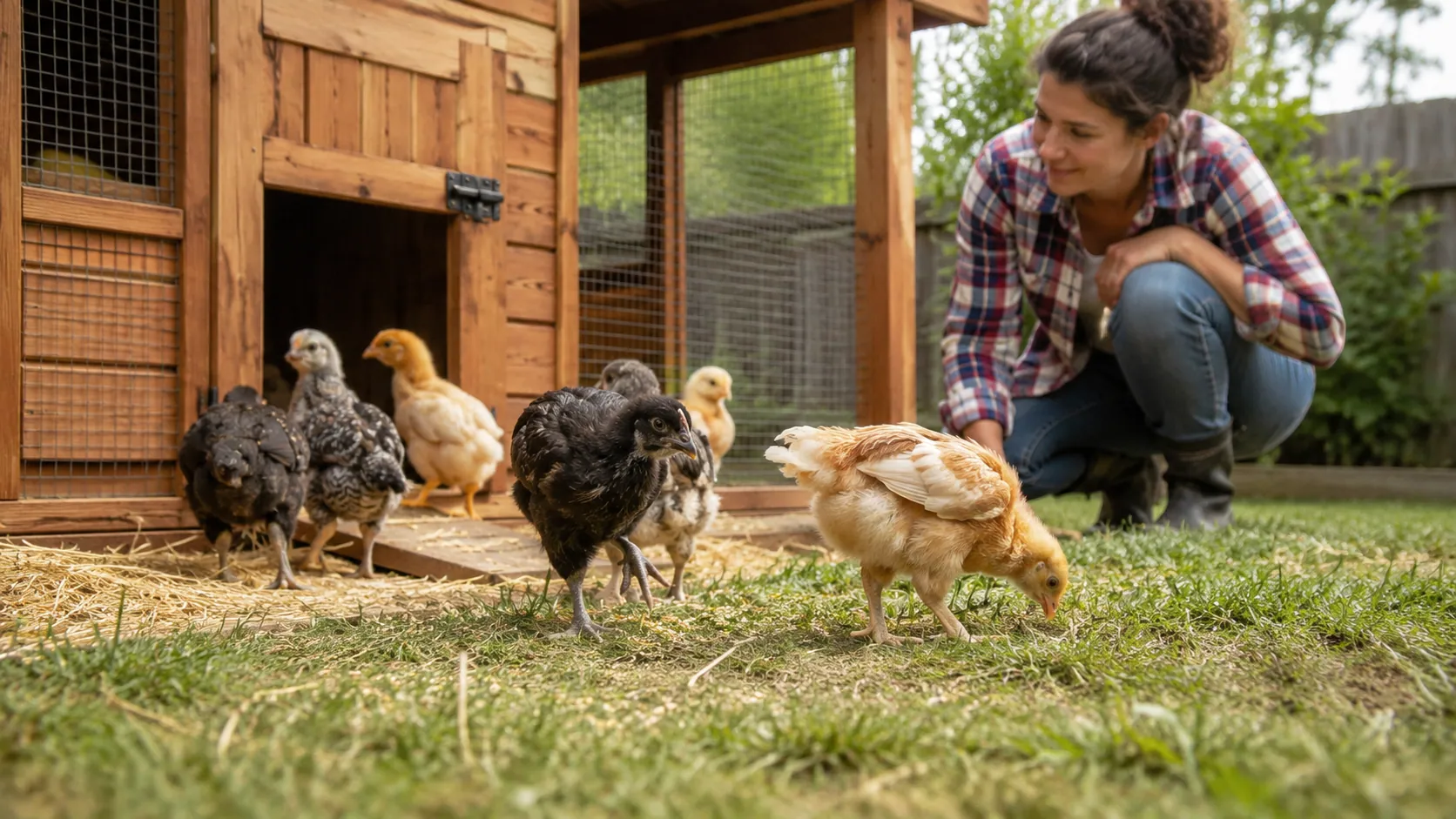
What age can chicks go outside is one of the first big questions new chicken keepers ask, and the safest answer is that most chicks can go outside around 5 to 6 weeks old when they are fully feathered. At this stage, baby chicks are usually better able to handle normal outdoor conditions without depending as much on brooder heat.
Still, age alone is not enough. Some chicks may be ready a little earlier, while others need more time depending on their breed, feather growth, outdoor weather, brooder temperature, and overall health. A warm spring day is very different from a cold, windy night, so it is important to look at the chick’s development and the environment together.
It also helps to understand what “going outside” means. For some chicks, it may start as a short, supervised visit on dry grass. For others, it may mean spending time in a secure daytime playpen. A full move from brooder to coop is a bigger step and should only happen when the chicks are strong, mostly or fully feathered, and the coop is safe, dry, and protected from predators.
In this guide, you’ll learn when chicks can go outside, how to tell if they are ready, what chick outdoor temperature is safe, how to prepare the coop, and which common mistakes to avoid. The goal is simple: help you move your baby chicks outside with confidence while keeping them warm, healthy, and safe.
When Can Chicks Go Outside?
Most chicks can start going outside for short supervised visits once they are strong, active, and the weather is mild. This may happen before they are ready to live outside full-time, especially if the day is warm, dry, and calm. At first, outdoor time should be brief and closely watched because young chicks can chill quickly, get stressed, or become easy targets for predators.
For a full brooder to coop transition, many chicks are ready around 5 to 6 weeks old, but only if they are fully feathered and the outdoor setup is safe. A 5 week old chick outside may do well in warm weather if it has enough feathers and protection, while many 6 week old chicks outside can handle coop life better when conditions are stable. Still, every flock is different, so it is important to look at the chicks, not just the calendar.
A chick is considered fully feathered when it has real feathers over most of its body instead of mostly soft baby down. These feathers help the chick hold body heat more effectively. If your chicks still look fluffy across the chest, back, or shoulders, they may need more time in the brooder before staying outside overnight.
Weather also matters. If nights are cold, wet, windy, or below the chicks’ comfort level, it is safer to keep them indoors longer or provide a safe source of supplemental warmth. Even fully feathered chicks can struggle if the coop is damp, drafty, or not protected from sudden temperature drops.
A simple safe rule is:
Feathers + stable warmth + secure coop = ready for outside.
So, the best answer to what age can baby chicks go outside is usually around 5–6 weeks, but only when they are feathered enough, the weather is suitable, and the coop is warm, dry, and predator-safe.
Why Age Alone Is Not Enough
Age is a helpful starting point, but it should not be the only thing you use to decide when chicks can go outside. Two chicks can be the same age and still be at different stages of chick development. One may be strong, active, and well-feathered, while another may still look fluffy, small, or slower to grow.
Chick feather growth is one of the most important signs to watch. Real feathers help chicks hold body heat better than soft baby down. That is why a fully feathered 5-week-old chick may be more ready for outdoor time than a 6-week-old chick that still has a lot of down. The calendar gives you an estimate, but the chick’s body tells you more.
Breed also makes a difference. Some cold hardy chicks, such as certain dual-purpose breeds, may handle cooler weather better once they are feathered. Smaller, delicate, or slower-feathering breeds may need extra time before moving outside. Bantam chicks, for example, can lose warmth faster because of their small body size.
Weather is another major factor. A mild spring afternoon is not the same as a cold night, steady rain, strong wind, or damp bedding. Even if the daytime temperature feels comfortable, chicks can become chilled after sunset if the coop is drafty or the bedding is wet. Since baby chick body temperature is harder for young birds to control, sudden changes in weather can be stressful.
Health matters too. Weak chicks, sick chicks, slow-growing chicks, or chicks dealing with issues like pasty butt should not be rushed outdoors. A chick should be eating, drinking, moving well, and acting alert before it spends serious time outside. When raising chicks safely, it is always better to wait a few extra days than to move them too early.
Group size can also affect readiness. Chicks in a larger group can share warmth by resting near each other. A single chick or very small group may need more protection because they have less shared body heat. For the safest decision, look at the whole picture: age, feathering, breed, health, weather, and coop conditions.
How to Tell If Chicks Are Fully Feathered
Knowing when chicks are fully feathered is one of the easiest ways to judge whether they are ready for more outdoor time. Fully feathered baby chicks have real feathers covering most of their bodies, not just the soft, fluffy down they had after hatching.
Soft down looks light, fuzzy, and almost like fluff. It helps very young chicks stay comfortable in a warm brooder, but it does not protect them well from cold outdoor air, wind, or damp conditions. True feathers are stronger, flatter, and more structured. These young chickens’ feathers help them hold body heat and handle outdoor conditions more safely.
As chicks move through normal chick growth stages, you will notice their feathers coming in gradually. The wings usually feather first, followed by the shoulders, chest, back, and other body areas. Chicks that are close to ready for outside often show these signs:
- Feathered wings
- Feathered chest and back
- Feathered shoulders
- Much less fluffy baby down
- More active scratching, perching, exploring, and dust-bathing behavior
The head may still look a little fluffy in some chicks, and that does not always mean they are unready. What matters more is whether the body is mostly covered with real feathers. If the chick still looks mostly fuzzy across the chest, back, sides, or shoulders, it is usually not ready for full-time outdoor living.
A simple observation tip is this: if your chicks still look like soft baby birds, keep them protected longer. If they look more like small chickens, with real feathers covering most of the body, they may be close to the brooder to coop stage.
So, when are chicks fully feathered? For many breeds, full feathering happens around 5 to 6 weeks old, but some chicks develop faster or slower. Breed, brooder temperature, health, and overall growth can all affect timing. That is why it is better to check the feathers and behavior instead of relying only on age.
Outdoor Temperature Guide for Baby Chicks
Outdoor temperature is one of the biggest factors in deciding when chicks can safely go outside. Very young chicks cannot regulate body temperature as well as adult chickens, which is why they need steady warmth in the brooder during their first weeks of life. If chicks get too cold, they may huddle tightly, peep loudly, stop eating well, or become weak.
A common chick temperature chart starts the brooder around 90–95°F during the first week, then lowers the heat by about 5°F each week as chicks grow and develop feathers. This gradual change helps chicks adjust while their bodies become better at holding warmth.
By around 6 weeks old, many chicks no longer need supplemental heat if they are fully feathered and the weather is suitable. However, that does not mean every 6-week-old chick can handle every outdoor condition. A dry, mild evening is very different from a damp, windy night.
Here is a simple way to think about outdoor temperature for chicks:
| Outdoor Condition | What It Usually Means |
| Warm, dry days | Good for short supervised outdoor visits |
| Cool evenings | Transition carefully and check chick behavior |
| Cold nights | Delay the full outdoor move or provide safe supplemental warmth |
| Wet or windy weather | Risky even if the air temperature seems acceptable |
Some chicken keepers move 6-week-old chicks outside when temperatures are around 50°F or higher, especially if the chicks are fully feathered and the coop is dry and protected. Others prefer warmer conditions, such as 65°F or higher, before keeping chicks without a heat lamp overnight. The safest choice depends on feathering, breed, group size, coop setup, and the local weather forecast.
Cold is not the only concern. Damp bedding, wind blowing through the coop, and wet feathers can make chicks lose warmth faster. This is why baby chicks in cold weather or wet weather need extra caution, even if they are close to the right age.
The best guide is not only the thermometer. Watch the chicks. If they are spread out, active, eating, drinking, and resting comfortably, they are likely warm enough. If they are piled tightly together, crying loudly, standing still, or avoiding food and water, they may be too cold. The safe temperature for chicks outside is the one where they can stay dry, active, comfortable, and protected.
Short Outdoor Visits Before Moving to the Coop
Chicks do not have to move outside all at once. In fact, short outdoor visits can make the full move from brooder to coop much easier. These early trips help baby chicks adjust to grass, sunlight, fresh air, wind, natural sounds, and more open space without suddenly changing their whole environment.
The best time to begin letting chicks outside during the day is on a warm, dry, calm day when they are active and healthy. Start with a short visit, even just a few minutes, and stay nearby the entire time. This kind of supervised chick outdoor time helps you see how your chicks respond before they are expected to live outside full-time.
Always use a safe setup. A chick playpen, enclosed run, or small chick-safe outdoor area works well because it keeps the chicks contained and easier to watch. The area should protect them from cats, dogs, hawks, and other predators. It should also give them access to shade, especially on sunny days.
At first, keep visits short and simple. As the chicks become more confident, you can slowly increase the time they spend outdoors. This gradual process is called acclimating chicks to outside, and it helps reduce stress. Chicks may scratch at the ground, peck at tiny bits of grass, explore leaves, or try dust-bathing for the first time. Seeing baby chicks on grass is exciting, but they still need close protection.
Bring the chicks back inside if they start huddling tightly, peeping loudly, standing still, acting sleepy, or seeming stressed. These can be signs that they are cold, overwhelmed, or uncomfortable.
Most importantly, never leave young chicks loose in the yard. They are small, fast, curious, and vulnerable. A safe outdoor visit should always be supervised, enclosed, warm, and short enough that the chicks stay comfortable from start to finish.
How to Move Chicks From Brooder to Coop Safely
Before you move chicks to the coop, the outdoor space should be fully prepared. A safe brooder to chicken coop transition is not just about age. The coop needs to protect young chicks from cold, dampness, drafts, predators, and stress. Even strong, feathered chicks can struggle if the coop is not ready.
Start by checking the full chick coop setup. The coop should be dry, clean, draft-free, well-ventilated, predator-proof, and properly bedded. Dry bedding is especially important because damp bedding can chill chicks quickly and create unhealthy conditions. Ventilation is also important, but it should not mean cold air blowing directly on the chicks at floor level.
Move chicks during mild weather if possible. Avoid moving them outside during a cold snap, heavy rain, strong wind, or stormy night. A calm, dry stretch of weather gives young chickens a better chance to settle in without extra stress.
When possible, transition chicks outside slowly over several days. You might start with daytime visits in the coop or run, then bring them back to the brooder at night. Once they are comfortable, fully feathered, and the weather is stable, they can begin staying outside overnight.
Make the new space feel familiar. Place their feed and water where they can find them easily. You can also use a familiar feeder, waterer, or a small amount of bedding from the brooder to help reduce stress. Young chicks may feel confused in a new area, so simple familiarity can make the move smoother.
During the first day and night with young chickens in the coop, check them several times. Watch how they move, eat, drink, and settle down. Listen for loud distress peeping, which can mean they are cold, scared, lost, or unable to find warmth. If they are resting calmly, eating, drinking, and staying active, they are likely adjusting well.
A safe move is gradual, calm, and closely watched. The goal is not to rush chicks outside, but to help them settle into the coop when their bodies, the weather, and the setup are all ready.
Coop Safety Checklist Before Chicks Go Outside
A safe coop for baby chicks should be ready before the chicks spend full days or nights outside. Young chicks are smaller, weaker, and more vulnerable than adult chickens, so the coop must protect them from predators, bad weather, damp bedding, and unsafe heat sources.
Start with predator protection. A predator proof chick coop should not have loose gaps, weak wire, or easy entry points. Use hardware cloth instead of basic chicken wire for vulnerable openings because many predators can tear through or reach through weak wire. A proper hardware cloth chicken coop is especially important around windows, vents, doors, corners, and lower openings near the ground.
Check the coop carefully for gaps around doors, flooring, vents, nesting areas, and corners. Small predators can fit through surprisingly tight spaces. Chicks also need protection from rats, snakes, cats, raccoons, dogs, hawks, and other animals that may see them as easy prey. If the chicks will use an outdoor run, the run should also be secure, covered when needed, and protected from digging predators.
Weather protection is just as important. Keep chick bedding clean and dry because wet bedding can make chicks cold and uncomfortable. The coop should be a draft-free coop, but that does not mean it should be sealed tightly with no airflow. Cold wind blowing directly at chick level is dangerous, while proper airflow above them helps keep the coop healthier.
Good chicken coop ventilation allows moisture and stale air to escape without creating a cold draft on the chicks. This balance helps prevent damp conditions, strong odors, and respiratory stress. In warm weather, the coop should also have shade and airflow so chicks do not overheat. Rain should not be able to blow inside and soak the bedding.
Space also matters. Chicks need enough room to move, eat, drink, rest, and get away from each other if they feel crowded. If you use supplemental heat, make sure there is enough space for chicks to move closer to warmth when they are cold and farther away when they are comfortable. They should never be trapped directly under heat.
Fire safety should be taken seriously. If supplemental heat is used outdoors, avoid unsafe heat lamp setups. Heat lamps can be risky if they fall, touch bedding, or are not secured properly. Any heating equipment should be stable, safely placed, and checked often.
Before chicks go outside, use this simple safety check: the coop should be dry, secure, well-ventilated, draft-free, predator-resistant, properly bedded, and safe from fire hazards. If one of those areas is not ready, it is better to fix the coop first than to rush the chicks outside.
Should Chicks Still Need a Heat Lamp Outside?
Many fully feathered chicks do not need extra heat outside if the weather is warm, dry, and stable. By the time chicks are around 5 to 6 weeks old, they often have enough feathers to help control their body temperature better than they could as tiny hatchlings. Still, the answer depends on the chick’s age, feathering, health, breed, group size, and nighttime temperatures.
So, do chicks need heat outside? Sometimes, yes. Chicks may still need supplemental warmth if they are young, not fully feathered, small for their age, or moving outside during cold nights. A chick that looks mostly fluffy is not ready to handle outdoor temperatures without protection. Even feathered chicks may struggle if the coop is damp, drafty, or exposed to sudden weather changes.
Some keepers use chicks outside with a heat lamp, but this should be done with extreme care. Heat lamps in coops can create serious fire hazards, especially near dry bedding, wood, dust, feathers, or loose cords. If a heat lamp falls, shifts, or gets too close to bedding, it can become dangerous quickly. This is why heat lamp safety for chickens is so important.
A safer option in many setups is a brooder plate for chicks, which provides gentle warmth without hanging a hot bulb over bedding. It should still be used correctly and placed where chicks can choose whether they want warmth or not. No matter what heat source is used, chicks must have enough room to move closer if they are cold and move away if they are too warm.
The best way to judge comfort is to watch behavior. Cold chick signs often include tight huddling, loud peeping, weakness, or standing still under the heat source. If chicks stay far away from the heat, spread their wings, or pant, they may be too hot. If they are evenly spread out, eating, drinking, scratching, and resting calmly, they are usually comfortable.
A simple behavior guide can help:
| Chick Behavior | What It Usually Means |
| Huddled tightly under heat | Too cold |
| Far from heat and panting | Too hot |
| Evenly spread and active | Comfortable |
The goal is not just to provide heat. The goal is to provide a safe, dry, draft-free space where chicks can choose their comfort zone. If the weather is warm and the chicks are fully feathered, they may not need heat outside. If nights are cold or the chicks still look young and fluffy, wait longer or use safe supplemental warmth with close monitoring.
Signs Chicks Are Ready to Stay Outside Overnight
Before leaving chicks outside overnight, make sure they are truly ready for the change. A chick may enjoy short daytime visits but still need more time before sleeping outdoors full-time. Nighttime is usually colder, quieter, and more stressful, so it is important to check both the chicks and the coop before making the move.
The first sign is feathering. Chicks should be mostly or fully feathered, with real feathers covering the wings, chest, back, and shoulders. If they still look mostly fluffy, they may not be ready to hold enough body warmth through the night. Feathering is one of the clearest signs that chicks are ready for the coop.
Behavior also matters. Healthy chicks should be eating, drinking, scratching, walking, and exploring normally. They should look alert and active during the day. If they seem weak, sleepy, stressed, or slow to move around, it is better to wait before putting baby chicks in the coop at night.
Watch how they rest, too. If chicks are constantly huddling tightly for warmth, they may still be too cold. Some resting close together is normal, but nonstop tight huddling, loud peeping, or piling on top of each other can mean the chick overnight temperature is too low for their comfort.
The coop should also be ready. It needs to be secure, dry, draft-free, and predator-safe. Chicks should be able to find their food and water easily, especially in a new space. If they have been spending short daytime visits in the coop, they may already understand where shelter, warmth, food, and safety are.
Before deciding when can chicks sleep outside, check the weather forecast for the next several nights. A sudden cold snap, heavy rain, strong wind, or damp conditions can make the move risky, even if the chicks seem ready during the day.
A simple overnight readiness checklist looks like this:
| Readiness Sign | What to Look For |
| Feathering | Mostly or fully feathered body |
| Normal behavior | Eating, drinking, scratching, and moving well |
| Comfort | Not constantly huddling or distress peeping |
| Night temperature | Suitable for their age, breed, and feathering |
| Coop safety | Dry, draft-free, secure, and predator-proof |
| Food and water access | Chicks can find both easily |
| Shelter awareness | Chicks know where to rest and stay protected |
| Weather forecast | No cold snap, storm, or risky wet weather expected |
If most of these boxes are checked, your chicks may be ready to stay outside overnight. If you are unsure, wait a few more days and continue with supervised outdoor time. A slow, careful transition is safer than moving chicks into the coop too early.
Common Mistakes to Avoid When Putting Chicks Outside
Putting chicks outside for the first time is exciting, but a few common mistakes can make the transition harder or less safe. Many raising chicks mistakes happen because new keepers focus only on age instead of looking at feathering, weather, coop safety, and chick behavior.
One of the biggest mistakes is moving chicks outside just because they look “big enough.” Size does not always mean readiness. A chick should be mostly or fully feathered before living outdoors full-time. If the body still has a lot of soft down, the chick may not be able to stay warm enough, especially at night.
Another common mistake is ignoring nighttime temperatures. A warm afternoon can make chicks seem ready, but temperatures may drop quickly after sunset. If chicks are too cold, they may huddle tightly, peep loudly, or become weak. These are signs that the chicks need more warmth, better shelter, or more time indoors.
Wet grass and damp bedding can also create problems. Letting chicks explore outside in wet grass for too long can chill them, even if the weather feels mild. Wet bedding chicks are also at risk because damp bedding holds moisture against their bodies and makes the coop feel colder. A dry floor, dry bedding, and protection from rain are important parts of baby chick outdoor safety.
Heat sources can be another risk. Some keepers use heat lamps in coops, but an unsafe heat lamp can become a fire hazard if it falls, touches bedding, or is not secured correctly. If supplemental heat is needed, the setup should be stable, safe, and placed where chicks can move away if they get too warm.
Predator protection is another area where beginners often make mistakes. Basic chicken wire may keep chickens in, but it is not always strong enough to keep predators out. Young chicks need stronger protection, especially from raccoons, rats, snakes, cats, dogs, and hawks. Hardware cloth is usually a better choice for vulnerable openings.
Be careful when introducing chicks to flock members, too. Adult hens may peck, chase, or bully young chicks if they are introduced too quickly. Chicks should not be placed directly with adult chickens without a gradual introduction plan and close supervision.
You should also avoid moving weak, sick, slow-growing, or stressed chicks outside. A chick should be healthy, alert, eating, drinking, and moving well before spending long periods outdoors. If a chick is already struggling, outdoor weather and flock pressure can make things worse.
Finally, never leave young chicks unsupervised in an open yard. They are small, quick, and vulnerable. Wind, drafts, predators, wet ground, and confusion can all become problems fast. The safest approach is to move slowly, check the weather, prepare the coop, and watch the chicks closely during every stage of the transition.
Can Chicks Go Outside With Adult Chickens?
Young chicks should not usually be placed directly with adult chickens right away. Even if the chicks are old enough to go outside, that does not always mean they are ready for full flock integration. Adult chickens can be territorial, and young chicks may not be strong enough to protect themselves or compete for food and space.
When introducing chicks to older chickens, it is common for adult hens to peck, chase, or bully younger birds. Some pecking is normal in a chicken flock, but young chicks can be injured if the introduction happens too quickly. Smaller chicks may also get trapped in corners, pushed away from feeders, or scared into hiding.
A safer method is the see but don’t touch chicken method. This means the chicks and adult chickens can see each other through a secure barrier, but they cannot physically reach each other yet. You can use a divided run, a wire partition, a grow-out pen inside the coop, or a separate enclosed area next to the flock. This helps both groups get used to each other before they share the same space.
Chicks should be larger, stronger, and more confident before joining adult hens. They should move well, eat and drink normally, and understand where to find shelter. If they panic easily or still look very small compared with the adults, they may need more time in a protected grow-out area.
Feed is another important detail. Starter feed for chicks is different from layer feed for adult hens. Chicks need starter or grower feed while they are developing, while layer feed contains extra calcium for laying hens. Too much calcium is not ideal for growing chicks, so separate feeding may be needed during the transition.
After placing baby chicks with adult hens, watch closely for signs of trouble. Bullying, blocked food access, constant chasing, hiding, loud distress peeping, or chicks staying away from the group can mean the integration is moving too fast. If that happens, separate them again and give the chicks more time.
The safest approach is slow and supervised. Let the flock see the chicks first, then allow short controlled introductions, and only move to full integration when the chicks are big enough, confident enough, and able to access food, water, and shelter without being pushed away.
Special Situations: Cold Weather, Rain, Heat, and Small Breeds
Some chicks need extra care before going outside, even if they are close to the usual 5 to 6 week age range. Weather, breed size, feather growth, and group size can all change how safely chicks handle outdoor conditions.
In cold weather, it is better to delay outdoor living if chicks are not fully feathered. Young chicks lose warmth quickly when they still have soft down instead of real feathers. If you notice tight huddling, loud distress calls, low activity, or chicks piling on top of each other, they may be too cold. A chick that is struggling to stay warm should be brought back to a warmer, protected space.
Chicks in rain also need careful protection. Wet chicks chill faster than dry chicks because moisture pulls warmth away from the body. Even a mild day can become risky if chicks are standing in wet grass, muddy ground, or damp bedding. The coop and run should stay dry, and bedding should be changed if it becomes wet. Avoid letting young chicks spend long periods in muddy or rainy conditions.
Hot weather can be stressful too. During baby chicks hot weather, provide shade, fresh cool water, and good ventilation. Chicks that are too hot may pant, hold their wings away from the body, become weak, or act unusually quiet. A coop should never feel stuffy or trapped with heat. Shade and airflow are just as important as warmth when chicks are outside in summer.
Bantam chicks outside may need extra attention because they are smaller and can lose body heat more easily than larger breeds. They may also be more vulnerable to predators and bullying from bigger birds. Small breeds should be moved outside slowly and only when they are strong, feathered, and protected.
Meat chicks outside can also be different from standard laying breeds. Some meat birds grow quickly, but their feathering and stamina may not always match their size. Instead of judging only by age or body weight, watch their feather coverage, movement, breathing, and comfort in the outdoor space.
A single chick needs special care as well. Good single chick care means providing warmth, safety, and companionship. One chick should not be placed outside alone because it has no flockmates to share warmth with and may become stressed. If you have only one chick, it is usually safer to keep it protected longer and provide proper social support.
In special situations, the safest rule is simple: do not rush. Whether you are dealing with chicks in cold weather, rainy conditions, hot days, bantams, meat birds, or a single chick, watch the bird’s behavior and body condition closely. Comfortable chicks are active, alert, eating, drinking, and resting calmly. Chicks that are cold, wet, overheated, weak, or stressed need more protection before staying outside full-time.
Quick Age-by-Age Outdoor Readiness Guide
A simple chick age chart can help you understand the general timeline, but it should not replace checking feather growth, weather, coop safety, and chick behavior. Every flock develops a little differently, so use this as a helpful guide rather than a strict rule.
| Chick Age | Outdoor Readiness |
| 1–2 weeks | Usually too young for outdoor living. Chicks at this age still need steady brooder warmth, but they may have very short supervised visits outside on warm, dry days. |
| 3–4 weeks | Can explore briefly in mild weather, especially if they are active and healthy, but they usually still need warmth, protection, and close supervision. |
| 5 weeks | 5 week chicks are often close to fully feathered. They may begin longer outdoor time if the weather is warm, dry, and calm. |
| 6 weeks | Many 6 week chicks can move to the coop if they are fully feathered and the coop is dry, draft-free, predator-safe, and weather-protected. |
| 7–8 weeks | 7 week chicks and 8 week chicks are usually stronger and better prepared for outdoor living, especially in cooler areas or during less stable weather. |
This chick growth timeline gives a general idea of baby chick outdoor age, but the safest decision comes from watching the chicks themselves. If they are fully feathered, active, eating well, staying warm, and comfortable in the coop, they may be ready. If they still look fuzzy, huddle constantly, or seem stressed outside, they need more time before living outdoors full-time.
Conclusion: What Age Can Chicks Go Outside?
The answer to what age can chicks go outside is usually around 5 to 6 weeks old, but only if the chicks are fully feathered and outdoor conditions are safe. Some chicks may be ready a little earlier in warm, dry weather, while others may need more time if they are small, slow to feather, weak, or facing cold nights.
The safest decision depends on several readiness factors. Chicks should have real feathers over most of their bodies, not just soft baby down. The temperature should be comfortable for their age and feathering, and the weather should be dry, calm, and stable. The coop should also be clean, dry, draft-free, well-ventilated, and protected from predators.
Before you move baby chicks outside, watch their behavior closely. Comfortable chicks are active, eating, drinking, scratching, and resting calmly. Chicks that huddle tightly, peep loudly, stand still, or seem stressed may be too cold or not ready yet. This is especially important when deciding when can chicks go outside safely overnight.
Do not rush the move just because the chicks have reached a certain age. A safe chick transition should happen gradually, starting with short supervised outdoor visits before a full move to the coop. For new chicken keepers, the best rule is simple: wait until the chicks are fully feathered, the weather is mild, and the coop is secure.
In the end, the safest way to put chicks fully feathered outside is to make the transition gradual, warm, dry, and closely supervised.
Disclaimer
This article is for general informational purposes only and is meant to help readers better understand when chicks may be ready to go outside. Individual results, flock needs, weather conditions, breeds, and situations may vary. Always observe your chicks closely and use your best judgment based on their health, feathering, and environment.