

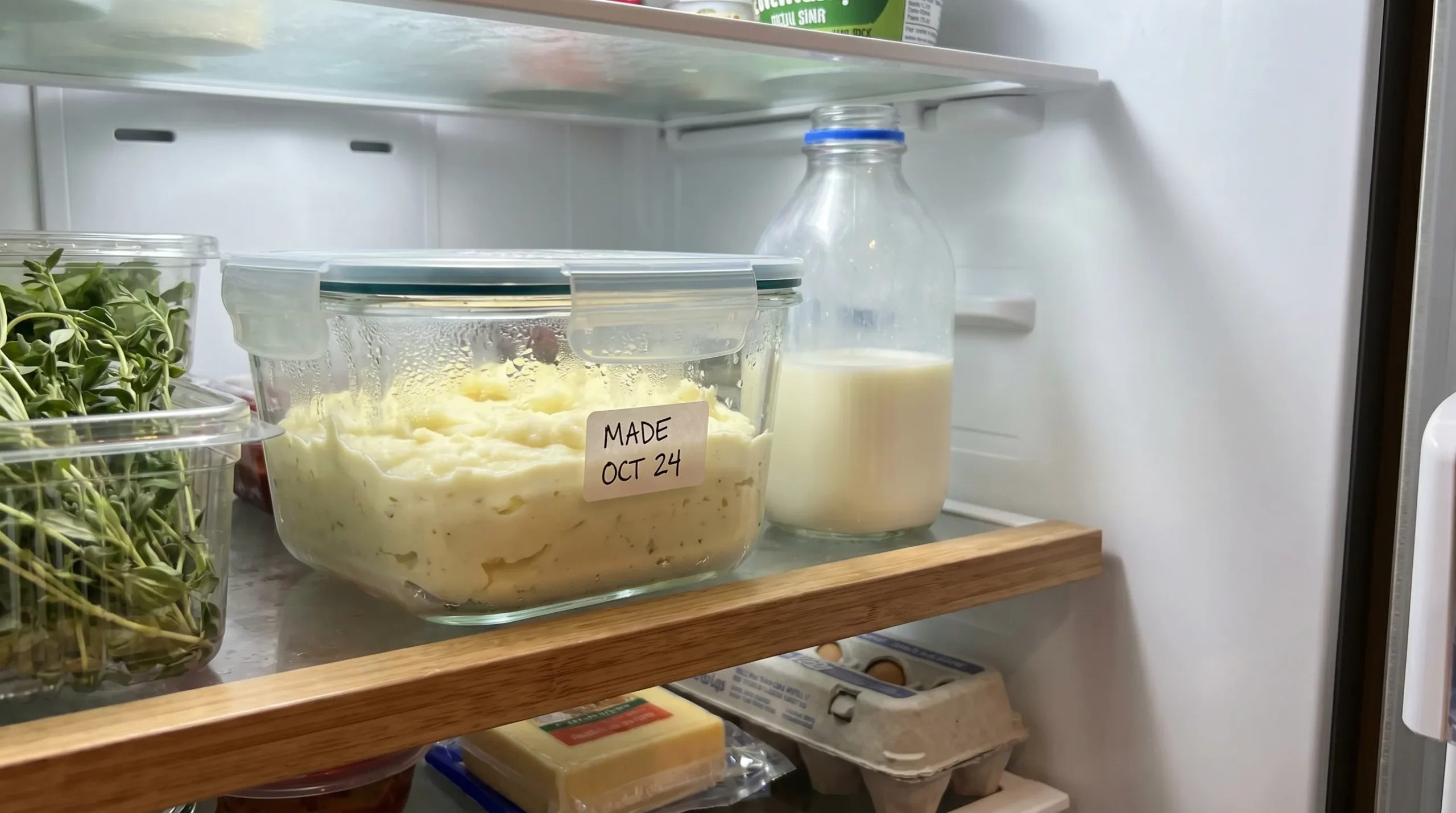
How long does mashed potato keep in the fridge is one of those simple questions that matters more than it seems. The practical answer is that mashed potatoes are usually best used within 3 to 4 days when refrigerated promptly and kept cold at 40°F (4°C) or below. That said, the real shelf life depends on how quickly you chilled them, what you mixed into them, and whether they have been reheated or left out too long. USDA guidance for cooked leftovers broadly uses a 3 to 4 day refrigerator window, and FDA guidance emphasizes the 2-hour rule and the 40°F to 140°F “danger zone” for perishable foods.
If you just want the safest rule of thumb, use this: cool leftover mashed potatoes quickly, store them in a shallow airtight container, refrigerate within 2 hours, and eat them within 3 to 4 days. If they smell sour, look slimy, show mold, or have been sitting out too long, do not try to “save” them by reheating.
How Long Do Mashed Potatoes Last in the Fridge?
For most home cooks, the best answer is 3 to 4 days. That matches USDA leftover guidance, which says cooked leftovers can be kept in the refrigerator for 3 to 4 days or frozen for 3 to 4 months. This is the safest standard to use for leftover mashed potatoes, whether they were made fresh for dinner, meal prepped ahead, or served at a holiday meal.
You may see other pages say 2 to 3 days or 3 to 5 days, and that is part of why this keyword causes confusion. In practice, those ranges often reflect differences in ingredients and handling. Mashed potatoes made with milk, butter, cream, cream cheese, sour cream, cheese, or gravy are still treated as perishable leftovers, so the safest SEO-worthy answer is not “it depends forever,” but “plan on 3 to 4 days, and sooner if handling was sloppy or the potatoes were left warm too long.” USDA and FDA guidance supports using that conservative window.
So if someone asks, “how long are mashed potatoes good for?” the clean answer is: about 3 to 4 days in the fridge, assuming they were cooled and stored properly. That makes the article useful for both quick-answer readers and people comparing conflicting storage advice across food blogs.
What Affects Mashed Potatoes Shelf Life?
Not all mashed potatoes keep equally well. The first big factor is temperature control. FDA says perishable foods should be refrigerated within 2 hours, or within 1 hour if the temperature is above 90°F. USDA also stresses refrigerating leftovers within 2 hours and keeping them at 40°F or below. If your potatoes sat on the counter for too long after dinner, their safe shelf life is already compromised.
The second factor is what is in them. Plain mashed potatoes are still a cooked leftover, but versions made with milk or cream, butter, sour cream, cream cheese, garlic, cheese, gravy, or meat drippings can lose quality faster and may become riskier if mishandled. The official 3-to-4-day leftover rule still applies, but richer mashed potatoes often show spoilage sooner in texture and smell. This matters for searches like “how long do mashed potatoes with dairy last in the fridge” and “how long do mashed potatoes last with gravy.” The safest recommendation remains the same: treat them as perishable leftovers and use them within 3 to 4 days.
The third factor is container shape and cooling speed. USDA advises using shallow containers for quick cooling, because food sitting warm for too long spends more time in the temperature range where bacteria multiply rapidly. FSIS notes that bacteria grow fastest between 40°F and 140°F and can double in as little as 20 minutes under favorable conditions. That is why a deep tub of hot mashed potatoes is a worse storage choice than a shallow airtight container.
How to Store Mashed Potatoes in the Fridge the Right Way
The best way to store mashed potatoes is simple but important. First, do not leave them out all evening. Once the meal is over, portion the leftovers into a shallow airtight container so they cool faster. Then move them into the refrigerator while they are still within the safe time window. USDA and FDA both emphasize prompt chilling and maintaining a refrigerator temperature of 40°F or below.
A good practical system is this: spread thick leftovers into a shallower layer, seal them well, and label the date. That makes it easier to track whether you are still within the 3-to-4-day leftover window. If you meal prep or make make-ahead mashed potatoes for a holiday, the dating step matters even more because it is easy to lose track after Thanksgiving or Christmas. USDA’s holiday food-safety reminders also stress refrigerating leftovers within 2 hours of serving.
If you are wondering about the best place to store mashed potatoes in the fridge, the answer is the coldest stable part of the refrigerator, not the warm door shelves. FDA recommends using an appliance thermometer to make sure the fridge stays consistently at 40°F or below. That small step can make a real difference for leftovers, especially dairy-heavy ones.
How Long Can Mashed Potatoes Sit Out Before Refrigeration?
This is one of the most important sections because many articles gloss over it. According to FDA and USDA guidance, perishable food should not be left at room temperature for more than 2 hours, and if the room or outdoor temperature is above 90°F (32°C), the safe limit drops to 1 hour. That applies to mashed potatoes, especially when they contain milk, cream, butter, sour cream, or cheese.
The reason is the bacteria danger zone, the range between 40°F and 140°F (4°C to 60°C) where bacteria can grow rapidly. USDA says leftovers need to be placed in shallow containers and refrigerated within 2 hours specifically to reduce that risk. So if mashed potatoes have been sitting out through a long dinner, buffet, or party, the question is not just “how long do mashed potatoes last in the fridge” but “were they safe to refrigerate in the first place?”
That is also why reheating does not magically undo bad handling. If the potatoes were left out too long, do not rely on a later microwave session to make them safe again. The best move is to discard them.
How to Tell if Mashed Potatoes Have Gone Bad
Spoiled mashed potatoes usually give more than one warning sign. The most obvious are mold, a sour or unpleasant smell, a slimy texture, or major discoloration that goes beyond a little surface drying. If you see any of those, do not taste them. Food-safety guidance consistently puts time and temperature first, but obvious spoilage signals are a clear reason to throw leftovers away.
There is an important nuance here: not every quality change means spoilage. Refrigerated mashed potatoes can become thicker, drier, or slightly dull in color, especially if they were low in fat or not tightly covered. That is not the same thing as dangerous spoilage. But once you combine age beyond 3 to 4 days with off smells, watery separation, slime, or mold, the answer becomes easy: discard them. USDA’s 3-to-4-day rule is especially helpful because it prevents people from guessing based only on smell.
So for readers asking “is smell enough to tell if mashed potatoes are bad?” the best answer is no. Smell helps, but time, storage history, and visible changes matter too. A batch that smells okay after 7 days is still not something you should trust.
Can You Eat Mashed Potatoes After 5 Days? What About 7 Days?
This is the real-world decision point many readers care about. If mashed potatoes have been in the fridge for 5 days, they are already beyond the USDA’s usual 3-to-4-day window for leftovers. At that point, the cautious answer is do not eat them, especially if they contain dairy or were reheated once already.
At 7 days, the answer becomes even clearer: they are too old to be considered a good food-safety bet. This is exactly the kind of question that shows up in community threads, because people hate wasting food and wonder whether they can just reheat leftovers thoroughly. But the official food-safety framework does not support stretching cooked leftovers for a week in the fridge. If the goal is both good SEO and trustworthy advice, “don’t risk week-old mashed potatoes” is the right conclusion.
A helpful way to phrase it in plain language is this: 3 to 4 days is the safe zone, 5 days is pushing it, and 7 days is a no. That is memorable, useful, and aligned with the strongest authority sources.
How to Reheat Mashed Potatoes Without Drying Them Out
Once your leftovers are still within the safe window, reheating matters for both safety and texture. USDA guidance for leftovers says they should be reheated thoroughly, and food-safety advice commonly uses 165°F as the target internal temperature for reheated leftovers. For mashed potatoes, the texture side matters too: they often need a splash of milk, cream, or butter while reheating to stay smooth and creamy instead of turning stiff or gummy.
The microwave works well for small portions. Reheat in short bursts, stir between rounds, and add a little liquid if the potatoes look dry. The stovetop is often the best method for larger amounts because you can reheat slowly over medium-low heat and control the texture better. If you are serving a crowd, the oven can work too; many make-ahead recipes use a moderate oven, often around 350°F, to warm the dish through gently. That temperature is about quality and serving convenience, not a substitute for safe leftover handling.
One thing readers ask often is whether reheating fixes old leftovers. It does not. Reheating properly helps when the food was stored safely; it does not reverse unsafe time spent in the danger zone. So the right order is: store safely first, then reheat well later.
Can You Freeze Mashed Potatoes?
Yes, you can freeze mashed potatoes, and freezing is often smarter than trying to stretch them in the fridge. USDA says cooked leftovers can be frozen for 3 to 4 months for best quality. Food held frozen remains safe, though quality can gradually decline through moisture loss and texture changes. That makes freezing a good option if you know you will not finish the leftovers within 3 to 4 days.
For best results, freeze the potatoes in a sealed freezer-safe container or tightly wrapped freezer bag, ideally in portions you can thaw one at a time. Then thaw them in the refrigerator overnight, not on the counter. FDA notes that refrigerator thawing is a safe method because cold temperatures slow bacterial growth, while room-temperature thawing leaves food in the danger zone.
When reheated after freezing, mashed potatoes may need extra stirring and a little added milk, cream, or butter to bring back their texture. Richer mashed potatoes often freeze better than very lean ones because fat helps protect the texture. USDA’s quality guidance also notes that frozen foods can dry out over time even if they remain safe.
How Long Do Mashed Potatoes Last With Dairy, Gravy, or Add-Ins?
Readers often ask whether mashed potatoes with cream cheese, sour cream, garlic, cheese, gravy, or butter last longer or shorter than plain ones. The safest answer is that they should still be treated as perishable cooked leftovers and kept within the same 3-to-4-day refrigerator window. Added dairy and moisture-rich mix-ins can make the potatoes lose quality faster, and they do not earn you extra storage time.
This matters for holiday food too. Thanksgiving mashed potatoes, loaded mashed potatoes, and gravy-topped leftovers may feel sturdy because they are dense and filling, but they are still perishable foods. USDA’s holiday reminders stress rapid chilling and timely refrigeration for leftovers served at family gatherings.
If your potatoes contain lots of extras and you are not sure you will eat them soon, freeze them early rather than gamble on a long fridge hold. That is the most practical answer for meal prep and post-holiday storage.
Best Leftover Ideas for Mashed Potatoes
Once you know your mashed potatoes are still within the safe window, leftovers can be genuinely useful. This is where searches like leftover mashed potato recipes, potato cakes, potato pancakes, gnocchi, shepherd’s pie, and potato soup come in. Repurposing leftovers is not just a budget move; it also helps you use them before they age out in the refrigerator. That is especially handy after holidays, when the fridge is full and dates blur together. USDA’s leftover timeline makes this even more relevant: you have only 3 to 4 days to use refrigerated leftovers at their best.
A simple way to use them is to turn them into crispy potato cakes the next day, fold them into a shepherd’s pie topping, or thin them into a soup base. The exact recipe matters less than the timing. Safe leftovers are flexible; old leftovers are not. In other words, the best leftover strategy is not just recipe creativity, but using the potatoes early enough that safety is still on your side.
Mashed Potatoes Storage Chart
Here is the quick-reference version most readers want:
| Situation | Best Rule to Follow |
| Left at room temperature | No more than 2 hours; 1 hour if above 90°F (32°C) |
| Fridge temperature | Keep at 40°F (4°C) or below |
| Fridge shelf life | Use within 3 to 4 days |
| Freezer shelf life | Best quality within 3 to 4 months |
| Thawing | Overnight in the fridge is safest |
| Reheating leftovers | Reheat thoroughly to 165°F |
| Best container | Shallow airtight container for quick cooling |
This chart is pulled from the same USDA and FDA principles used throughout the article, so it gives readers one clean answer without forcing them to read every section first.
FAQ: Quick Answers About Mashed Potato Storage
Can mashed potatoes be meal prepped?
Yes, but they should still be handled like any other cooked leftover: cool promptly, refrigerate within 2 hours, and use within 3 to 4 days.
How long do instant mashed potatoes last in the fridge once prepared?
Once prepared with water, milk, butter, or similar ingredients, they should be treated like other cooked mashed potatoes and kept within the 3-to-4-day leftover window.
Can you reheat mashed potatoes twice?
Food safety gets less forgiving each time leftovers are cooled and reheated. The safer approach is to reheat only the amount you plan to eat right away, rather than repeatedly warming the whole batch. USDA’s time-and-temperature rules still apply.
How long do mashed sweet potatoes last in the fridge?
As a cooked leftover, the same 3-to-4-day refrigerator rule is the safest rule of thumb.
Is smell alone enough to tell if mashed potatoes are bad?
No. Time in storage, whether they were left out, visible spoilage, and smell all matter. Something can be unsafe even before it smells obviously wrong.
Final Takeaway
The safest answer to how long does mashed potato keep in the fridge is this: store it within 2 hours, keep it at 40°F or below, and use it within 3 to 4 days. That covers homemade mashed potatoes, make-ahead mashed potatoes, dairy-rich holiday leftovers, and most other common versions. If the potatoes were left out too long, look slimy, smell sour, or have passed the safe window, do not push your luck.