

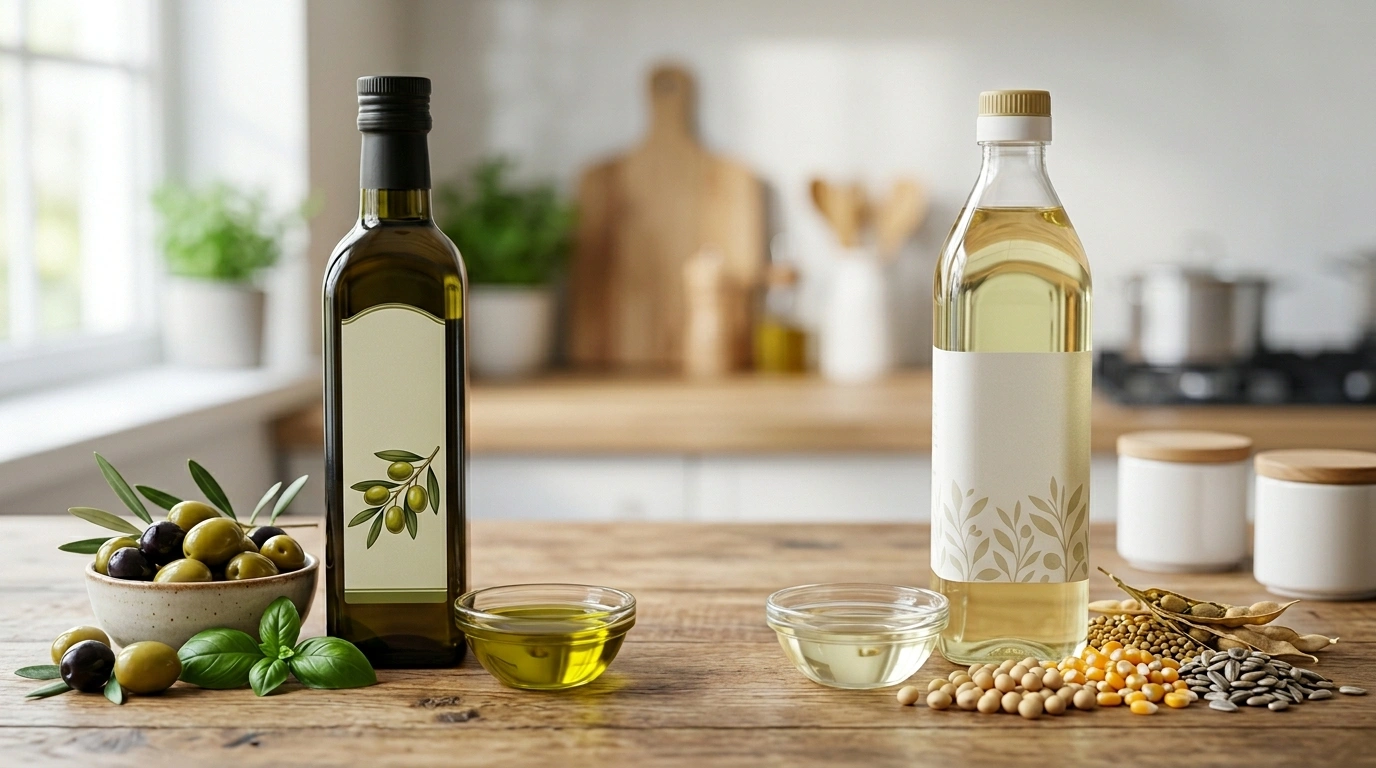
Is olive oil the same as vegetable oil? No, olive oil is not the same as vegetable oil in everyday cooking, even though both are plant-based cooking oils. Olive oil comes from the olive fruit, while vegetable oil usually refers to a refined, neutral-tasting oil or blend made from plant sources such as soybean oil, canola oil, corn oil, sunflower oil, cottonseed oil, or safflower oil.
The confusion happens because olive oil technically comes from a plant, so some people wonder if it counts as a vegetable oil. In grocery stores and recipes, however, olive oil and vegetable oil are treated as different ingredients because they differ in source, processing, flavor, nutrition, smoke point, cost, and best cooking uses.
This guide explains the real difference between olive oil and vegetable oil, when you can substitute one for the other, which one is better for baking or frying, and which oil makes more sense for everyday cooking.
Olive Oil vs Vegetable Oil: Quick Comparison
Here is the simplest way to understand olive oil vs vegetable oil:
| Feature | Olive Oil | Vegetable Oil |
| Source | Made from olives, the fruit of the olive tree | Usually made from seeds or plant blends like soybean, corn, canola, sunflower, cottonseed, or safflower |
| Processing | Extra virgin olive oil is less refined and mechanically extracted | Usually highly refined for neutral taste and longer shelf stability |
| Flavor | Fruity, grassy, peppery, mild, or robust | Neutral, light, and mostly flavorless |
| Nutrition | Rich in monounsaturated fats, oleic acid, antioxidants, and polyphenols | Often higher in polyunsaturated fats, depending on the oil blend |
| Best Uses | Salad dressings, marinades, sautéing, roasting, Mediterranean dishes | Baking, deep frying, boxed cake mixes, neutral recipes |
| Substitution | Can often replace vegetable oil, but flavor matters | Can replace olive oil when flavor is not important |
The biggest difference is that olive oil has character, while vegetable oil is designed to stay in the background. Olive oil can add flavor and nutrition, especially when you use extra virgin olive oil. Vegetable oil is often chosen because it is neutral, affordable, and practical for recipes where you do not want the oil to change the taste.
Is Olive Oil Technically a Vegetable Oil?
Technically, olive oil is a plant-based fat, so it can fit under the broad idea of vegetable oils. But in normal cooking language, vegetable oil usually means something more specific: a refined, neutral oil made from seeds or plant sources.
This is why the answer is a little nuanced. Olive oil is vegetable-derived, but it is not the same as the product labeled “vegetable oil” on most grocery shelves. Olive oil is made from olive fruit, while most vegetable oils are made from seeds or blended plant oils.
So, when a recipe says “vegetable oil,” it usually means a neutral oil that will not affect the flavor. When a recipe says “olive oil,” it usually expects the richer taste and aroma of olive oil.
A useful way to remember it is this:
Olive oil is a plant oil, but vegetable oil is usually a refined neutral oil blend.
That difference matters when you are baking a cake, frying food, making a salad dressing, or choosing the healthiest oil for cooking.
What Is Olive Oil?
Olive oil is oil extracted from olives, which are the fruit of the olive tree. Unlike many seed oils, olive oil comes from fruit and is often produced through pressing, centrifugation, or mechanical extraction. The highest-quality type, extra virgin olive oil, is made without heavy refining, high heat, or chemical solvents.
This matters because less processing helps extra virgin olive oil keep more of its natural flavor, antioxidants, polyphenols, vitamin E, and bioactive compounds. These compounds are one reason olive oil is often connected with heart health and the Mediterranean diet.
There are several types of olive oil:
| Type of Olive Oil | What It Means |
| Extra virgin olive oil | Least refined, boldest flavor, highest natural antioxidant content |
| Virgin olive oil | Also mechanically extracted but may have a milder quality profile |
| Regular olive oil | Often a blend of refined olive oil and virgin olive oil |
| Light-tasting olive oil | Lighter in flavor, not lower in calories |
| Refined olive oil | More neutral and better for recipes where strong flavor is not wanted |
The main thing to know is that olive oil is not just a plain cooking fat. It can be a flavor enhancer, a finishing oil, and a cooking oil depending on the type you use.
What Is Vegetable Oil?
Vegetable oil is a broad term for oil made from plant sources. In many grocery stores, the bottle labeled “vegetable oil” is usually made from soybean oil, or it may be a blend of oils such as corn oil, canola oil, cottonseed oil, sunflower oil, or safflower oil.
Most vegetable oil is refined to create a clean, neutral, and consistent product. Refining can remove strong flavors, odors, impurities, and color. That is why vegetable oil usually has a neutral flavor, light color, and high versatility.
This neutral quality makes vegetable oil useful in many recipes. It works well in cakes, muffins, brownies, boxed cake mixes, deep frying, and recipes where you do not want the oil to stand out.
However, vegetable oil is not one single oil. Its nutrition and cooking performance depend on what plants were used and how much refining took place. Some vegetable oils are higher in polyunsaturated fats, while others contain more monounsaturated fats. This is why it is helpful to read the label instead of assuming every vegetable oil is identical.
Main Differences Between Olive Oil and Vegetable Oil
The main differences between olive oil and vegetable oil come down to source, processing, flavor, nutrition, and cooking use.
First, the source is different. Olive oil comes from olives, while vegetable oil usually comes from seeds or plant blends. Olive oil is a fruit oil. Many vegetable oils are seed oils.
Second, the processing methods are different. Extra virgin olive oil is mechanically extracted and less refined. Vegetable oil is usually refined to make it neutral, stable, and inexpensive for everyday use.
Third, the flavor profile is very different. Olive oil can taste fruity, grassy, peppery, mild, or robust. Vegetable oil is usually neutral, flavorless, and odorless. That makes vegetable oil helpful in delicate baked goods, while olive oil is better when flavor matters.
Fourth, the fatty acid composition differs. Olive oil is known for monounsaturated fat, especially oleic acid, also called an omega-9 fatty acid. Vegetable oils often contain more polyunsaturated fatty acids, including omega-6 fats, depending on the blend.
Finally, they behave differently in recipes. Olive oil adds taste and aroma. Vegetable oil adds moisture and fat without changing the flavor much.
So, while both are cooking oils, they are not identical ingredients.
Which Is Healthier, Olive Oil or Vegetable Oil?
Many people ask, which is healthier olive oil or vegetable oil? In general, olive oil, especially extra virgin olive oil, is often considered the healthier choice because it contains more monounsaturated fats, polyphenols, antioxidants, and naturally occurring plant compounds.
Extra virgin olive oil is strongly associated with the Mediterranean diet, which is often discussed for heart health. Its main fat, oleic acid, is a monounsaturated fatty acid. Olive oil also contains antioxidant compounds that help protect the oil from oxidation and support its overall nutrition profile.
Vegetable oil is not automatically “bad,” but it is more complicated. Since vegetable oil can come from soybean, corn, canola, sunflower, cottonseed, or safflower, the health profile depends on the exact oil. Many refined vegetable oils are lower in flavor and natural antioxidants because they go through more processing.
A balanced way to look at it is this:
Olive oil is usually better when you want flavor, antioxidants, and monounsaturated fats. Vegetable oil is useful when you need a neutral, affordable cooking oil.
It is also important to remember that both oils are fats. Neither one should be poured freely without portion control. The healthier choice depends not only on the oil, but also on how often you use it, how much you use, and what foods you cook with it.
Calories in Olive Oil vs Vegetable Oil
A common myth is that olive oil is much lower in calories than vegetable oil. It is not. Both olive oil and vegetable oil are calorie-dense because both are pure fats.
The real difference is not usually calories. The bigger difference is fat type, processing level, flavor, antioxidants, and cooking purpose. Olive oil may provide more beneficial compounds, but it still contains calories like any other oil.
So, if your goal is weight management, switching from vegetable oil to olive oil does not automatically reduce calories. You still need to watch the amount you use. A small drizzle of extra virgin olive oil can add flavor to salads, vegetables, pasta, and grilled foods, but large amounts can quickly increase total calories.
The best approach is to use oil intentionally. Choose olive oil when the flavor and nutrition matter. Choose vegetable oil when you need a neutral oil for a specific recipe.
Smoke Point, Frying, and High-Heat Cooking
The smoke point is the temperature where oil begins to smoke and break down. Many people compare olive oil smoke point and vegetable oil smoke point because they want to know which one is better for frying or high-heat cooking.
Vegetable oil often has a high smoke point and a neutral flavor, which makes it popular for deep frying and large-batch cooking. It is also usually cheaper, so many home cooks and restaurants use it when they need a lot of oil.
Olive oil can also handle many cooking methods. It works well for sautéing, roasting, pan frying, and low to medium-heat cooking. Extra virgin olive oil has more flavor, while refined or light-tasting olive oil can be more neutral and better suited when you do not want a strong taste.
However, smoke point is not the only thing that matters. Oxidative stability and oil quality also matter. Oils with antioxidants and stable fats may perform better than people expect, even if their smoke point is not the highest.
For most home cooking, olive oil is fine for everyday heat. For deep frying, vegetable oil may be more practical because it is neutral and cost-effective.
Olive Oil vs Vegetable Oil for Baking
When comparing olive oil vs vegetable oil for baking, the main issue is flavor.
Vegetable oil is popular in baking because it is light, neutral, and flavorless. It adds moisture to cakes, muffins, brownies, and quick breads without changing the taste. If a recipe calls for vegetable oil, it often expects that neutral quality.
Olive oil can also work beautifully in baked goods, but you need to choose the right recipe. It pairs especially well with chocolate, citrus flavors, carrot cake, olive oil cake, savory breads, and brownies. In these recipes, olive oil can add richness and depth.
But extra virgin olive oil may taste too strong in delicate desserts such as vanilla cake, white cake, or light pastries. If you want to use olive oil in baking without a strong taste, choose a mild olive oil or light-tasting olive oil.
Here is a simple baking guide:
| Recipe | Best Choice |
| Vanilla cake | Vegetable oil or mild olive oil |
| Chocolate cake | Olive oil or vegetable oil |
| Brownies | Olive oil works well |
| Carrot cake | Olive oil or vegetable oil |
| Olive oil cake | Extra virgin olive oil |
| Boxed cake mix | Vegetable oil or mild olive oil |
So yes, you can bake with olive oil, but flavor matters.
Can You Substitute Olive Oil for Vegetable Oil?
Yes, you can often substitute olive oil for vegetable oil in a 1:1 ratio. That means if a recipe calls for one cup of vegetable oil, you can usually use one cup of olive oil.
However, the better question is not just “Can I use olive oil instead of vegetable oil?” It is “Will olive oil taste good in this recipe?”
Olive oil works well as a vegetable oil substitute in many dishes, especially:
| Use | Does Olive Oil Work? |
| Roasted vegetables | Yes |
| Sautéed vegetables | Yes |
| Salad dressings | Yes |
| Marinades | Yes |
| Brownies | Yes |
| Chocolate cake | Usually yes |
| Savory breads | Yes |
| Vanilla cake | Maybe, if mild olive oil is used |
| Deep frying | Possible, but not always practical |
You may not want to use strong extra virgin olive oil in recipes that need a completely neutral flavor. For example, a delicate white cake might taste slightly fruity or peppery if you use a bold olive oil.
On the other hand, olive oil can improve recipes where flavor matters. It can make dressings, marinades, roasted vegetables, and Mediterranean dishes taste richer and more aromatic.
Can You Use Vegetable Oil Instead of Olive Oil?
Yes, you can use vegetable oil instead of olive oil in some recipes, but the result may be less flavorful.
Vegetable oil is useful when you simply need fat, moisture, or a neutral cooking base. It can work in baked goods, frying, and some sautéed dishes. But if a recipe depends on olive oil for flavor, vegetable oil may make the dish taste flat.
For example, vegetable oil is not the best choice for a classic vinaigrette, salad dressing, marinade, or Mediterranean-style dish where olive oil adds aroma and richness. It will still provide fat, but it will not provide the same flavor profile.
Use vegetable oil instead of olive oil when:
- The recipe needs a neutral oil
- You are baking and do not want added flavor
- You are deep frying and need a budget-friendly option
- Olive oil flavor would be distracting
Use olive oil when:
- The oil is part of the flavor
- You are making salad dressing or marinades
- You want more aroma and richness
- You are cooking Mediterranean-style dishes
Extra Virgin Olive Oil, Seed Oils, and Calories
Extra virgin olive oil vs vegetable oil is an important comparison because extra virgin olive oil is the least refined common olive oil. It keeps more natural flavor, polyphenols, antioxidants, and plant compounds than refined oils.
Another common question is: Is olive oil a seed oil? No. Olive oil is not a seed oil because it comes from the olive fruit, not seeds. Many vegetable oils, however, are seed oils. Examples include sunflower seed oil, cottonseed oil, soybean oil, safflower oil, and canola oil.
This matters because many users are now searching for seed oils vs olive oil. The key difference is not only the source, but also the processing and fat composition. Olive oil is naturally rich in monounsaturated fats, while some seed oils are higher in polyunsaturated fats, including omega-6 fats.
Calories are another point of confusion. Olive oil calories and vegetable oil calories are similar, because both are fats. The health difference is more about oil quality, fatty acid composition, antioxidants, and how the oil is used.
So, extra virgin olive oil is not magic, but it is a strong choice when you want a less refined oil with flavor and beneficial compounds.
Best Uses for Olive Oil and Vegetable Oil
The best oil depends on the recipe. There is no single winner for every cooking method.
| Cooking Need | Better Choice | Why |
| Salad dressing | Olive oil | Better flavor and aroma |
| Marinades | Olive oil | Adds richness and depth |
| Sautéing vegetables | Olive oil | Works well with moderate heat |
| Roasting vegetables | Olive oil or vegetable oil | Both can work |
| Deep frying | Vegetable oil | Neutral and usually cheaper |
| Pan frying | Refined olive oil or vegetable oil | Depends on flavor and cost |
| Brownies | Olive oil or vegetable oil | Olive oil pairs well with chocolate |
| Vanilla cake | Vegetable oil | Neutral flavor is safer |
| Mediterranean recipes | Olive oil | Better flavor match |
| Everyday cooking | Both | Choose based on taste, cost, and health goals |
If you want the best everyday cooking oil, many kitchens benefit from keeping both. Use extra virgin olive oil for dressings, finishing, vegetables, marinades, and flavorful cooking. Use vegetable oil for neutral baking, deep frying, and recipes where oil should not be noticed.
This practical approach is better than treating one oil as always good and the other as always bad.
Cost, Storage, and Common Mistakes
Vegetable oil is usually more cost-effective than olive oil, especially for deep frying or large recipes. Olive oil often costs more because of its source, production process, quality grade, and flavor. That does not mean vegetable oil is always better. It simply means cost matters when choosing the right oil.
Storage also matters. Both oils should be kept away from heat, light, and air. Olive oil is especially sensitive to light and oxygen, so it is best stored in a cool pantry in a dark bottle or sealed container. If oil smells stale, waxy, or unpleasant, it may be rancid.
Common mistakes include using strong extra virgin olive oil in delicate cakes, using neutral vegetable oil in dishes where olive oil flavor is important, assuming olive oil is low-calorie, and using expensive extra virgin olive oil for deep frying when a cheaper neutral oil would make more sense.
Another mistake is thinking all vegetable oils are the same. A bottle labeled vegetable oil may be mostly soybean oil, while another may be a blend. Always check the label if nutrition or source matters to you.
FAQs About Olive Oil and Vegetable Oil
Is olive oil the same as vegetable oil?
No. Olive oil is not the same as vegetable oil in normal cooking terms. Olive oil comes from olives, while vegetable oil is usually a refined neutral oil made from plant sources like soybean, corn, canola, sunflower, cottonseed, or safflower.
Can I use olive oil instead of vegetable oil?
Yes, you can often use olive oil instead of vegetable oil in a 1:1 ratio. It works best in savory recipes, roasted vegetables, marinades, dressings, brownies, and chocolate cakes. Use mild olive oil for recipes where you do not want a strong flavor.
Can I use vegetable oil instead of olive oil?
Yes, but it depends on the recipe. Vegetable oil can replace olive oil when neutral flavor is fine. It is not ideal when olive oil is needed for flavor, such as in vinaigrettes, Mediterranean dishes, or finishing oils.
Is olive oil healthier than vegetable oil?
In many cases, yes. Extra virgin olive oil is often considered healthier because it contains monounsaturated fats, oleic acid, polyphenols, antioxidants, and bioactive compounds. However, vegetable oil quality varies depending on the type and processing.
Is olive oil a seed oil?
No. Olive oil is made from the olive fruit, not seeds. Many vegetable oils are seed oils, including sunflower, cottonseed, soybean, canola, and safflower oils.
Which oil is better for baking?
Vegetable oil is usually better for neutral baked goods because it does not affect flavor. Olive oil can work well in brownies, chocolate cake, carrot cake, citrus cakes, and olive oil cake.
Which oil is better for frying?
Vegetable oil is often more practical for deep frying because it is neutral and budget-friendly. Olive oil can work for sautéing, roasting, shallow frying, and pan frying, especially if you choose the right type.
Does olive oil taste different from vegetable oil?
Yes. Olive oil can taste fruity, grassy, peppery, mild, or robust. Vegetable oil is usually neutral, flavorless, and light, which is why it is often used in baking and frying.
Conclusion: Olive Oil and Vegetable Oil Are Similar, But Not the Same
So, is olive oil the same as vegetable oil? No. Both are plant-based cooking oils, but they are different in source, processing, flavor, nutrition, and best uses. Olive oil comes from olive fruit and often contains more monounsaturated fats, antioxidants, and polyphenols, especially when it is extra virgin. Vegetable oil is usually a refined, neutral oil made from plant sources such as soybean, corn, canola, sunflower, cottonseed, or safflower.
Use olive oil when you want flavor, heart-health-focused fats, salad dressings, marinades, sautéing, roasting, and Mediterranean-style cooking. Use vegetable oil when you need a neutral, budget-friendly oil for baking, deep frying, or recipes where the oil should not stand out.