

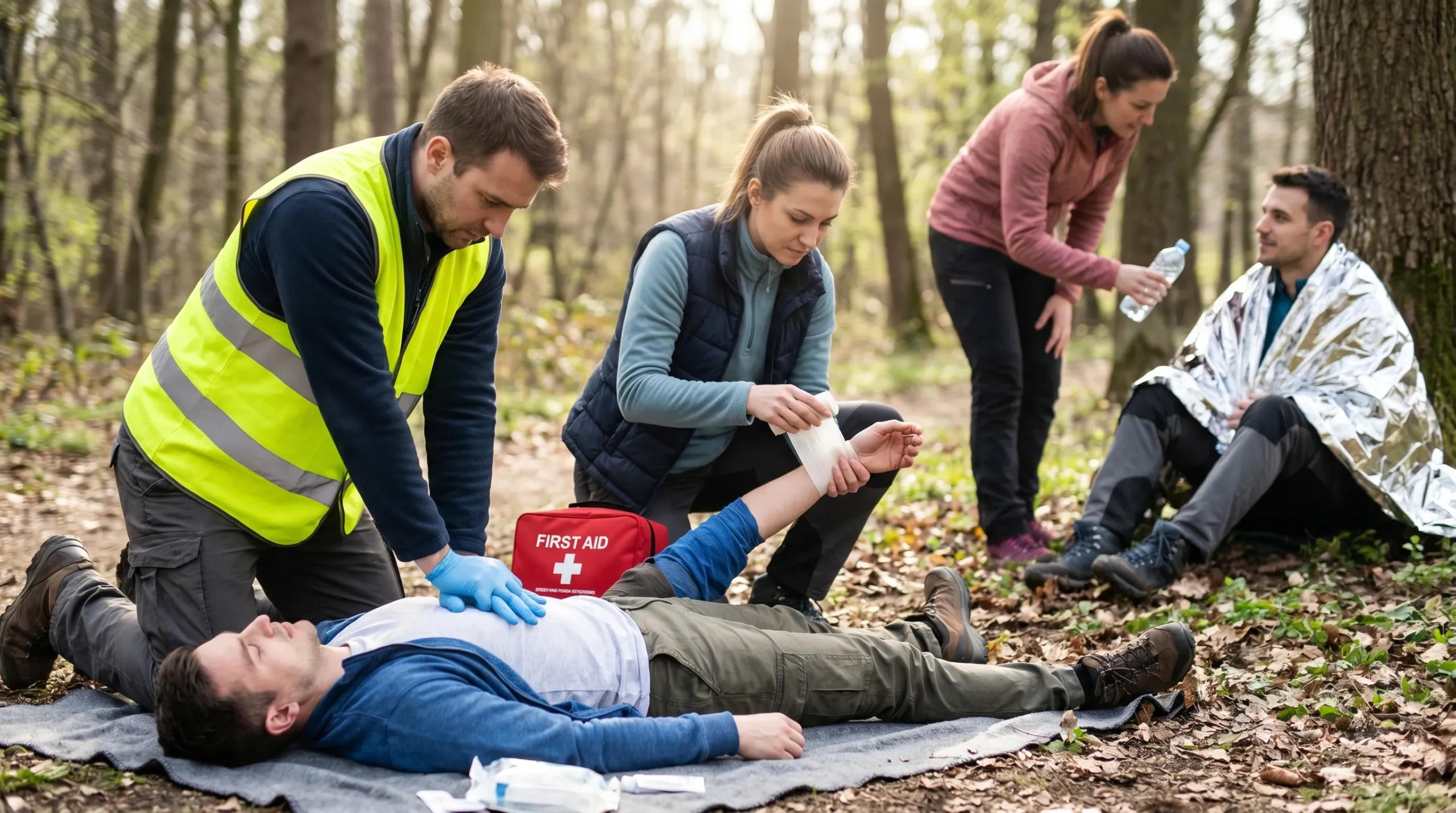
What are the three aims of first aid? The three aims of first aid are to Preserve Life, Prevent Deterioration, and Promote Recovery. These are often called the 3 Ps of first aid, and they explain the main purpose of giving immediate emergency care to an injured or ill person before professional medical help arrives.
First aid is not about replacing doctors, nurses, paramedics, or emergency medical services. It is about doing the right basic actions at the right time. A first aider may need to check whether the scene is safe, call emergency services, help a casualty breathe, control severe bleeding, place an unconscious but breathing person in the recovery position, or simply keep someone calm until help arrives. The main goal is always to protect life, stop the situation from getting worse, and support the person’s recovery as safely as possible.
Important note: This article is for general education only. In a real emergency, call your local emergency number and follow instructions from trained emergency responders.
Quick Answer: The Three Aims of First Aid in One Table
The three aims of first aid are simple to remember because they follow the 3 Ps: Preserve Life, Prevent Deterioration, and Promote Recovery.
| Aim of First Aid | What It Means | Example |
| Preserve Life | Keep the person alive and protect vital functions | Call emergency services, check breathing, start CPR if trained, use an AED if available |
| Prevent Deterioration | Stop the injury or illness from getting worse | Control bleeding, protect from hazards, manage shock, keep the casualty still |
| Promote Recovery | Help the person begin to recover safely | Reassure them, dress wounds, monitor vital signs, keep them comfortable |
A good first aid response begins with safety. The American Red Cross teaches first aiders to check the scene for safety, form an initial impression, get consent when possible, and use personal protective equipment before giving care. It also advises checking an unresponsive person for breathing, life-threatening bleeding, and other serious conditions.
Why Are the Three Aims of First Aid Important?
The importance of first aid becomes clear when you imagine how quickly an emergency can change. A person who is not breathing needs help immediately. Someone with heavy bleeding can lose a dangerous amount of blood within minutes. A casualty in shock, a person having a seizure, or someone with a serious burn may become worse without quick and calm action.
The primary goals of first aid help a first aider stay focused. Instead of panicking, the first aider asks: “How can I help preserve life? How can I prevent the condition from worsening? How can I promote recovery until professional medical help arrives?”
These aims also protect the first aider from doing too much. First aid is about safe, basic, immediate help. It includes actions such as calling the local emergency number, providing care within your training, keeping the casualty calm, and monitoring changes. The Red Cross also summarizes emergency action as Check, Call, Care: check the scene and person, call the local emergency number, and provide care.
Aim 1 — Preserve Life
Preserve Life is the first and most urgent aim of first aid. It means doing whatever is safely possible to keep the casualty alive until emergency responders or medical professionals take over. This may involve checking the airway, checking breathing, supporting circulation, calling emergency services, starting CPR, or using an Automated External Defibrillator.
For example, if a person collapses and is not breathing normally, the focus is no longer on minor wounds or comfort. The priority is survival. A trained first aider may begin cardiopulmonary resuscitation, use an AED if available, and continue until emergency services arrive or the person shows signs of life.
For trained responders, the American Heart Association describes conventional CPR as cycles of 30 chest compressions and 2 rescue breaths, with compressions at a rate of 100 to 120 per minute for adult cardiac arrest. The American Red Cross also recommends chest compressions at 100 to 120 per minute, with proper hand position, locked elbows, and enough depth for effective compressions.
Preserving life can also mean clearing danger from the area, helping someone who is choking, supporting breathing, or calling for an ambulance quickly. The key point is that Preserve Life comes first because every other aim depends on the casualty staying alive.
Aim 2 — Prevent Deterioration
The second aim is Prevent Deterioration, which means stopping the casualty’s injury or illness from getting worse. Once life-threatening problems are addressed, a first aider should look for risks that could worsen the person’s condition.
This aim includes actions such as applying direct pressure to severe bleeding, keeping a suspected fracture still, preventing infection by covering wounds, keeping the person warm if they show signs of shock, and moving hazards away from the casualty. If someone has a suspected spinal injury, preventing deterioration may mean not moving them unless they are in immediate danger.
For example, if a person has a deep cut and is bleeding heavily, first aid may involve applying firm pressure with a clean dressing. If someone has a burn, preventing deterioration means cooling the burn quickly and avoiding actions that could make tissue damage worse. St John Ambulance advises cooling a burn or scald under cool running water for at least 20 minutes or until the pain improves.
Preventing deterioration also includes careful observation. A first aider should watch for changes in consciousness, breathing, skin color, pain, or confusion. These changes may show that the casualty is getting worse and needs urgent medical help.
Aim 3 — Promote Recovery
The third aim is Promote Recovery. This means helping the casualty feel safer, calmer, and more comfortable while their body begins the healing process. It also means supporting recovery until medical professionals can provide further treatment.
Promoting recovery may sound less urgent than preserving life, but it still matters. A calm casualty may breathe more steadily, follow instructions better, and feel less panic. A first aider can promote recovery by offering reassurance, explaining what is happening, keeping the person warm or cool as needed, dressing minor wounds, and monitoring vital signs.
For example, after controlling a small wound, the first aider may cover it with a sterile dressing or clean bandage. If a person feels faint, the first aider may help them rest safely and monitor them. If someone is unconscious but breathing normally and has no suspected spinal injury, placing them in the recovery position can help keep the airway open while waiting for help. The American Heart Association notes that it may be reasonable to place an unresponsive person who is breathing normally in a lateral side-lying recovery position.
Promoting recovery also includes giving useful information to paramedics, such as what happened, what first aid was given, and whether the casualty’s condition changed.
Real-Life Examples of the Three Aims of First Aid
The three aims of first aid are easiest to understand through real examples. In many emergencies, all three aims work together.
In a cardiac arrest, the first aim is to Preserve Life. The first aider checks responsiveness and breathing, calls emergency services, starts CPR if trained, and uses an AED if available. The second aim, Prevent Deterioration, means continuing CPR and not stopping unnecessarily. The third aim, Promote Recovery, begins when the person shows signs of life or when professionals take over and the first aider shares key details.
In severe bleeding, preserving life means acting quickly because major blood loss can be life-threatening. Preventing deterioration means applying direct pressure, using a dressing, keeping the casualty still, and watching for shock. Promoting recovery means reassuring the person and monitoring them until help arrives.
In a burn emergency, preserving life may mean calling emergency services if the burn is severe or affects breathing. Preventing deterioration means cooling the burn properly. Promoting recovery means covering the burn loosely with a clean dressing and keeping the casualty calm. St John Ambulance advises calling 999 or 112 for severe burns and continuing cooling for at least 20 minutes.
In a choking emergency, preserving life means restoring the airway. In a seizure, preventing deterioration may mean clearing nearby hazards and protecting the person from injury. In anaphylaxis, using an EpiPen if prescribed and calling emergency services can be life-saving.
What Should You Do First in a First Aid Emergency?
In any first aid emergency, the first thing to do is check for danger. A first aider should not rush into an unsafe scene. If there is fire, traffic, electricity, violence, chemicals, or another hazard, the first priority is scene safety.
After checking the area, check the person. Are they responsive? Are they breathing normally? Is there life-threatening bleeding? Do they show signs of a serious medical emergency? The Red Cross recommends checking an unresponsive person for responsiveness, breathing, life-threatening bleeding, and other life-threatening conditions, and says this check should take no more than 10 seconds.
Then call emergency services or ask someone else to call. Use your local emergency number, such as 911, 999, 112, 000, or 1122, depending on your country or region.
A simple way to remember the first steps is:
- Check the scene and casualty.
- Call emergency services.
- Care for the person within your training.
This connects directly to the three aims: check and call to Preserve Life, provide safe care to Prevent Deterioration, and reassure and monitor the person to Promote Recovery.
3 Ps vs ABC vs DRSABCD: What Is the Difference?
Many people confuse the 3 Ps of first aid with ABC, CAB, or DRSABCD. They are related, but they are not the same.
| Framework | Meaning | Purpose |
| 3 Ps | Preserve Life, Prevent Deterioration, Promote Recovery | The aims of first aid |
| ABC | Airway, Breathing, Circulation | A basic way to assess vital functions |
| CAB | Compressions, Airway, Breathing | Often used in CPR-focused response |
| DRSABCD | Danger, Response, Send for help, Airway, Breathing, CPR, Defibrillation | A step-by-step emergency action plan |
The 3 Ps explain why first aid is given. ABC and DRSABCD help explain what to check or do during an emergency. For example, Preserve Life is the aim, while checking the airway, breathing, and circulation is part of the action that supports that aim.
This distinction matters because an article, exam answer, or first aid worksheet may ask specifically for the three aims of first aid, not the steps of CPR or the primary survey. The answer should remain: Preserve Life, Prevent Deterioration, and Promote Recovery.
The Role and Responsibilities of a First Aider
A first aider is someone who gives immediate care to an injured or ill person before professional help arrives. The first aider’s role is not to diagnose like a doctor or perform advanced medical treatment. Their role is to protect safety, provide basic care, call for help, and stay with the casualty when possible.
A responsible first aider should stay calm, check for hazards, ask for consent if the person is conscious, use gloves or other PPE when available, and provide care within their level of training. They may need to control bleeding, help someone into a safe position, monitor breathing, or reassure the person.
First aid also involves legal and ethical responsibilities. In many situations, this means acting reasonably, not causing further harm, respecting the casualty’s dignity, and passing accurate information to emergency responders. If the first aider is in a workplace role, local health and safety rules may also apply.
The best first aiders know their limits. They help, but they do not pretend to be medical professionals.
What First Aiders Should Not Do
Knowing what not to do is just as important as knowing what to do. The aim is always to help without making the situation worse.
A first aider should not move a casualty unnecessarily, especially if there may be a head, neck, or spinal injury, unless there is immediate danger. They should not give food or drink to an unconscious person. They should not remove deeply embedded objects from wounds. They should not delay calling emergency services when the situation is serious. They should not perform procedures they have not been trained to do.
A common first aid mistake is focusing on minor injuries while missing life-threatening signs. For example, a small cut is less urgent than abnormal breathing, chest pain, severe bleeding, or loss of consciousness. Another mistake is assuming someone is “fine” too quickly. A casualty’s condition can change, so monitoring is part of good first aid.
The safest mindset is simple: do no further harm, call for help early, and stay within your training.
When Should You Call Emergency Services?
You should call emergency services whenever the person may have a life-threatening condition or when you are unsure how serious the situation is. It is better to call early than to wait until the casualty becomes worse.
Call emergency services if the person is unconscious, not breathing normally, has chest pain, has severe bleeding, shows signs of stroke, has a serious burn, has a seizure that does not stop quickly, has a severe allergic reaction, has been involved in drowning, has major trauma, or may have a spinal injury.
Local emergency numbers vary by region. Common examples include:
| Region | Emergency Number |
| United States / Canada | 911 |
| United Kingdom | 999 or 112 |
| European Union | 112 |
| Australia | 000 |
| Pakistan | 1122 in many areas |
If someone else is nearby, ask them directly: “You, call emergency services now.” Clear instructions reduce confusion and save time.
First Aid in Different Settings: School, Workplace, Home, and Sports
The three aims of first aid apply everywhere, but the setting changes the type of emergency you may face.
In schools, first aid may involve children and infants, playground injuries, asthma attacks, allergic reactions, or fainting. Teachers and school staff need to understand basic emergency response and know when to call parents or emergency services.
In workplaces, workplace first aid supports workplace safety. Offices may see fainting, chest pain, slips, trips, and falls. Factories and construction sites may face cuts, burns, fractures, chemical exposure, or machinery injuries. Workplace first aiders should know the location of the first aid kit, AED, emergency exits, and reporting procedures.
At home, parents and caregivers may deal with burns, choking, poisoning, cuts, or falls. In sports, coaches may need to respond to sprains, fractures, concussion, dehydration, or cardiac emergencies. In each setting, the three aims stay the same: preserve life, prevent deterioration, and promote recovery.
Do the Three Aims Replace First Aid Training?
The three aims of first aid are important, but they do not replace proper first aid training. Reading about Preserve Life, Prevent Deterioration, and Promote Recovery helps you understand the purpose of first aid, but practical training helps you act with more confidence.
A good course may teach CPR, AED use, bleeding control, burns care, choking response, recovery position, shock management, and how to check a casualty safely. Some people may also need CPR certification, Basic Life Support, Emergency First Aid at Work, First Aid at Work, or Paediatric First Aid, depending on their role.
Training is especially useful because emergencies are stressful. People often freeze, panic, or forget what to do. Practice helps turn knowledge into action. Even a basic refresher course can help a first aider remember how to check breathing, call emergency services, use an AED, and give safe care.
Quick First Aid Checklist Based on the Three Aims
A simple first aid checklist can help you remember what to do in an emergency. Start by checking for danger, then check the casualty’s response. Call emergency services if the situation is serious or uncertain. Check the airway and breathing. If the person is not breathing normally and you are trained, start CPR and use an AED if available.
Next, prevent the condition from getting worse. Control severe bleeding, manage shock, protect the person from hazards, avoid unnecessary movement, and cover wounds when appropriate. Then promote recovery by reassuring the casualty, keeping them comfortable, monitoring vital signs, and staying with them until professional medical help arrives.
The checklist follows the same logic as the 3 Ps of first aid:
Preserve Life by dealing with immediate threats.
Prevent Deterioration by stopping the condition from worsening.
Promote Recovery by supporting comfort, healing, and safe handover to medical professionals.
Frequently Asked Questions About the Three Aims of First Aid
What are the three aims of first aid?
The three aims of first aid are Preserve Life, Prevent Deterioration, and Promote Recovery. These are also called the 3 Ps of first aid.
What are the 3 Ps of first aid?
The 3 Ps of first aid stand for Preserve Life, Prevent Deterioration, and Promote Recovery. They describe the main objectives of first aid treatment.
What is the main aim of first aid?
The main aim of first aid is to preserve life. This means protecting the casualty’s breathing, circulation, and safety until emergency services or medical professionals arrive.
Is CPR one of the three aims of first aid?
No. CPR is not one of the three aims. CPR is a first aid action that can help achieve the first aim, Preserve Life, when someone is not breathing normally.
What is the difference between first aid aims and first aid principles?
First aid aims explain the goals of care. First aid principles and action plans explain how to respond. For example, the 3 Ps explain the purpose, while ABC and DRSABCD help guide assessment and action.
What should you do first in a first aid emergency?
The first thing to do is check the scene for danger. Then check the casualty, call emergency services if needed, and provide care within your training.
Why is first aid training important?
First aid training helps people act safely and confidently. It can teach practical skills such as CPR, AED use, bleeding control, recovery position, burn care, and how to recognize serious warning signs.
Conclusion: Remember the 3 Ps of First Aid
The three aims of first aid are easy to remember: Preserve Life, Prevent Deterioration, and Promote Recovery. These 3 Ps of first aid give every first aider a clear purpose in an emergency. First, protect life. Next, stop the injury or illness from getting worse. Then, support recovery through comfort, reassurance, monitoring, and safe handover to medical professionals.
Whether you are a student, parent, teacher, workplace first aider, caregiver, or sports coach, understanding these aims can help you respond more calmly and safely. First aid does not replace professional medical care, but it can make a real difference in the critical moments before help arrives.
Disclaimer:
This article is for general educational purposes only and is not a substitute for professional first aid training, medical advice, or emergency services. In real emergencies, always follow instructions from trained responders, call your local emergency number, and act within your level of first aid knowledge. The guidance here is meant to help understand the three aims of first aid: Preserve Life, Prevent Deterioration, and Promote Recovery