

Introduction
Write the difference between milk teeth and permanent teeth in the simplest way, and the answer is this: milk teeth are the first temporary set of teeth that help children eat, speak, and grow properly, while permanent teeth are the second long-term set of teeth meant to last into adulthood. Although many people call them baby teeth, primary teeth, or deciduous teeth, they all refer to the same first set. These teeth may be temporary, but they play a very important role in oral health, speech development, jaw growth, and the alignment of permanent teeth.
A child usually gets the first milk tooth at around 6 months, completes the full set of 20 milk teeth by about 3 years, and then starts losing them around 6 years of age. After that, permanent teeth begin to erupt, and most children have most of their adult teeth by 12 or 13 years, while wisdom teeth may appear much later, often around 21 years or even later. This transition is natural, but the difference between milk teeth and permanent teeth goes far beyond age alone. Their number of teeth, size and shape, color, strength, root length, and function are all different.
In this guide, you will clearly understand milk teeth vs permanent teeth, why both matter, what makes them different, and how to care for them properly for a healthy smile for life.
What Are Milk Teeth?
Milk teeth are the first set of teeth that appear in childhood. They are also called baby teeth, primary teeth, or deciduous teeth. These teeth begin to erupt at about 6 months, and by the time a child is around 3 years old, the full set of 20 milk teeth is usually present. There are ten on top and ten on the bottom, and they fit the smaller size of a young child jaw.
Even though they are temporary teeth, milk teeth are not “unimportant” teeth. They help a child chew and bite food, form clear words during speech development, and hold space for the adult teeth that will come later. They also support facial structure and help guide the proper growth of the jaws.
Many parents assume that because these teeth will eventually fall out, they do not need much care. That idea causes trouble. In reality, healthy milk teeth create the foundation for a healthy smile. When these teeth are lost too early because of tooth decay, cavities, or injury, the nearby teeth can shift, and that can affect the alignment of permanent teeth.
What Are Permanent Teeth?
Permanent teeth are the second and final natural set of teeth. They are also called adult teeth or permanent dentition. These teeth usually begin appearing around 6 years of age and continue erupting through the early teen years. Most children have the majority of their 32 permanent teeth by 12 or 13 years, although the final 4 wisdom teeth may erupt much later, often in the late teens, early twenties, or around 21 years.
Unlike milk teeth, permanent teeth are made to last for decades. They are generally larger, stronger, and more durable. They include tooth types that do not exist in the full primary set, especially premolars and wisdom teeth. A permanent set usually contains 8 incisors, 4 canines, 8 premolars, and 12 molars, including wisdom teeth.
Permanent teeth are essential for complex chewing, long-term oral health, facial balance, and self-confidence. Because they are meant to stay, damage to these teeth can create lifelong problems. That is why children need to protect their permanent teeth from the moment they begin to erupt.
Difference Between Milk Teeth and Permanent Teeth: Quick Comparison Table
| Feature | Milk Teeth | Permanent Teeth |
| Other names | Baby teeth, primary teeth, deciduous teeth | Adult teeth, permanent dentition |
| Number of teeth | 20 milk teeth | 32 permanent teeth |
| Eruption age | Start around 6 months | Start around 6 years |
| Completion age | Full set by about 3 years | Most by 12 or 13 years |
| Color | Usually whiter teeth | Slightly more creamy or yellow |
| Size | Smaller teeth | Larger stronger permanent teeth |
| Enamel | Thinner enamel | Thicker enamel |
| Roots | Shorter, thinner roots that later resorb | Longer roots built for long-term support |
| Function | Help with early chewing, speech, growth | Support lifelong chewing and oral function |
| Spacing | Often small natural gaps | More tightly arranged in the adult mouth |
| Decay risk | More susceptible to decay | Stronger but still at risk without care |
| Tooth types | Incisors, canines, molars | Incisors, canines, premolars, molars, wisdom teeth |
This table gives a fast answer to milk teeth and permanent teeth comparison, but each point becomes clearer when we look at the details.
Key Differences Between Milk Teeth and Permanent Teeth
1. Number of Teeth
One of the easiest differences to understand is the number of teeth. Children have 20 milk teeth, while adults usually have 32 permanent teeth. In the primary set, there are 4 central incisors, 4 lateral incisors, 4 canines, and 8 molars. In the permanent set, there are 8 incisors, 4 canines, 8 premolars, and 12 molars, including 4 wisdom teeth.
This is why the adult mouth seems fuller. A child’s mouth is smaller and only needs the first set for early development, while the adult mouth grows larger and makes room for more teeth.
2. Size, Shape, and Tooth Structure
If you compare a baby tooth and a permanent tooth side by side, you can often tell the difference immediately. Baby teeth are smaller than permanent teeth, and they often look smoother and rounder. Their crowns are smaller, and the teeth are designed to fit a child’s smaller jaws.
Permanent teeth are broader and taller. Newly erupted permanent front teeth often show mamelons, which are the small 3 ridges or three little ridges on the biting edge. These ridges wear down over time. Adult teeth also tend to have deeper grooves and more detailed chewing surfaces, especially in the molars and premolars.
3. Color and Appearance
A very common question is: why are baby teeth whiter than permanent teeth? Milk teeth usually look brighter and more chalky white. Permanent teeth often look slightly darker, creamier, or more yellow. This does not usually mean the permanent teeth are unhealthy. It is often a normal part of tooth structure and thickness.
That is also why parents sometimes worry when the first adult tooth comes in and seems more yellow than the surrounding baby teeth. In most cases, that color difference is natural. So when discussing color, it is important to explain that whiter teeth are not always stronger teeth.
4. Enamel Thickness and Strength
Another major key difference between milk teeth and permanent teeth is enamel. Milk teeth have thinner enamel, which makes them more delicate and more easily affected by cavities and tooth decay. Because of this, sugary foods and juices can damage them faster.
Permanent teeth usually have thicker enamel and are more resistant, but they are not invincible. Without good oral hygiene, brushing, flossing, and regular dental visits, permanent teeth can also decay. The difference is that losing a permanent tooth is a much bigger long-term problem.
5. Roots, Lifespan, and Shedding
Milk teeth are designed to fall out. Their roots gradually shorten through a natural process called root resorption. As the permanent teeth develop underneath, they cause the roots of the baby teeth to dissolve. That is why a baby tooth becomes loose and eventually falls out.
Permanent teeth, in contrast, have longer roots meant to hold them in the jaw for many years. This difference in root length is one of the hidden but important structural differences between the two sets.
6. Function: Chewing, Speech, and Jaw Development
The purpose of milk teeth is not just to fill the mouth for a few years. They help children chew food, pronounce sounds correctly, and develop the jaw in a healthy way. They also help maintain the shape of the face and support early confidence in smiling and speaking.
Permanent teeth take over these jobs later, but with greater strength and efficiency. They are built for stronger biting, more complex chewing, and long-term oral function. So when people ask about the roles these teeth play, the answer is that both sets are important, just at different stages of life.
7. Spacing and Alignment
Milk teeth often have small spaces between them. This is normal and even helpful. Those spaces create room for the bigger permanent teeth that will erupt later. In this way, milk teeth act like placeholders.
If a baby tooth is lost too early, that space may close before the permanent tooth is ready. Then the adult tooth may erupt in the wrong position, causing misalignment, crowding, or the need for orthodontic treatment. This is one reason how milk teeth guide permanent teeth into appropriate positions is such an important idea.
Why Do Humans Have Two Sets of Teeth?
Many parents ask, why do humans have two sets of teeth in their lifetime? The answer is growth. A baby is born with a very small jaw, so the mouth cannot hold large adult teeth at that stage. The first set of milk dentition fits the child’s smaller face and supports eating and speaking during early development.
As the child grows, the jaws become wider and longer. Then the mouth is ready for bigger, stronger teeth. That is why the body replaces the first set with a second one. In simple words, children need small teeth first, and then they need bigger teeth later.
This natural change from milk teeth to permanent teeth is one of the smartest parts of human development. It allows the mouth to match the child’s age, growth, and changing food needs.
Why Baby Teeth Are Important Even Though They Fall Out
Some people still think baby teeth do not matter because they are temporary. That is not true. Why baby teeth are important even though they are temporary is one of the most important ideas in children’s dentistry.
First, they help children chew food properly. Second, they support clear speech development. Third, they keep the correct space open for the adult teeth below. Fourth, they influence jaw growth and the overall development of your smile. Finally, healthy baby teeth reduce pain, infections, and eating difficulties.
A simple real-world example makes this clear. Imagine a child loses a back baby tooth too early because of a cavity. The nearby teeth can start drifting into that empty space. Months later, when the permanent tooth is ready to erupt, there may not be enough room. That can lead to crowding or the need for a space maintainer. So yes, baby teeth truly play an important role in oral health and in building a healthy smile for life.
When Milk Teeth Fall Out and Permanent Teeth Come In
Parents also want to know the normal timeline. When does the first tooth erupt? Usually, the first milk tooth appears at around 6 months. By about 3 years, the full primary set is in place. Children often begin losing baby teeth around 6 years, and this starts the mixed dentition stage, where both baby and permanent teeth may be present at the same time.
Most children continue this transition through the next several years. By around 12 or 13 years, many have lost all their milk teeth and gained most of their permanent teeth. Wisdom teeth may erupt much later, sometimes around 21 years.
Milk Teeth vs Permanent Teeth Eruption Chart by Age
| Age | What Usually Happens |
| 6 months | First milk teeth begin to erupt |
| 3 years | Full set of 20 milk teeth usually present |
| 6 years | First permanent teeth begin to erupt; baby teeth start falling out |
| 12 or 13 years | Most permanent teeth are present |
| 21 years | Wisdom teeth may erupt |
This timeline can vary from child to child, so a little delay does not always mean a problem.
Mixed Dentition Stage: Why Children May Have Both Sets of Teeth at Once
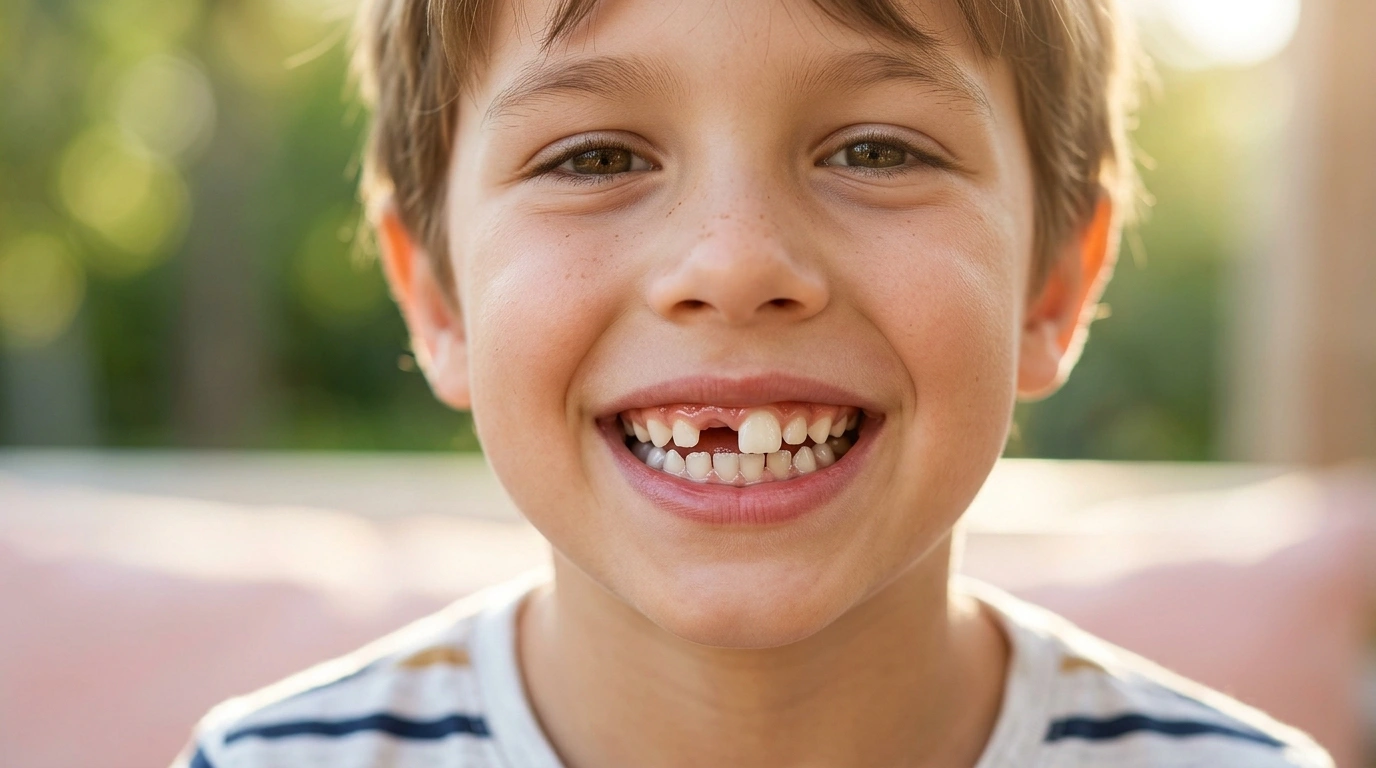
The mixed dentition stage is the period when a child has both milk teeth and permanent teeth in the mouth together. This usually happens between about 6 years and 12 or 13 years. Many parents become anxious during this phase because the mouth can look uneven, crowded, or “messy.”
One common concern is adult teeth coming behind baby teeth, often called shark teeth in kids. This happens when the permanent tooth erupts before the baby tooth has fallen out. In some cases, the baby tooth loosens and falls out on its own. In other cases, a dentist may need to check whether help is needed.
This stage may look awkward, but it is often a normal part of tooth eruption sequence. What matters is that the child receives regular dental monitoring so that any space loss, crowding, or eruption issue is spotted early.
What Happens if a Milk Tooth Is Lost Too Early?
When a milk tooth is lost too early, the surrounding teeth may start shifting. This can reduce the space meant for the permanent tooth underneath. Later, the adult tooth may erupt crooked, blocked, or crowded. This is one of the main reasons premature loss of primary teeth can lead to orthodontic problems.
In some situations, a dentist may suggest a space maintainer. This small device helps hold the space open until the permanent tooth is ready. Without that space, the child may develop malocclusion or crowding that could have been prevented.
So if a baby tooth is lost too early due to trauma or severe decay, it is wise not to ignore it. A quick dental visit can protect the future alignment of the child’s permanent teeth.
Tooth Anatomy of Primary vs Permanent Teeth
A stronger article should also explain the hidden anatomy. The tooth anatomy of primary vs permanent teeth differs in several important ways. Milk teeth usually have thinner enamel, relatively larger pulp chambers, and roots that are meant to resorb. Their crowns are smaller, and their necks often look more narrow.
Permanent teeth have thicker enamel and dentin, larger crowns, longer roots, and stronger overall structure. This is why they can handle stronger chewing forces. Their grooves, ridges, and chewing surfaces are also usually more detailed. In front permanent teeth, the mamelons are often visible at first.
Understanding this anatomy helps explain why baby teeth loosen naturally, why permanent teeth may look more yellow, and why milk teeth and permanent teeth chart comparisons are so useful in education.
How to Care for Milk Teeth and Permanent Teeth
Good care matters for both sets. A proper baby teeth care routine should begin as soon as the first tooth appears. Teeth should be brushed gently, sugary snacks should be limited, and parents should schedule regular check-ups. Early prevention is especially important because milk teeth have thinner enamel and are more easily damaged.
Permanent teeth need the same daily care, but with even more long-term attention. Brushing twice a day, flossing properly, and attending check-ups every 6 months can make a huge difference. Dentists may also recommend fluoride toothpaste for kids, fluoride varnish, or sealants for permanent molars to reduce the risk of early childhood caries and later decay.
A good rule is this: care for milk teeth as if they matter now, and care for permanent teeth as if they must last for life. Because both statements are true.
“Healthy baby teeth guide healthy permanent teeth.”
That simple line captures the whole idea.
Common Parent Questions About Milk Teeth and Permanent Teeth
Do milk teeth need fillings?
Yes. If a baby tooth has a cavity, treatment may still be necessary. Ignoring decay can cause pain, infection, and early tooth loss.
Are baby teeth smaller than permanent teeth?
Yes. This is one of the most obvious differences. Baby teeth are smaller than permanent teeth and fit a child’s smaller jaws.
Why are permanent teeth more yellow than baby teeth?
Permanent teeth often look less white because of their natural structure. This does not usually mean they are unhealthy.
What if adult teeth come in behind baby teeth?
This can happen during the mixed dentition stage. Sometimes it corrects itself, but if the baby tooth stays firm, a dental check is a good idea.
When should I see a pediatric dentist?
A child should ideally have an early dental visit once teeth begin to appear or by the first year. After that, regular follow-up helps monitor tooth eruption, spacing, and oral hygiene.
Conclusion
Understanding the difference between milk teeth and permanent teeth is important for every parent, student, and caregiver. Milk teeth are the first temporary set, usually 20 in number, smaller, whiter, and softer, while permanent teeth are the second stronger set, usually 32 in number, larger, thicker, and built to last. The difference includes their number of teeth, size and shape, color, enamel, roots, function, and lifespan.
Most importantly, milk teeth should never be ignored just because they fall out. They support chewing, speech development, jaw growth, and the future alignment of permanent teeth. When families understand this, they are more likely to protect both sets of teeth properly. And that is the real secret to a healthy smile for life.
This article is for general informational purposes only and does not replace professional dental advice. Every child’s dental development is different — if you have concerns about your child’s teeth, eruption timeline, or oral health, please consult a qualified dentist or pediatric dental specialist.