

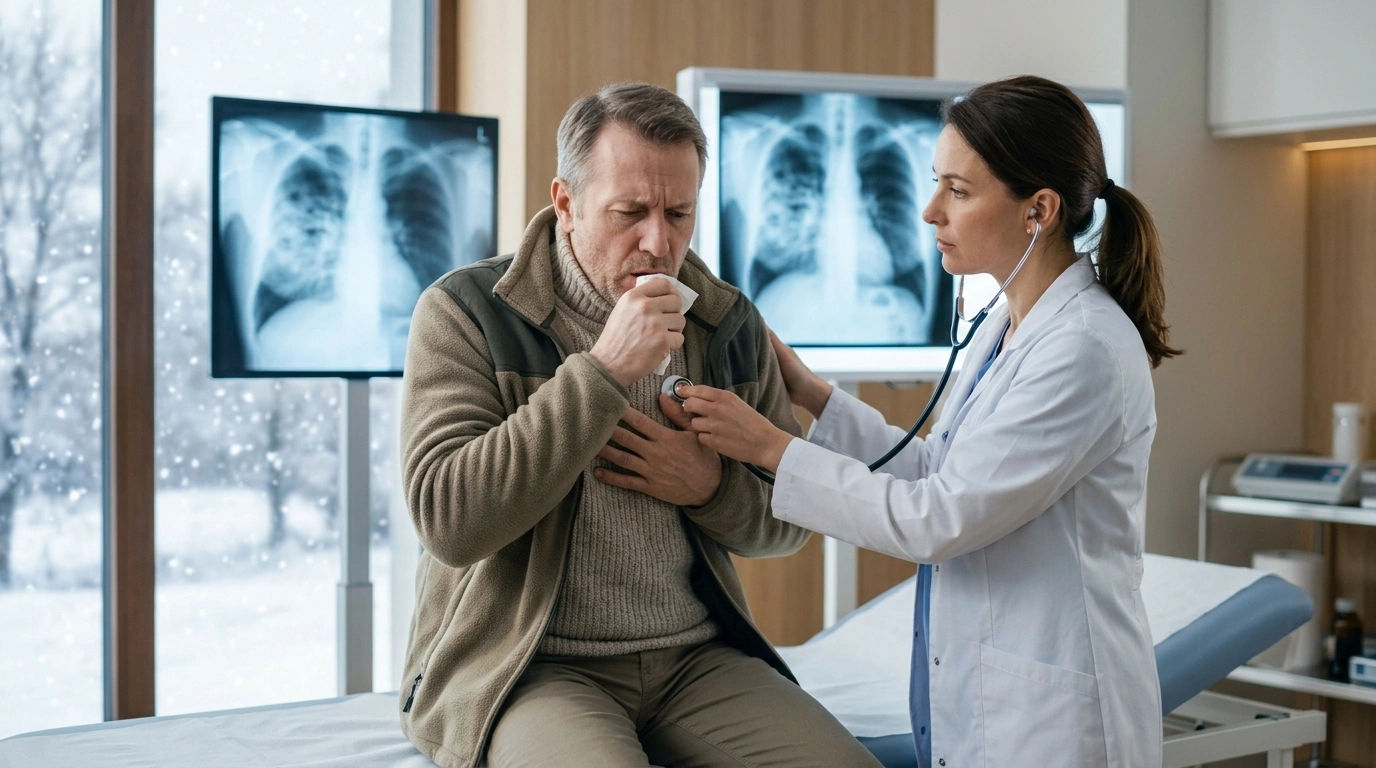
You get it from an infection, not from cold air alone, but winter conditions make it easier for the bacteria, viruses, and fungi that cause pneumonia to spread, and they also raise the chance that a flu, RSV, COVID-19, or other respiratory illness will turn into a more serious lung infection. Pneumonia inflames the air sacs in the lungs, called alveoli, and those air sacs can fill with fluid or pus, which is why symptoms like cough, fever, chills, chest pain, and trouble breathing can become serious fast.
In winter, people spend more time in indoor gatherings, windows stay closed, ventilation often gets worse, and respiratory viruses circulate more widely. That is why pneumococcal infections are more common during the winter and early spring, and why many people notice that a lingering winter cough feels different when pneumonia is involved. The risk is higher for older adults, children younger than 5, people over 65, smokers, and people with chronic lung disease, diabetes, heart disease, or a weakened immune system.
This guide explains what pneumonia is, how pneumonia spreads in winter, why cold weather seems linked to it, which winter illnesses can turn into pneumonia, the early signs of pneumonia, and how to reduce your risk during cold months. The goal is simple: help you understand the difference between a normal seasonal illness and a problem that needs attention.
What Is Pneumonia, Exactly?
Pneumonia is a lung infection. It can be caused by bacteria, viruses, or fungi, and it affects the lungs by inflaming the alveoli, the tiny air sacs where oxygen exchange happens. When those air sacs fill with fluid or pus, breathing can become harder and the body has to work more to get enough oxygen. That is why pneumonia is more than “just a bad cold” or a routine winter cough.
There are several types, including bacterial pneumonia, viral pneumonia, fungal pneumonia, community-acquired pneumonia, and walking pneumonia. Some cases start directly from an infection in the lungs. Others show up after another illness, such as the flu, RSV, or COVID-19, weakens the airways and gives germs a chance to move deeper into the lungs. The American Lung Association notes that common causes include bacteria such as Streptococcus pneumoniae, viruses such as the flu virus, RSV, and the virus that causes COVID-19, plus less common fungal causes.
That point matters for SEO and for readers: cold weather does not directly create pneumonia. Infection does. Winter simply creates the conditions that help those infections spread and get worse.
Why Pneumonia Is More Common in Winter
People often ask, “Can cold weather cause pneumonia?” The more accurate answer is that cold weather increases risk, but it is not the direct cause by itself. Several winter patterns work together.
First, people stay indoors more often during cold winter months. That means more shared air, more close contact, and more exposure to seasonal viruses. Second, when buildings are closed up, limited ventilation can make it easier for germs to circulate. Third, winter is the season when respiratory illnesses surge, so the overall number of people carrying infections rises too. CDC surveillance notes that pneumococcal infections are more common during the winter and in early spring when respiratory diseases are more prevalent.
Cold, dry air can also irritate the airways and make your throat and nose feel less comfortable, but that still does not mean cold air alone gives you pneumonia. It is more accurate to say that winter can make it easier for germs to spread and for already-inflamed airways to become more vulnerable after another illness.
Here is the simplest way to think about it:
| Winter factor | How it raises pneumonia risk |
| Indoor gatherings | More close contact with infected people |
| Poor ventilation | Germs can linger and spread more easily |
| Flu, RSV, COVID-19 season | More viral illness means more chances for pneumonia to develop |
| Cold, dry air | Can irritate airways, making symptoms worse or recovery slower |
That is why searches like “how pneumonia spreads in winter,” “why pneumonia is more common in winter,” and “how do you get pneumonia in the winter” are really asking about a combination of infection exposure, viral spread, and higher seasonal vulnerability.
Can a Cold, Flu, or RSV Turn Into Pneumonia?
Yes, and this is one of the most important points readers want explained clearly. A person may start with what seems like an ordinary cold, flu, RSV, or COVID-19, then develop pneumonia afterward. Sometimes the virus itself causes viral pneumonia. In other cases, the viral illness weakens the respiratory tract, and then bacteria move in afterward, causing secondary bacterial pneumonia.
This is one reason winter pneumonia can feel confusing. Someone may think, “I just had the flu,” or “It is only a chest cold,” while the infection is becoming more serious. The American Lung Association specifically connects pneumonia to illnesses such as influenza, RSV, and COVID-19, and CDC also groups these respiratory illnesses together as major seasonal concerns.
A simple real-world example looks like this:
Case example: A 68-year-old smoker gets the flu in January. The fever improves after a few days, but then a new persistent cough, chest pain, and shortness of breath appear. That pattern can suggest pneumonia developing after the original viral illness, especially in someone in a high-risk group. This is a common winter concern because both age and smoking increase pneumonia risk.
This is why gap phrases such as “can the flu turn into pneumonia,” “can RSV cause pneumonia,” and “post-viral pneumonia” are so valuable in your article. They match real user fears and fit the medical evidence.
Who Is Most at Risk for Pneumonia in Winter?
Anyone can get pneumonia, but some groups are more likely to get sick or become seriously ill. According to CDC and the American Lung Association, the biggest risk groups include older adults, children younger than 5, people over 65, smokers, and people with chronic lung disease, heart disease, diabetes, or a weakened immune system. People with immune suppression from illness, medications, cancer treatment, or organ transplants are also at higher risk.
That means the following readers are especially likely to search this topic in winter:
- A parent with a young child under 5
- An adult worried about an older parent over 65
- A smoker with a lingering winter cough
- Someone with asthma, COPD, or another chronic lung condition
- A person recovering from flu, RSV, or COVID-19
Smoking deserves special attention. The American Lung Association says tobacco use damages the lung’s ability to fight off infection, which is a major reason smokers face higher pneumonia risk.
Early Signs of Pneumonia in Winter
The early signs of pneumonia are not always dramatic at first. Sometimes they start as symptoms that sound similar to other respiratory infections. But when they become more intense, last longer, or affect breathing, pneumonia becomes more likely.
Common pneumonia symptoms include cough, fever, chills, trouble breathing, shortness of breath, fatigue, and chest pain, especially chest pain that gets worse when breathing or coughing. Some people also cough up phlegm. In older adults, confusion can be an important warning sign. The American Lung Association notes that pneumonia symptoms can range from mild to severe, and the NHS advises urgent help if symptoms include shortness of breath, chest pain when breathing or coughing, or coughing up blood.
Symptoms That Should Make You Take a Winter Cough Seriously
| Possible sign | Why it matters |
| Persistent cough | May mean the infection is not staying in the upper airway |
| Fever and chills | Suggest the body is fighting a significant infection |
| Shortness of breath | A major warning sign that lungs are involved |
| Chest pain | Can happen when inflamed lungs are stressed by breathing or coughing |
| Confusion in older adults | Can be a sign of low oxygen or serious infection |
| Bluish lips or fingertips | Can suggest low oxygen and needs urgent attention |
Search phrases like “persistent cough and fever could be pneumonia,” “signs a winter cough is turning into pneumonia,” and “pneumonia symptoms in children and older adults” work naturally here because this is exactly where users need clarity.
Pneumonia vs. Cold, Flu, Bronchitis, or a Chest Infection
This comparison section is where your article can outperform weaker competitors. Many people do not search “pneumonia” first. They search because they want to know whether their winter cough is normal or not.
A cold usually affects the nose and throat more than the lungs. A flu often causes more body aches, fatigue, and fever, though it can also lead to pneumonia. Bronchitis often causes coughing and mucus, but pneumonia is more likely to cause shortness of breath, chest pain, and more serious breathing trouble. The phrase “chest infection” is often used casually, but medically the real question is whether the infection has moved into the lungs and become pneumonia.
A practical rule: if symptoms are getting worse instead of better, if breathing is harder, or if chest pain and fever remain strong, pneumonia becomes more important to rule out.
When to See a Doctor or Seek Urgent Care
A lot of users search this topic because they are not just curious. They are trying to decide whether they should do something now. This section serves that intent directly.
You should seek medical help sooner if you have shortness of breath, chest pain when breathing or coughing, a cough lasting 3 weeks or more, or coughing up blood. NHS guidance specifically flags those symptoms for urgent assessment.
It is also smart to get checked quickly if:
- symptoms get worse after the flu or another respiratory illness
- you are over 65
- your child is under 5
- you have diabetes, heart disease, chronic lung disease, or a weakened immune system
- you are a smoker and the cough feels unusually deep, painful, or exhausting
Clinicians may use an exam, oxygen checks, and sometimes a chest X-ray to help diagnose pneumonia.
How to Reduce Your Risk of Pneumonia During Cold Months
The best prevention strategy is not one big trick. It is a series of simple habits that lower your chance of catching or worsening a respiratory infection.
Start with vaccination. The American Lung Association says vaccines help prevent pneumonia, and CDC data show pneumococcal vaccination has reduced serious disease over time. Vaccines may not prevent every case, but they are one of the strongest tools for reducing severe illness.
Then focus on these practical steps:
- Avoid smoking and limit secondhand smoke exposure, because smoking makes it harder for the lungs to fight infection.
- Improve indoor air and ventilation when possible, especially during indoor gatherings.
- Practice good hygiene, especially when respiratory viruses are circulating.
- Take respiratory symptoms seriously if you are in a high-risk group.
- Rest, hydrate, and do not “push through” a bad viral illness if breathing symptoms are worsening.
A short prevention table makes this easy to scan:
| Prevention step | Why it helps |
| Flu vaccine / pneumococcal vaccine | Reduces risk of severe respiratory illness and some pneumonia-related complications |
| No smoking | Protects the lungs’ natural defenses |
| Better airflow indoors | Lowers exposure to shared respiratory germs |
| Hygiene and staying home when sick | Reduces spread of viruses and bacteria |
| Early care for worsening symptoms | Helps catch pneumonia before it becomes severe |
Recovery and Complications
Recovery depends on the cause of pneumonia, the person’s age, overall health, and how severe the symptoms are. The American Lung Association notes that many otherwise healthy people recover in one to three weeks, but pneumonia can become life-threatening, especially in older adults and medically vulnerable people.
That is why it is a mistake to ignore warning signs. What begins as a winter respiratory illness can turn into something much more serious if low oxygen levels, worsening breathing trouble, or untreated infection develop. This is especially important for people over 65, smokers, and those with chronic lung disease or weakened immunity.
Quick Answers to Common Questions
Can cold weather cause pneumonia?
Not directly. Cold weather does not itself cause pneumonia. Pneumonia is caused by an infection, but winter conditions make exposure and progression more likely.
Can a cold turn into pneumonia?
A regular cold may not directly “become” pneumonia, but a respiratory infection can weaken the airways and lead to pneumonia, especially if another virus or bacteria move into the lungs afterward.
Is pneumonia contagious in winter?
The germs that cause pneumonia can spread. Whether pneumonia itself is described as contagious depends on the exact cause, but many viruses and bacteria linked to pneumonia do spread from person to person.
Who is most likely to get pneumonia in winter?
People over 65, children younger than 5, smokers, and those with chronic medical conditions or a weakened immune system face higher risk.
When is a winter cough serious?
A winter cough becomes more concerning when it comes with shortness of breath, chest pain, high fever, coughing up blood, or symptoms that keep getting worse instead of improving.
Bottom Line
The best answer to how do you get pneumonia in the winter is this: you get pneumonia from germs, but winter makes those germs easier to catch and harder to avoid. Indoor gatherings, limited ventilation, and seasonal waves of flu, RSV, COVID-19, and other respiratory infections help explain why pneumonia is more common during cold months. People at the highest risk include older adults, children under 5, smokers, and anyone with chronic illness or a weakened immune system.
Disclaimer: This article is for general informational and educational purposes only and should not replace professional medical advice. Pneumonia symptoms and severity can vary between individuals. Always consult a qualified healthcare provider for diagnosis, treatment, or emergency medical concerns.