

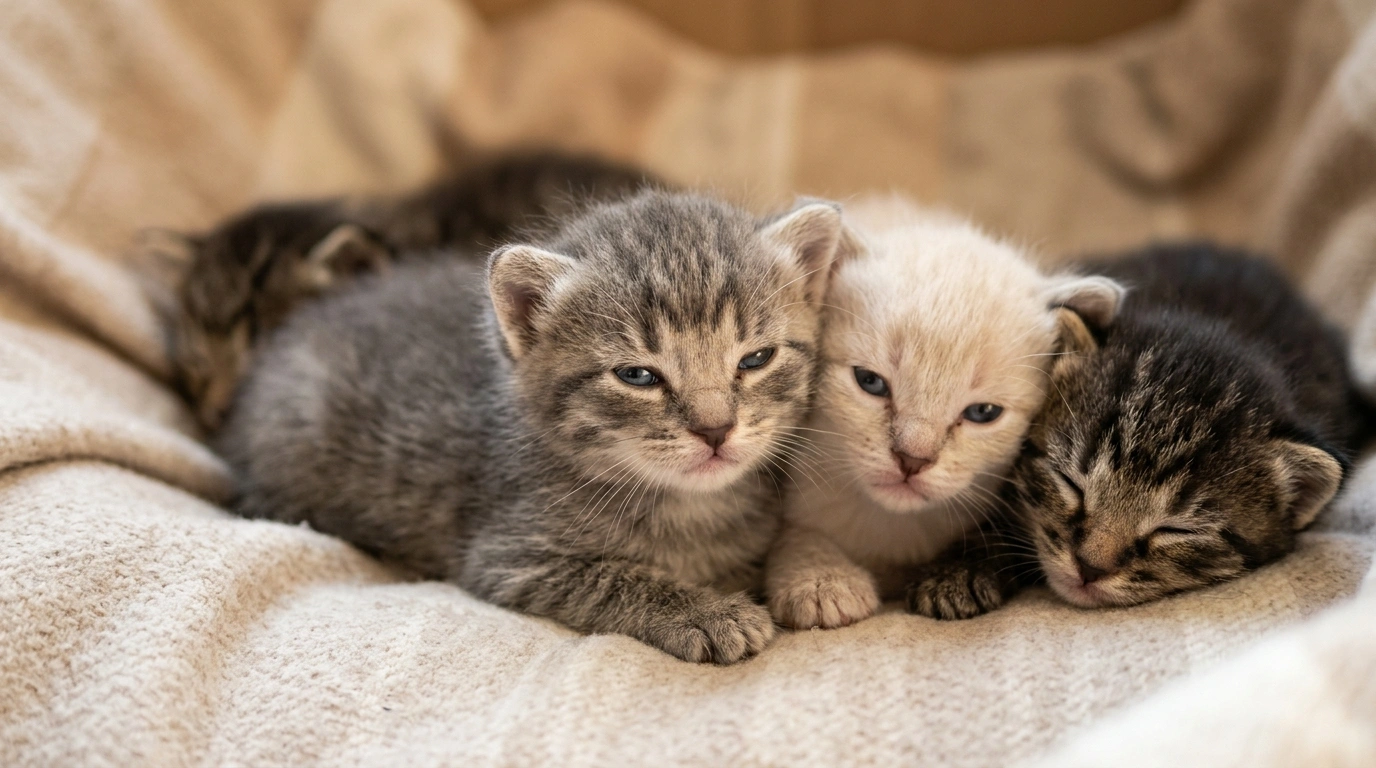
When do cats open their eyes is one of the first questions people ask after finding or caring for a newborn kitten, and the short answer is simple: most kittens begin opening their eyes at around 7 to 10 days old, and their eyes are usually fully open by 10 to 14 days. That said, every kitten develops at a slightly different pace, so one eye may open before the other, and some litters move a little faster or slower without it meaning anything is wrong.
If you are caring for baby kittens, this stage can feel both exciting and stressful. Tiny kittens are fragile, their eyes start to open gradually, and their vision is still unfocused at first. Many people also worry about kitten eye crust, kitten eye infection, or whether they should help if a kitten’s eyes seem slow to open. The good news is that there is a normal pattern to kitten eye development, and once you understand that timeline, it becomes much easier to tell what is typical and what needs veterinary care.
This guide explains when do kittens open their eyes, what happens during newborn kitten development, when kittens start to see clearly, why their eyes are often blue eyes at first, how to handle newborn kitten eye care, and what warning signs should send you to a vet.
The Short Answer: When Do Kittens Open Their Eyes?
Most newborn kittens open their eyes somewhere between 7 and 14 days of age. In many litters, you may notice tiny slits forming around the first week. By about 10–14 days of age, the eyes are often mostly or fully open. Some guides stretch that range to 2 to 16 days of age, which explains why a kitten that is a little early or a little late may still be normal.
The important thing to remember is that when do kittens open their eyes fully is not always the same as when they start opening them. A kitten may begin with just a narrow opening, then take a few more days before both eyes are comfortably open. This is why people often search when are a kitten’s eyes fully open or how long does it take for newborn kittens to open their eyes. The answer is usually a few days of gradual change, not a single instant moment.
It is also very common for caregivers to confuse when do cats open their eyes with when do kittens open their eyes, because adult cats obviously already have open eyes. In real-world search intent, this keyword almost always refers to newborn kittens, not grown cats.
Quick rule of thumb: if a kitten is under 2 weeks old, partially opened eyes can be normal. If the kitten’s eyes are still tightly closed well after that, or if there is discharge, redness, or swelling, it is time to pay closer attention.
A Week-by-Week Kitten Development Timeline
Understanding kitten development by age makes it much easier to estimate what is normal.
Birth to Day 3: Eyes Closed and Ears Folded
A one day old kitten is completely dependent on its mother or caregiver. At this stage, the eyes are sealed shut, the ears folded, and the kitten is essentially helpless. It cannot regulate body temperature well, cannot see, and spends nearly all its time sleeping and nursing.
A three days old kitten still looks very similar. The body is tiny, movement is limited, and the focus is still on warmth, feeding, and rest.
Days 4 to 7: Early Changes Begin
By the time a kitten reaches six days old or seven days old, the body is still fragile, but subtle changes begin. Some kittens may show the earliest signs that the eyelids are loosening. This is the stage people often mean when they ask when do kitten eyes start to open.
Not every kitten will start at exactly the same time. A six days old kitten may still have closed eyes, while another in the same litter may begin to show a slight opening.
Days 7 to 10: Eyes Start Opening
This is the classic window when kittens open their eyes. At first, the eyes may look only partly open. You might notice one narrow slit, then the other. A kitten at eight days old or nine days old may have partially opened eyes and still squint in bright light.
At this point, eyesight is still unfocused, and the kitten cannot see the way an older kitten can. The eyes also tend to appear blue or gray-blue at first.
Days 10 to 14: Eyes Usually Fully Open
By 10–14 days of age, most kittens have eyes that are mostly or fully open. A twelve days old kitten often fits this stage. This is the period most people refer to when asking when do kittens open their eyes fully.
Two to Three Weeks: Vision Improves
A two weeks old kitten is usually in a much better place visually than a one-week-old kitten, but vision is still developing. By 3 weeks old, many kittens are better at focusing, moving around, and responding to their environment. Their vision gradually improves, though it does not become fully mature overnight.
Four to Eight Weeks: Growing Confidence
By 4 weeks, kittens become more mobile, curious, and coordinated. They start exploring, interacting more with littermates, and showing clearer play behavior. By 8 weeks old, many kittens are active, alert, and much more independent than they were in the first days of life.
Here is a simple cat age chart for eye-related milestones:
| Kitten Age Guide | What Usually Happens |
| 1–3 days | Eyes closed, ears folded, fully dependent |
| 6–7 days | Earliest chance eyes may begin loosening |
| 7–10 days | Eyes start opening |
| 10–14 days | Eyes usually mostly or fully open |
| 2 weeks old | Better awareness, eyes open, vision still improving |
| 3 weeks old | Focus improves, movement becomes more purposeful |
| 4 weeks old | More confident crawling and walking |
| 8 weeks old | Much stronger vision, play, and independence |
This newborn kitten progression by week is one of the best ways to answer how to tell how old a kitten is if you do not know its exact birth date.
Is It Normal If One Eye Opens Before the Other?
Yes, it is normal for one kitten eye to open before the other. This is one of the most common reassurance questions people have, even though many articles only mention it briefly.
If you are wondering when do kittens open one eye first, the answer is that it can happen anytime during the normal opening window. One eye may appear more open, while the other stays partly shut for another day or two. This does not automatically mean there is a problem.
What matters is the overall picture. If both eyes are gradually progressing and there is no severe swelling, pus, or crusting, a slight difference is usually fine. But if one eye seems stuck, inflamed, or painful while the other looks normal, that could point to infection, irritation, or another issue that deserves attention.
When Do Kittens Start to See Clearly?
A lot of people ask when do kittens start to see and assume that the moment the eyes open, sight is fully developed. It is not that simple.
Right after the eyes open, a kitten’s vision development is still incomplete. The kitten may react to movement and light, but the image is not yet sharp. In other words, kitten eyes open but vision blurry is normal in the beginning.
This is why terms like when do kittens start to see clearly and when can kittens focus with both eyes matter. A kitten’s sight improves step by step. Around 3 weeks old, visual coordination becomes better, and over the following weeks the kitten becomes increasingly confident in exploring the environment.
During this stage, avoid harsh bright lights. Very young kittens are still adjusting, and their low-light vision traits as cats do not mean they are instantly ready for strong light exposure as newborns. Soft, calm surroundings are best.
Why Are Kitten Eyes Blue at First?
One of the most charming parts of early kitten eye development is that so many kittens start with blue eyes. This often surprises new owners, who then ask when do kittens’ eyes change color.
The temporary blue shade happens because the kitten’s permanent eye pigmentation has not fully developed yet. Over time, melanin and other pigment processes affect the iris, which is why true eye color appears later. That permanent color may be green, gold, copper, yellow, or remain blue in some cats.
If you are wondering when do kittens’ eyes change color from blue, it usually begins over the next several weeks. Many kittens show more obvious changes by around first six weeks of life, and their more stable color is easier to judge by 8 weeks old or around two months old.
So if you are raising a litter and every kitten seems to have similar blue eyes in the beginning, that is normal. Their permanent hue often comes later.
What Not to Do: Never Force a Kitten’s Eyes Open
One of the most important parts of newborn kitten care is knowing what not to do.
Never try to pry or force a kitten’s eyelids apart. If you have searched should you force a kitten’s eyes open, the answer is no. A kitten’s body has its own timeline, and forcing the eyes open can cause irritation, damage, or infection.
This is also why people ask can you touch a newborn kitten’s eyes. Gentle care around the eye area may sometimes be needed if there is light crusting, but you should never tug, press, or pull at the eyelids. Patience is crucial.
A good caregiver gives the kitten warmth, clean bedding, calm handling, and observation. Let the natural process happen unless there are clear warning signs.
How to Care for a Newborn Kitten’s Eyes Safely
Good newborn kitten eye care is simple, gentle, and clean.
If the area around the eyes is slightly dirty, use a warm damp washcloth, a soft cotton ball, or warm clean water to gently wipe away surface debris. This is the safest answer to how to clean a kitten’s eyes safely and how to clean a kitten’s eyes with warm water.
A few practical care tips help:
- Keep the kitten’s bedding clean and dry.
- Wash your hands before and after handling the kitten.
- Be gentle and avoid rubbing hard.
- Do not use random human eye drops unless a vet tells you to.
- Watch whether the eyes are improving day by day.
This matters even more in multi-kitten settings because littermates can spread irritation or infection if bedding is dirty. Clean surroundings, light handling, and careful observation go a long way.
If you are asking should I wipe newborn kitten eye discharge, the answer depends on the severity. Mild residue can often be cleaned gently, but thick pus, swelling, or repeated discharge means the kitten should be checked by a professional.
Warning Signs: When Closed or Crusty Eyes Mean a Vet Visit
The hardest part for many people is knowing what is normal versus what is a problem.
A kitten may simply be a little slower to develop. But kitten eyes still closed after 2 weeks deserves closer attention, especially if there are other symptoms. If you are wondering what if a kitten’s eyes don’t open after 14 days, or when should I worry if my kitten’s eyes are closed, the answer is: worry sooner if there is pain, discharge, swelling, or obvious illness.
Here are the main red flags:
- Red eyes
- Thick or repeated discharge
- Eyelids crusted shut
- Squinting or obvious discomfort
- Swelling around the eyes
- A kitten pawing at the face
- One eye looking very different from the other
- Eyes still sealed beyond the expected window
These can be linked to common eye problems in kittens such as conjunctivitis, bacterial infection, viral infection, feline herpesvirus, feline calicivirus, entropion, or problems involving the third eyelid.
If you found a stray litter and one has newborn kitten eyes stuck shut, do not assume it will fix itself. A vet can tell whether it is simple crusting, a mild infection, or something more serious. This is also the clearest answer to signs a kitten eye infection needs a vet: if there is persistent crusting, inflammation, pus, or delay beyond the normal timeline, get help.
A practical case example looks like this: a rescuer finds a litter of three kittens. Two have eyes starting to open at around day 8, but the third still has heavy crusting and swelling by day 12. That third kitten is not just “behind.” It may need treatment.
Other Early Kitten Milestones: Crawling, Walking, Hearing, and Sleep
People searching when do baby kittens open their eyes and start walking are usually trying to understand the bigger picture of early growth.
Kittens do not go from sealed eyes to energetic play in one step. First comes slight visual awareness, then better coordination, then stronger movement. A kitten may begin to crawl before it can truly walk. Those first wobbly steps are part of the charm of early development.
By around 2 weeks old, kittens are still very young but becoming more responsive. By 3 weeks old, many are more active and better coordinated. By 4 weeks, movement is stronger, and over time this leads to walk, jump, and play behavior.
Sleep is also a big part of this stage. Very young kittens can spend up to 22 hours per day sleeping, which is completely normal. Growth is happening fast, and the body needs huge amounts of rest.
This section is also useful for people asking when do kittens hear and see. The answer is that both senses develop gradually. Eyes and ears do not become fully functional all at once, which is why week-by-week observation matters more than expecting one dramatic milestone.
Orphaned Kittens Need Extra Care
If the mother cat is absent, orphaned kitten eye care becomes more important because the caregiver must do everything the mother would normally support: feeding, warmth, cleanliness, and monitoring.
In the earliest stage, bottle feeding every two hours may be necessary for very young kittens. Warmth is just as important as feeding. Newborns cannot regulate body temperature well, so keeping them in an appropriate environment matters. Some rescue guidance points to temperatures around 85ºF / 29ºC for very young kittens, though needs change with age.
This is where vet-approved newborn kitten care makes a real difference. Orphaned kittens are at higher risk because there is no mother to groom them, keep them warm, or notice when one is weaker than the rest. If an orphan’s eyes are slow to open or look infected, do not wait too long to seek help.
Quick FAQ About Kittens Opening Their Eyes
When do kittens usually start opening their eyes?
Usually around 7 to 10 days, with most eyes fully open by 10–14 days.
Is it normal if one eye opens before the other?
Yes. A slight difference is common.
Can bright light hurt newborn kittens?
Strong light can be uncomfortable, so gentle lighting is best while the eyes are newly opening.
What if my kitten’s eyes are still closed after two weeks?
That can happen occasionally, but it should be monitored carefully, especially if there is crusting or swelling. A vet check is wise.
Should I clean crust from a kitten’s eyes at home?
You can gently wipe mild surface residue with warm clean water and a soft cloth, but thick discharge, pus, or pain needs professional care.
Final Takeaway
So, when do cats open their eyes? In practical terms, newborn kittens usually begin opening their eyes at about 7 to 10 days old, and their eyes are often fully open by 10 to 14 days. From there, vision gradually improves, eye color begins changing over time, and other milestones like crawling, walking, and play follow.
The most important thing is to know what is normal and what is not. A little variation is fine. One eye opening first can be fine. But severe crusting, swelling, kitten eye infection, or eyes staying shut too long are signs that veterinary care may be needed.