

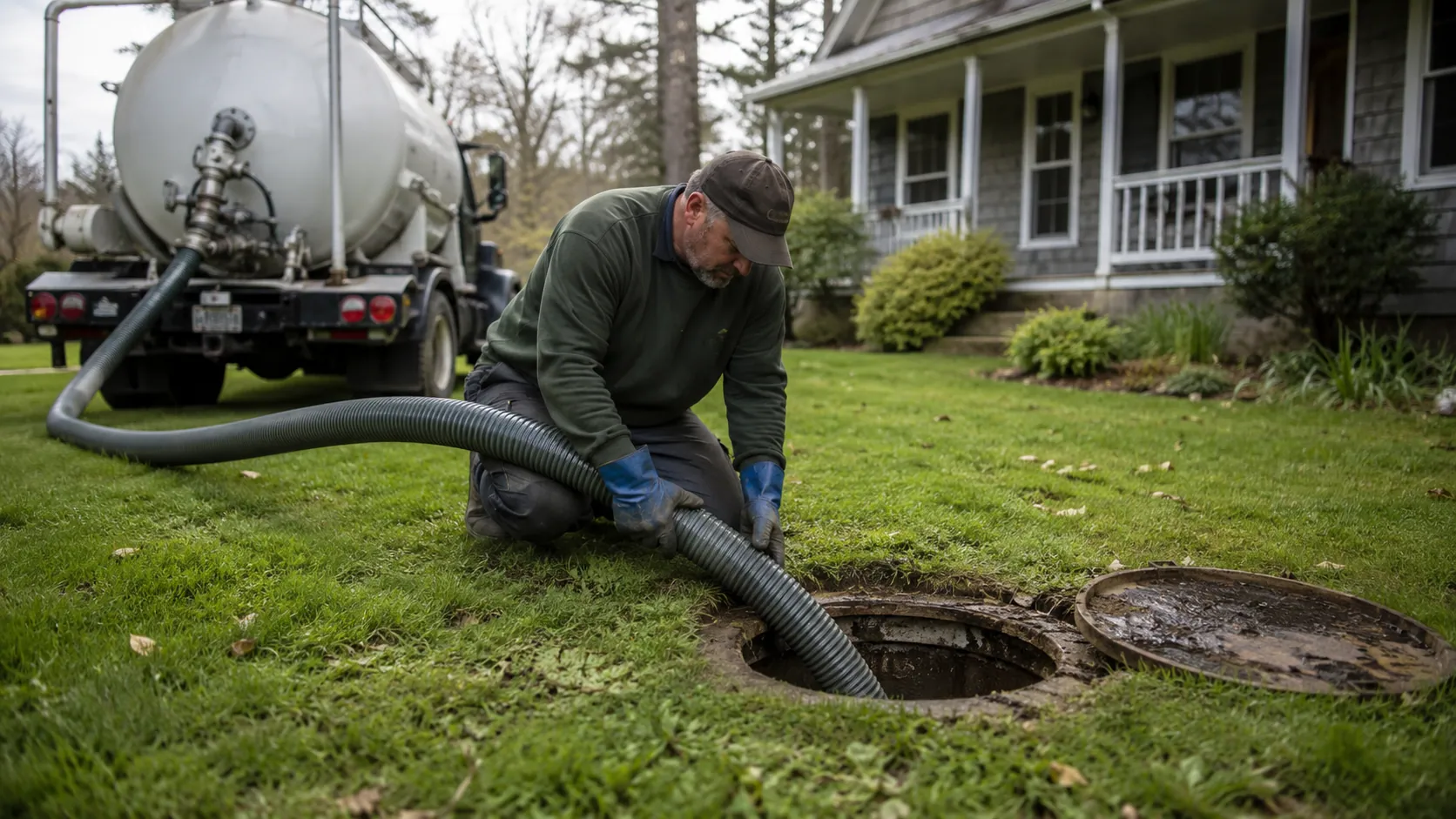
Signs that septic tank needs pumping often start small, then turn into messy and expensive problems if you ignore them. A septic tank does not usually fail all at once. More often, it gives you early warnings like slow drains, bad odors, gurgling pipes, wet spots in the yard, or sewage backing up into the house. In general, the EPA says a septic tank should be inspected every 1 to 3 years and pumped every 3 to 5 years, although the right schedule depends on tank size, household size, water-use habits, and how much sludge and scum have built up.
For many homeowners, the hard part is not noticing that something feels off. The hard part is figuring out whether the issue means you simply need a pump-out, whether you need a septic inspection, or whether the system may already be moving toward drain field failure. That distinction matters because delayed maintenance can let solids move deeper into the system and increase the risk of backups, wet soil, and bigger repair bills.
This guide walks through the most important full septic tank signs, explains what they usually mean, and shows you when to call a pro immediately.
Why early septic warning signs matter
A healthy septic system separates household wastewater into layers. The heavy solids settle into sludge, oils and lighter material form scum, and the liquid effluent flows out toward the drain field. Over time, sludge and scum take up more space inside the tank. When that usable space shrinks too much, wastewater can stop moving through the system the way it should. That is when you begin to notice symptoms inside the house or out in the yard.
What makes this topic so important is that a septic issue is not only a convenience problem. Backups and surfacing wastewater can create health risks, contaminate nearby soil or water, and damage parts of the system that are far more expensive to repair than a routine pumping visit.
The 9 most common signs your septic tank needs pumping
1. Slow drains throughout the house
One of the clearest warning signs is when multiple fixtures start draining slowly at the same time. You may notice sinks, showers, bathtubs, and toilets all becoming sluggish, not just one drain. That pattern matters. A single slow sink can point to a local clog, but when several drains act up together, the problem is more likely connected to the septic tank or the system’s ability to move wastewater out properly. The EPA lists very slow drains in the home as a common sign of a malfunctioning septic system.
This is why people ask, “Do slow drains mean my septic tank is full?” Not always, but they absolutely can. If the tank is overdue for pumping, or if the drain field is under stress, wastewater starts backing up in subtle ways before a full sewage backup happens. That makes slow draining sinks and toilets one of the earliest and most useful clues.
2. Toilets flush slowly or seem weak
A weak flush is a close cousin of the slow-drain problem, but it deserves special attention because toilets often show stress early. If flushing feels unusually soft, the bowl refills oddly, or you need multiple flushes more often than normal, do not brush it off. Toilets can be the first fixture to show that the system is overloaded.
Again, context matters. One toilet acting up may be a clog. Several fixtures acting up together points more strongly toward a septic issue. This is especially true if the problem is paired with gurgling, odors, or a recent lack of maintenance.
3. Gurgling sounds in pipes or toilets
If you hear gurgling pipes, bubbling drains, or gurgling toilets, your plumbing is telling you something. Those sounds often happen when wastewater is not moving smoothly and air is being displaced in the lines. Many homeowners search “can gurgling toilets mean my septic tank is full?” because the sound feels random, but it is often one of the clearest early warnings that the system is under pressure.
Gurgling does not prove the tank itself is completely full. It can also happen because of venting problems or line restrictions. But when gurgling shows up with slow drains, foul smells, or wet spots outside, the odds of a septic problem go up significantly.
4. Bad sewage odors inside or outside
A strong sewage smell is one of the most unpleasant and most searched symptoms. Homeowners notice it near sinks, drains, bathrooms, the tank area, or around the drain field. The EPA identifies odors as a possible sign of a failing or stressed septic system.
That said, this is where a good article should add nuance: bad odor does not always mean the tank is full. EPA guidance explains that odors may also come from a roof vent or other vent pipe that has become obstructed by leaves or debris, or from a vent pipe that freezes during prolonged cold spells. In some cases, changing wind patterns can also push odors where you notice them more.
So if you are wondering, “Does bad smell mean I need pumping or a repair?” the answer is: maybe pumping, maybe venting, maybe another system problem. The smell is real, but the cause needs diagnosis.
5. Standing water, soggy soil, or wet spots in the yard
If you see standing water, wet spots, or mushy ground near the tank or leach field, take it seriously. EPA guidance lists standing water or damp spots near the septic tank or drainfield as common signs of malfunction. That often means wastewater is no longer moving and dispersing as it should.
This is also one of the main reasons people ask, “What should I do if I see standing water near my tank or drain field?” The answer is to reduce water use immediately and get the system evaluated. Do not let kids or pets play in that area. Surfacing wastewater can carry harmful pathogens.
6. Unusually green or fast-growing grass over the drain field
Sometimes the lawn tells the story before the plumbing does. If one part of your yard looks much greener, thicker, or faster-growing than the surrounding grass, especially in dry weather, wastewater may be reaching the surface or oversupplying that patch with moisture and nutrients. EPA guidance notes that bright green, spongy lush grass over the septic area even during dry weather can be a sign of trouble.
Many homeowners search “why is the grass greener over my drain field?” because at first it looks like a good thing. It is not always proof of failure, but it is definitely a signal worth checking, especially when paired with odors, wet spots, or overdue pumping.
7. Sewage backup inside the home
This is the point where the issue stops being a warning and becomes an urgent problem. The EPA lists water and sewage from toilets, drains, and sinks backing up into the home’s plumbing as a classic sign of septic malfunction.
If you are asking, “Can a full septic tank cause sewage backup in the home?” yes, it can. But so can a severe blockage or drain field failure. Either way, this is not a wait-and-see problem. Minimize water use immediately and call a septic professional.
8. It has been 3 to 5 years since the last pump-out
Sometimes the sign is not what you see. It is what you do not know. If you cannot remember the last service date, or it has already been 3 to 5 years, the tank may simply be overdue. EPA guidance is clear that septic tanks should generally be inspected every 1 to 3 years and pumped every 3 to 5 years, though the exact timing depends on tank size, number of people in the household, water habits, and solids buildup. More complex alternative systems may need more frequent inspection or pumping.
This is why one of the smartest things a homeowner can do is keep maintenance records. If the last pump-out date is a mystery, your risk of getting surprised is much higher.
9. The system seems to struggle after heavy water use or rainy weather
Some systems reveal stress only when demand rises. Maybe you run several loads of laundry, host guests, or go through a rainy period and suddenly the house smells off, drains more slowly, or the yard turns soggy. That can point to a system already close to its limit.
EPA explains that septic systems can malfunction because of poor maintenance, high groundwater tables, unsuitable soils, or hydraulic overload. Flooding and saturated ground can make symptoms worse because the drain field cannot absorb and treat wastewater the way it normally does.
Quick symptom guide
| What you notice | What it may mean | How urgent is it? |
|---|---|---|
| One slow sink only | Local clog more likely | Low to moderate |
| Multiple slow drains | Tank overdue or system stressed | Moderate |
| Gurgling toilets and drains | Wastewater flow or venting issue | Moderate |
| Bad odor near yard or drains | Full tank, vent issue, or system trouble | Moderate |
| Wet spots or standing water | Drain field stress or malfunction | High |
| Sewage backup in home | Serious septic or plumbing failure | Urgent |
| No service in 3–5 years | Pumping may be overdue | Moderate to high |
The timing guidance in that last row lines up with EPA recommendations for routine septic maintenance.
Do you need pumping, inspection, or repair?
This is the question behind most searches. People rarely want theory. They want to know what action to take next.
A pump-out is often the right next step when the symptoms are mild to moderate, the tank is overdue, and the issue appears across several fixtures. An inspection is the smarter move when the cause is not obvious, when the home has recurring problems, or when you want to know whether the system is simply full or actually beginning to fail. A repair may be needed if you have persistent wet soil, repeated backups, corroded parts, leaks, drain field damage, or issues with pumps, floats, filters, or electrical components. EPA notes that inspections can include checking sludge and scum levels, looking for signs of leakage, examining the effluent filter, and evaluating mechanical parts and the drain field.
A simple rule helps:
If the problem is isolated to one fixture, think clog.
If the whole house seems slow and the tank is overdue, think pumping.
If you have wet ground, surfacing wastewater, repeated sewage backup, or problems that return quickly after service, think inspection and possible repair.
What makes a septic tank fill up faster than expected?
Not every household reaches the 3 to 5 year mark the same way. Some tanks need attention sooner because usage patterns are harder on the system. EPA says pumping frequency depends on tank size, number of people in the household, water-use habits, and how much solid material has accumulated.
Common reasons a tank fills faster include:
- More people in the home than the system was originally sized for
- Heavy water use, especially many loads of laundry in a short time
- Leaking fixtures that quietly overload the system
- Use of a garbage disposal, which adds more solids to the tank
- Flushing things that should never enter a septic system, such as wipes, grease, chemicals, or other non-biodegradable waste
NC State Extension notes that septic failure can happen when a system is overloaded with more water than it can absorb, and leaking toilets or dripping faucets are common causes of that overload.
That is why prevention is not just about what you flush. It is also about how you use water across the week.
Heavy rain and flooding can change the diagnosis
This is one of the most overlooked parts of the topic. Homeowners often search “do septic problems get worse after heavy rain?” and the answer is yes, they can. When soil is saturated, the drain field may not be able to absorb wastewater effectively. That can lead to slow drains, odors, pooling water, or even backups that seem to appear suddenly after storms.
But here is the nuance many articles miss: EPA guidance says do not open the septic tank for pumping while the soil is still saturated. Mud and silt can enter the tank and end up in the drain field, and in some cases a tank in saturated soil may even “pop out” of the ground. EPA also says to pump the system as soon as possible after the flood, but not during flooded or saturated drainfield conditions.
So if your system acts up after major rain, the right next step is not always immediate pumping. Sometimes the first move is to reduce water use, wait for conditions to improve, and then have the system assessed safely.
When a septic problem is an emergency
Some symptoms are warning signs. Others are red lights.
Treat the problem as urgent if you have sewage backing up into the home, surfacing wastewater where people may come into contact with it, or strong persistent symptoms paired with standing water and multiple plumbing problems. The EPA warns that contact with backed-up sewage should be avoided because it may contain harmful pathogens.
If sewage has entered living space, reduce all water use, keep people and pets away from contaminated areas, and get professional help quickly. That is not the moment for guesswork.
How often should a septic tank be pumped?
The most reliable broad answer comes from the EPA: inspect every 1 to 3 years and pump every 3 to 5 years in general. Some homeowners need service sooner, and some alternative systems need more frequent checks.
Here is a practical way to think about it:
- Smaller tanks generally need attention sooner
- Larger households fill tanks faster
- High water use shortens the interval
- More solids from cooking waste or a garbage disposal can shorten the interval too
So if you are asking, “How often should a septic tank be pumped?” the honest answer is: the 3 to 5 year rule is a starting point, not a guarantee.
How an inspection confirms whether pumping is really needed
A proper septic inspection is valuable because symptoms alone do not tell the whole story. According to EPA homeowner guidance, inspections can involve checking the tank’s structure, measuring sludge and scum, looking at the effluent filter, reviewing maintenance records, and evaluating the drain field and any mechanical or electrical components.
This is where a professional can answer the questions homeowners really care about:
- Is the tank simply overdue for pumping?
- Is there evidence of a clog?
- Is the drain field saturated or failing?
- Are pumps, floats, or alarms working correctly?
- Is there leakage or structural damage?
That information matters more than a guess, especially if you plan to stay in the home for years or you are preparing to sell it.
How to prevent septic problems after pumping
Pumping restores capacity, but it does not fix habits that overload the system. EPA homeowner guidance recommends a few simple long-term practices: keep maintenance records, use water efficiently, protect the drain field, and be careful about what goes down the drain.
A few preventive habits make a real difference:
- Spread out laundry instead of doing many loads in one day
- Fix leaking toilets and faucets
- Flush only human waste and toilet paper
- Keep grease, wipes, chemicals, paints, and medications out of the system
- Avoid driving or placing heavy loads over the drain field
- Keep a record of pump-outs, repairs, and inspections
Those steps may sound basic, but they are exactly what keeps a routine maintenance issue from turning into expensive repairs.
FAQ
How do I know if my septic tank needs pumped?
Look for a combination of slow drains, gurgling, bad odors, wet spots, or lush green grass over the septic area. If it has also been 3 to 5 years since the last service, pumping may be overdue.
Do slow drains always mean the septic tank is full?
No. A single slow drain may be a local clog. But several slow drains across the house point more strongly toward a septic or system-flow issue.
Can gurgling toilets mean my septic tank is full?
Yes, they can be an early warning sign, especially if they happen with other symptoms like odors or wet ground. But venting issues can also cause gurgling.
What happens if a septic tank gets too full?
The system can lose usable capacity, which raises the risk of slow drains, backups, and stress on the drain field. Over time, that can lead to bigger and costlier failures.
What does a septic alarm mean?
On systems with pumps or other mechanical parts, an alarm may signal a high-water condition or another operational issue. That is one reason alternative systems may need more frequent inspection.
How long does a septic pump-out take?
The exact time varies by tank size, access, and site conditions. The safest answer is that a local septic company can tell you based on your property setup. Current EPA guidance focuses more on inspection and pumping intervals than a universal pump-out duration.
Disclaimer: This article is for general informational and educational purposes only and should not replace professional septic inspection, maintenance, or repair advice. Septic system problems can vary based on tank size, soil conditions, weather, household usage, and system design. If you notice sewage backup, standing wastewater, strong odors, or persistent drainage issues, contact a licensed septic professional promptly.