

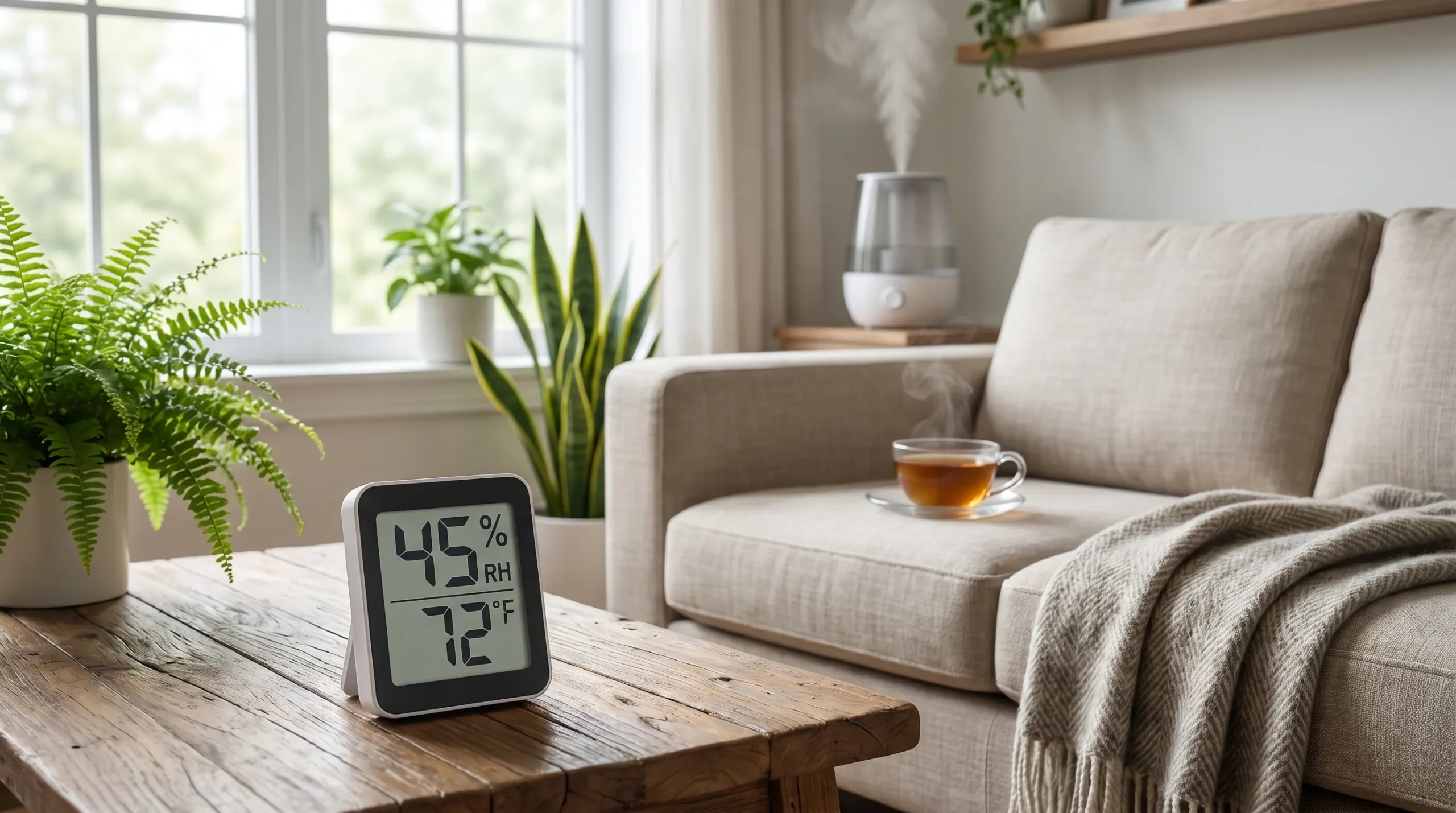
What should be the humidity inside a house is a common question, and the best answer for most homes is between 30% and 50% relative humidity. That range usually gives you the best balance of comfort, indoor air quality, and moisture control without making your home feel too dry or too damp.
A lot of homeowners assume there is one perfect number, but ideal indoor humidity is really a range, not a fixed setting. The right level depends on the season, the outdoor temperature, your climate, how well your home is insulated, and whether you are dealing with issues like condensation on windows, dry skin, musty odor, or even mold growth. In winter, many homes do better closer to 30% to 40%, while in more humid weather you may need stronger humidity control to stay comfortable.
In other words, home humidity levels affect far more than how the air feels. They can shape your sleep, your sinuses, your allergies, your wood floors, and even the long-term structural integrity of your home. Once you understand the right range and how to manage it, keeping a healthy indoor climate becomes much easier.
What Should the Humidity Inside a House Be?
For most homes, the ideal humidity level in a house is 30%–50% relative humidity, and many experts recommend staying below 60% whenever possible. If your home sits in that middle range, the air usually feels more comfortable, and you reduce the chance of moisture-related problems such as mold, mildew, and moisture condenses on surfaces.
The reason relative humidity matters so much is that it measures how much moisture in the air is present compared with how much the air could hold at that temperature. Warm air can hold more moisture than cold air, which is why winter humidity and summer humidity often feel very different even when the percentage looks similar.
A house sitting around 40% humidity often feels balanced for many families. At 50% humidity, many homes are still comfortable, but if the house is poorly ventilated or the weather outside is very cold, that same level can lead to window condensation or damp areas on wall surfaces. At 60% humidity, the risk of mold and mildew growth, dust mites, and a sticky indoor feel rises quite a bit. On the other side, when humidity drops to 25% humidity or even 15% humidity, the home can start feeling harshly dry.
So if you are asking what is the ideal indoor humidity range, the simple answer is this: keep your house in the 30%–50% zone, adjust lower during very cold weather, and try not to let it stay above 60% for long.
Why Indoor Humidity Matters for Comfort, Health, and Your Home
Indoor humidity affects almost every part of daily life. When humidity is too low, the air can pull moisture from your skin, nose, throat, and even your eyes. That is when people start noticing dry skin, burning eyes, irritated sinuses, eye nose or throat dryness, and more static electricity around the house. You may also notice that your wood furniture, hardwood floors, and doors seem to shrink or creak more than usual.
When humidity is too high, the problems change. Rooms can feel sticky in the summer, soft surfaces can start smelling musty, and hidden moisture can feed mold growth, bacteria and fungi, and dust mites. High humidity can also worsen asthma, allergies, and other respiratory conditions, especially in homes with carpeting, heavy bedding, or lots of upholstered furniture. A damp house rarely feels like a comfortable indoor climate, even if the thermostat reading looks fine.
There is also a building-science side to this. Too much humidity can affect paint, wallpaper, and other materials over time. Too little can lead to cracking wooden window frames floors and furniture and make a home feel less stable and comfortable. That is why indoor air quality is not only about temperature. It is also about balancing moisture well enough to support both people and the home itself.
A useful way to think about it is this: low humidity tends to cause dryness and irritation, while high humidity tends to cause dampness and biological growth. The healthiest humidity level for a home is the one that avoids both extremes.
Ideal Indoor Humidity by Season
One reason people get confused about best humidity level for home is that the answer changes throughout the year. A house that feels perfect at 45% humidity in mild weather may suddenly develop condensation in winter or feel clammy in a humid summer.
During colder months, the outdoor air holds less moisture. As that cold air enters the home and gets heated, it can make indoor air feel overly dry in the winter. This is why many homeowners start noticing dry throat, dry skin, static electricity, and irritated sinuses in the heating season. In winter, many homes do best closer to 30%–40%, and in especially cold climates, the ideal range may move even lower.
During warmer months, especially in humid regions, the challenge flips. Instead of air that is too dry, you often get air that holds too much water vapour. That can make bedrooms feel heavy, basements feel damp, and bathrooms or kitchens stay humid for too long after use. In summer, air conditioning, ventilation, and sometimes a dehumidifier become more important.
So if you are wondering about the best humidity level for home in winter and summer, the practical rule is this:
winter often calls for lower humidity, while summer often requires more moisture removal. The goal stays the same, but the path to getting there changes with the weather.
Indoor Humidity by Outdoor Temperature
The relationship between outside temperature and indoor humidity is one of the most important things homeowners overlook. If it is very cold outside, indoor air that seems normal can start leaving water on windows and colder wall surfaces. That happens because moisture in the air meets a cold surface and turns into condensation.
A simple homeowner guide looks like this:
| Outdoor Temperature | Recommended Indoor Humidity |
| Over 50°F | Up to 50% |
| Over 20°F | Up to 40% |
| 10°F to 20°F | Up to 35% |
| 0°F to 10°F | Up to 30% |
| -10°F to 0°F | Up to 25% |
| -20°F to -10°F | Up to 20% |
| -20°F or lower | Up to 15% |
This table explains why some people ask, “What humidity should my house be in winter?” and get answers that seem lower than the familiar 30%–50% rule. Both answers can be correct. The broader range works for most of the year, but in freezing conditions, lowering humidity helps prevent condensation on windows and moisture buildup inside walls.
If your windows are fogging up every morning, that is not just an annoyance. It is often your house telling you the indoor humidity is too high for the current outdoor conditions. In that case, lowering the RH setting, improving air circulation, or reducing indoor moisture sources may solve the problem.
Signs Your House Is Too Humid or Too Dry
Sometimes your home gives you clues before a hygrometer ever does. If the house is too humid, you may notice musty odour, damp-feeling bedding, sticky air, peeling paint, or condensation collecting on windows and colder wall areas. Bathrooms may stay wet longer after showers, and basements may smell stale even when they look clean.
If the air is too dry, the signs are different. Your skin may itch, your nose may feel irritated, your throat may feel scratchy, and your eyes may burn. You may wake up feeling dry or notice extra static in blankets and clothing. Wood doors may shrink slightly, floors can creak more, and furniture may look stressed.
These are the real-life versions of the keyword phrases people search, such as signs of high humidity in your home, signs of low humidity in the home, issues with high humidity in your home, and issues with low humidity in your home. When you spot those signs, it is a good idea to measure the humidity instead of guessing.
How to Measure Humidity in Your Home
The easiest way to measure indoor humidity is with a hygrometer. This small device reads relative humidity and gives you a much clearer picture of what is happening than comfort alone. Some smart thermostats and indoor air quality monitors also display humidity, but a separate hygrometer is still useful because readings can vary by room.
Placement matters. If you want a realistic picture of home humidity, place the device in a lived-in area away from direct sunlight, vents, exterior doors, kitchens, or steamy bathrooms. One common mistake is putting a hygrometer right next to a vent or window and then assuming that reading reflects the whole house.
If you suspect one room feels very different from the rest, move the hygrometer around for a few days. That helps you compare spaces like the bedroom, basement, and living area. This is especially useful when the thermostat says one thing but the room feels another way. The difference between thermostat vs hygrometer humidity reading is often caused by location, airflow, or sensor design.
A good habit is to check humidity during weather changes, not just once. Indoor humidity can shift quickly during a cold snap, a humid week, or after heavy indoor activities like cooking washing and showering.
How to Lower Humidity in a House
If your home feels damp, sticky, or musty, the first goal is to remove extra moisture rather than simply cool the air. Start with the basics: run bathroom exhaust fans after showers, use the kitchen fan while cooking, and make sure your dryer is vented properly. These small steps can help with how to lower humidity fast, especially in homes where daily routines add a lot of indoor moisture.
A dehumidifier is one of the most direct tools for reducing high humidity. In basements or other damp spaces, many homeowners aim for around 50% RH. If you are buying one, energy efficiency matters too, so looking for a unit with a strong Energy Factor (EF) of at least 2.0 can be a smart move.
Your air conditioner also plays a role. In humid climates, AC systems help pull moisture out of the air as they cool. Some systems or thermostats have an AC dehumidification mode, which can be especially useful when the house feels humid but does not necessarily feel hot.
Do not ignore hidden problems. Leaky pipes, roof issues, poor drainage, or moisture entering through a basement wall can all keep humidity high no matter how often you run a fan. If you keep seeing mold spots, peeling paint, or repeat condensation, look for water leaks and indoor humidity issues rather than assuming the solution is only a stronger appliance.
How to Raise Humidity When Indoor Air Is Too Dry
When indoor air becomes uncomfortably dry, the simplest fix is often a humidifier. Small room units can help bedrooms or offices, while a whole-home humidifier works through the HVAC system and can treat the full house more evenly.
That said, adding moisture should be done carefully. A humidifier can improve comfort, but too much added moisture can create the same condensation and mold problems you were trying to avoid. The goal is not to make the air feel heavy. It is to gently move the house back into the 30%–40% or 30%–50% zone, depending on the season.
If you want to know should you use a humidifier for everyday use, the answer depends on the reading. If your home is sitting near 35% humidity and feels comfortable, you may not need one. If it drops into the mid-20s or below and you are dealing with dry skin, throat irritation, or static, a humidifier can make a noticeable difference.
You can also raise humidity a little without a humidifier by reducing over-ventilation during dry weather, keeping the house from overheating, and letting normal daily activities add a modest amount of moisture. Still, if dryness is constant, a humidifier is usually the most reliable solution.
Best Humidity by Room in the House
One of the biggest content gaps in the current SERP is ideal humidity by room, yet this is exactly how many homeowners experience the problem. A whole-house average might look fine while one space is too dry or too damp.
In bedrooms, a target near 30%–50% usually works well for comfort and sleep. If the room feels stuffy, monitor both humidity and ventilation. In a nursery or baby room, moderate humidity can help avoid overly dry air, but you still do not want the room drifting too high because that can encourage mold or dust mites.
In a basement, humidity often needs closer attention because basements stay cooler and can trap moisture. Many homeowners aim around 50% RH there, especially if the area tends to smell musty. In bathrooms, humidity spikes after showers are normal, but the moisture should clear reasonably fast with a fan. In kitchens, boiling water and cooking can raise humidity quickly, so ventilation matters. Attics and crawl spaces can also become hidden trouble spots if airflow is poor.
The key point is that whole-house humidity strategy should still include room-level awareness. A single reading in the hallway does not always tell the full story.
Smart Thermostat and HVAC Humidity Settings
Modern thermostats and HVAC systems can make humidity control easier, especially when outdoor conditions change quickly. Some smart thermostats show indoor humidity automatically, while others help you adjust settings based on the weather outside.
This matters because many homeowners leave one humidity setting in place all season. That can work for a while, but when temperatures plunge, the same indoor setting can suddenly cause window condensation. This is where smart thermostat humidity setting tools can help. They allow you to lower the target during deep cold and raise it again when conditions soften.
If you are comparing Nest humidity setting advice with general homeowner guidance, remember the main principle: colder outdoor temperatures usually require lower indoor humidity targets. HVAC equipment, ventilation strategies, and thermostat controls work best when they respond to the season rather than staying fixed year-round.
Humidity Troubleshooting Checklist
If your house never seems comfortable, a simple humidity troubleshooting guide can save time:
| Problem | Likely Cause | What to Check First |
| Foggy windows in winter | Humidity too high for outdoor temperature | Lower RH setting, improve airflow |
| Musty basement smell | Excess moisture or poor ventilation | Dehumidifier, drainage, leaks |
| Dry skin and static | Humidity too low | Measure RH, consider humidifier |
| Sticky indoor air | High indoor moisture | AC performance, fans, dehumidifier |
| Different rooms feel different | Uneven airflow or moisture load | Move hygrometer room to room |
A smart indoor humidity checklist looks like this: measure the air, compare rooms, check for condensation, look for leaks, run fans where moisture is produced, and then adjust your HVAC or portable units as needed. Re-check after a few days, especially if the weather changed.
Frequently Asked Questions About Indoor Humidity
A very common question is “Is 60% humidity too high inside a house?” In many cases, yes, especially if that level lasts for long periods. At 60% humidity, mold and dust-mite risk rises, and many homes start feeling damp.
Another question is “Is 30% humidity too low?” Not always. In winter, especially in cold climates, 30% humidity may be appropriate. But if you are noticing discomfort, static, or throat dryness, your home may benefit from a small increase.
People also ask, “Why does my house feel humid at 50 percent?” The answer is that comfort is not just about one number. Airflow, room temperature, poor ventilation, recent cooking or showering, and even basement moisture can make 50% humidity feel heavier than expected.
And for sleep, many people find that a balanced bedroom near the middle of the normal range feels best. That is why best humidity level for sleeping is usually not an isolated number. It is about finding a range that feels comfortable without making the air too dry or too damp.
Final Thoughts
The best answer to what should be the humidity inside a house is usually simple: aim for 30%–50% relative humidity, stay below 60%, and adjust a bit lower in very cold weather. That range supports a healthy indoor climate, helps reduce mold prevention concerns, and keeps your home from feeling too dry or too sticky.
If your home does not feel right, do not guess. Measure it, compare rooms, watch for seasonal changes, and make small adjustments with humidifiers, dehumidifiers, ventilation, or thermostat settings. Good humidity control is not about chasing a perfect single number. It is about keeping your home comfortable, healthy, and balanced all year.
Disclaimer:
This article is for general informational purposes only and is not a substitute for professional building, HVAC, or indoor air quality guidance. While maintaining indoor humidity between 30% and 50% generally supports comfort, health, and mold prevention, specific needs may vary by season, climate, room, and home construction. Consult a qualified HVAC technician or building professional for precise measurement, control, or remediation of indoor humidity issues.