

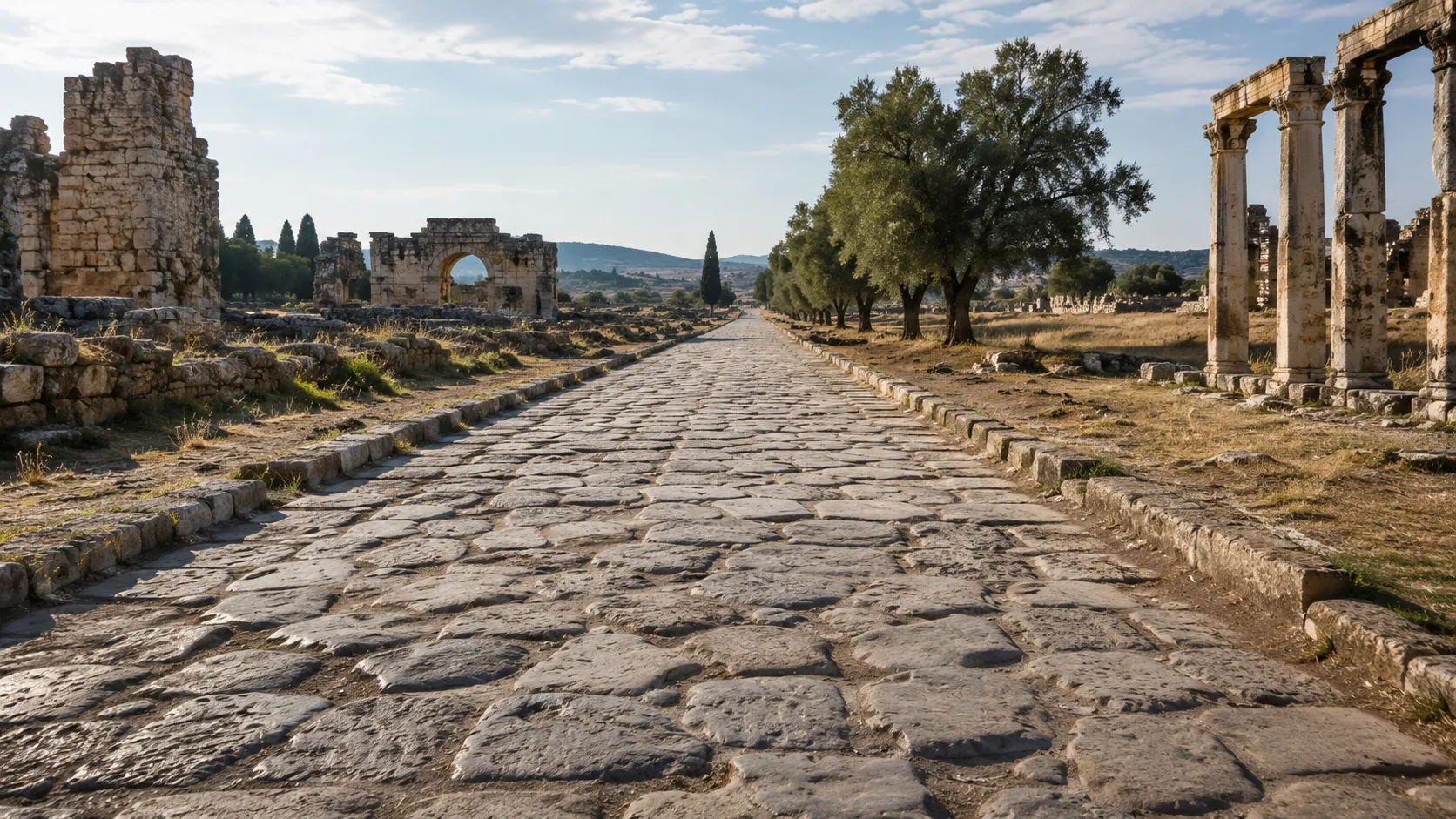
Cesta roman is a search term many people use when they want to understand the meaning, history, and legacy of Roman roads and the ancient transportation system that helped shape the Roman Empire. At first, the phrase may look confusing because “cesta” means road or path in several Slavic-language contexts, while “Roman” points toward ancient Rome, Roman civilization, and the powerful road network built by Roman engineers.
In simple words, Cesta Roman can be understood as a modern online phrase connected with ancient Roman roads, Roman infrastructure, and the long-lasting impact of the Roman road system. These roads were not just stone paths. They were tools of military strategy, trade, communication, city growth, and empire control.
The Romans built one of the most impressive transportation networks of the ancient world. Their roads connected cities, ports, military outposts, provinces, markets, and faraway regions. Even today, the subject of Cesta Roman attracts students, travelers, history lovers, and people interested in Roman engineering, heritage tourism, and ancient infrastructure.
What Is Cesta Roman? Simple Meaning Explained
The phrase Cesta Roman is best understood as a modern way of describing the Roman road network. It refers to the idea of roads connected with ancient Rome, especially the durable routes built across the Roman world for soldiers, merchants, officials, and travelers.
The word cesta is linked to the meaning of road, route, or path in several European language contexts. When combined with Roman, the phrase naturally suggests a Roman road, Roman pathway, or ancient road system. That is why many online articles use Cesta Roman meaning to explain the role of Roman roads in history.
A simple definition would be:
| Term | Simple Meaning |
| Cesta Roman | A modern phrase linked to Roman roads and ancient Roman routes |
| Roman roads | Roads built by Romans for military, trade, travel, and administration |
| Roman road system | The large connected network of roads across the Roman Empire |
| Roman infrastructure | Roads, bridges, aqueducts, walls, and public works built by Romans |
So, when someone searches what is Cesta Roman, they are usually looking for an easy explanation of ancient Roman roads, their purpose, their construction, and why they still matter today.
Is Cesta Roman a Real Historical Term?
One important thing to understand is that Cesta Roman is not the most standard academic term in English. Historians usually use phrases such as Roman roads, ancient Roman roads, Roman road system, or Roman road network.
However, Cesta Roman still works as a useful search phrase because it combines the idea of a road with the identity of Roman civilization. In some regional contexts, people may also search related terms like Rimska cesta, which means Roman road.
This is important for readers because it clears up confusion. If you are researching history, the more accurate terms are Roman roads or Roman road system. If you are searching online, Cesta Roman may lead you to articles about Roman pathways, road construction, ancient travel routes, and cultural heritage.
There is also another possible confusion. In some languages, roman can mean novel. Because of that, some users may think Cesta Roman refers to a book. The word Cesta is also used as the translated title of The Road, the famous novel by Cormac McCarthy. But in most SEO competitor content, Cesta Roman is treated mainly as a topic about Roman roads, not literature.
Historical Background of Roman Roads
The history of Roman roads goes back to the rise of the Roman Republic and later the expansion of the Roman Empire. Roads were essential because Rome needed to move armies, control conquered territories, collect taxes, connect settlements, and support trade.
One of the most famous examples is Via Appia, also known as the Appian Way. It began in 312 BCE and became one of the earliest and most important Roman roads. Because of its importance, it was later called Regina Viarum, meaning the Queen of Roads.
The Appian Way connected Rome with southern Italy and helped Roman forces move toward strategic regions. Over time, it also supported agriculture, commerce, city growth, and communication. This shows the true purpose of the Roman road system: it was not only about travel but also about power, planning, and control.
As Rome expanded, roads spread across Europe, North Africa, and parts of the Near East. These routes connected places such as Italy, Spain, France, Britain, Gaul, Hispania, the Danube region, and beyond. The result was a massive transportation system that helped hold together one of history’s most influential empires.
Why Romans Built Roads: Military, Trade, and Control
The Romans built roads for practical reasons. The first major reason was military logistics. Roman legions needed to move quickly from one region to another. A strong road network allowed soldiers, supplies, weapons, and messages to travel faster than they could across rough natural terrain.
The second reason was trade. Roman trade routes allowed merchants to move goods between cities, ports, markets, and provinces. Grain, wine, olive oil, pottery, metals, textiles, and other products could travel more efficiently. This helped local economies grow and made cities more connected.
The third reason was administration. A large empire needed communication. Roads allowed officials, tax collectors, messengers, and governors to stay connected with Rome. Without roads, managing distant provinces would have been far more difficult.
The fourth reason was cultural exchange. Roads helped ideas, languages, customs, religions, technologies, and artistic styles move across regions. In this way, the Roman road system did not only move people and goods; it moved culture.
That is why Cesta Roman is such a powerful topic. It represents how infrastructure can shape politics, economy, society, and daily life.
Roman Road Engineering: Why They Lasted So Long
The strength of Roman engineering is one of the biggest reasons Roman roads are still discussed today. Many ancient roads disappeared over time, but Roman roads became famous for their durability, planning, and construction quality.
Roman engineers understood that a road needed more than a flat surface. It needed a strong foundation, good drainage, durable materials, and careful maintenance. They often built roads with multiple layers of stone, gravel, sand, lime, and paving blocks. The surface was sometimes slightly raised or curved, which helped rainwater drain away from the center.
This design made Roman roads strong enough to handle soldiers, carts, animals, and heavy traffic. It also helped protect the road from mud, flooding, and erosion. In many places, Romans used local materials, which made construction more practical and efficient.
The phrase why were Roman roads so strong is one of the most important long-tail keywords for this topic because it answers a real user question. The answer is simple: Roman roads lasted because they were planned like serious public infrastructure, not temporary paths.
Roman Road Layers Explained Step by Step
A major content gap in many competitor articles is the lack of detail about Roman road layers. Roman construction was not always identical everywhere, but many roads followed a layered system.
| Roman Road Layer | Material | Purpose |
| Statumen | Large stones | Created a strong foundation |
| Rudus | Crushed stone or concrete-like material | Added strength and stability |
| Nucleus | Finer gravel, sand, or lime mixture | Created a smoother base |
| Summa crusta / pavimentum | Paving stones or surface blocks | Formed the visible road surface |
This layered construction system helped Roman roads survive heavy use. The statumen gave the road a solid base. The rudus and nucleus helped bind the structure together. The final surface made travel easier for carts, animals, soldiers, and pedestrians.
Another important feature was Roman road drainage design. Roads were often built with a slight camber, meaning the middle was higher than the sides. This allowed water to run off into side ditches. Without drainage, even the strongest road would break down over time.
This is why Roman roads are still studied in discussions about ancient Roman engineering, modern infrastructure design, and durable transportation systems.
Famous Roman Roads Connected to Cesta Roman
Several famous Roman roads help explain the wider meaning of Cesta Roman. These routes were more than local paths; they were strategic corridors of empire.
Via Appia, or the Appian Way, is the most famous Roman road. It connected Rome with southern Italy and became a symbol of Roman power. Because of its importance, it earned the title Queen of Roads.
Via Augusta was an important Roman route in Hispania, covering areas linked with modern Spain. It supported military movement, trade, and communication across western Roman territories.
Via Domitia connected Roman territories in Gaul and helped link Italy with regions that are now part of southern France and Spain. It played an important role in trade and movement across the western empire.
Other important routes included Via Flaminia, Via Aurelia, Via Aemilia, Via Latina, and Via Popilia. Each road helped Rome connect people, provinces, and resources.
These famous routes show why the Roman road network became one of the greatest achievements of ancient infrastructure.
Case Study: Via Appia, the Queen of Roads
A strong case study for Cesta Roman is Via Appia, also known as the Appian Way. This road was built from 312 BCE onward and developed over many centuries. It became one of the most important roads in the ancient Roman world.
Via Appia was originally designed for military conquest and strategic movement. It helped Roman forces move south and supported expansion toward important regions. Later, it became a route for agriculture, trade, travel, and settlement growth.
The road’s historic importance is so strong that it is now recognized as a major heritage route. Its long path, engineering quality, and cultural value make it one of the best examples of how Roman roads shaped both ancient and modern landscapes.
For travelers today, the Appian Way is also a powerful reminder that history is not only found in museums. Sometimes it is under your feet, in the stones of an ancient road that still tells the story of empire, movement, and human ambition.
Cesta Roman in Europe: Where Roman Roads Still Matter
Roman roads still matter across many parts of Europe. The old Roman world included regions connected with modern Italy, France, Spain, Croatia, Slovenia, Britain, and other areas. Some roads survive as visible archaeological remains, while others influenced later routes, towns, and transport corridors.
In Italy, the Appian Way remains one of the strongest examples of Roman road heritage. In France and Spain, Roman routes helped shape trade and settlement patterns. In Croatia and Slovenia, terms like Rimska cesta connect regional language with the idea of Roman roads and ancient routes.
This regional angle is useful for SEO because many users do not only want general history. They want to know where Roman roads existed, whether they can still be seen, and how these routes connect with local heritage.
How Roman Roads Changed Trade, Cities, and Culture
The economic impact of Roman roads was enormous. Roads helped goods move between farms, towns, military camps, ports, and major cities. This movement encouraged trade, supported markets, and helped settlements grow into important urban centers.
Roman roads also helped connect people. A merchant could travel to sell goods. A soldier could move to a frontier. A messenger could deliver official instructions. A traveler could move between cities. Each journey helped create stronger links between provinces.
The cultural legacy of Roman roads is also important. Roads allowed languages, customs, religious ideas, building techniques, and social practices to spread. They connected communities that might otherwise have remained isolated.
This is why how Roman roads shaped trade and cultural exchange across Roman provinces are important SEO angles. Roman roads were not just physical routes. They were channels of economic and cultural transformation.
Modern Impact of Roman Roads
The modern impact of Roman roads can be seen in how people still think about infrastructure. The Romans showed that strong roads could support military strength, economic growth, communication, and long-term political control.
Modern highways are not simply copies of Roman roads, but many infrastructure principles are similar: choose practical routes, build strong foundations, control water, maintain the surface, and connect important destinations. The Roman example still appears in discussions about modern transportation networks and modern infrastructure design.
A newer research angle also makes this topic more interesting. Modern digital mapping projects, including Itiner-e, use historical records, archaeological data, topographic information, GIS, and remote sensing to better understand the Roman road network. This shows that Roman roads are not only an ancient topic; they are still part of modern research.
Recent mapping has suggested that the Roman road network may have been much larger than older estimates. This gives your article a freshness advantage because many competitor pages discuss history but do not fully include modern archaeological mapping.
Cesta Roman Tourism: Can You Visit Roman Roads Today?
Yes, people can still visit some Roman roads today. This makes Cesta Roman tourism an important secondary search angle. Travelers, students, and history lovers often want to know whether ancient Roman roads can still be walked, photographed, or explored.
The Appian Way walking route is one of the best-known examples. Visitors can walk parts of the ancient road, see stone surfaces, explore nearby ruins, and experience a direct connection with Roman history.
Other Roman road remains can be found across Europe, depending on the region. Some are preserved as archaeological sites, while others appear as fragments, heritage routes, or roads that influenced later pathways.
Responsible tourism matters. Visitors should avoid damaging stones, removing artifacts, or walking outside protected areas. Roman roads are part of shared human heritage, and they need protection for future generations.
Preservation: Protecting Roman Roads for the Future
The preservation of Roman roads is important because these routes are archaeological records. They tell us how people moved, traded, fought, built, governed, and lived. Once damaged, ancient road remains can be difficult or impossible to restore.
Preservation often involves historians, archaeologists, local communities, environmentalists, and tourism authorities. Good preservation balances public access with protection. People should be able to learn from Roman roads, but the roads should not be harmed by careless tourism or modern construction.
Sustainable tourism, educational programs, careful signage, and local protection laws can help keep these roads safe. The goal is not only to protect old stones. The goal is to protect the memory of ancient movement, engineering, and cultural connection.
Myths and Facts About Cesta Roman and Roman Roads
| Myth | Fact |
| All Roman roads were perfectly straight. | Many were direct, but terrain, rivers, mountains, and local needs affected routes. |
| Roman roads were only for soldiers. | Military use was important, but roads also supported trade, travel, administration, and culture. |
| All Roman roads still exist today. | Many disappeared, but some survive as ruins, fragments, or routes influencing later roads. |
| Roman roads lasted by accident. | Their durability came from planning, layers, drainage, materials, and maintenance. |
| Cesta Roman is a standard academic term. | The more accurate academic terms are Roman roads or Roman road system. |
This section is useful because it answers common questions quickly and helps readers understand the topic without confusion.
Quick Summary: Cesta Roman at a Glance
| Topic | Short Answer |
| Main keyword | cesta roman |
| Simple meaning | A phrase connected with Roman roads and ancient Roman routes |
| Main subject | Roman road system and Roman infrastructure |
| Most famous road | Via Appia / Appian Way |
| Main purpose | Military movement, trade, communication, and control |
| Key engineering feature | Layered construction and drainage |
| Modern value | Heritage tourism, archaeology, and infrastructure history |
FAQs About Cesta Roman
What does Cesta Roman mean?
Cesta Roman generally refers to the idea of Roman roads or ancient routes connected with Roman civilization. It is best understood as a modern search phrase related to the Roman road system.
Is Cesta Roman the same as Roman roads?
In SEO and online content, yes, Cesta Roman is usually used to discuss Roman roads, ancient Roman pathways, and the Roman transportation network.
Why were Roman roads important?
Roman roads were important because they helped move armies, goods, officials, messages, and ideas across the Roman Empire. They supported military power, trade, city growth, and administration.
Why were Roman roads so strong?
Roman roads were strong because they used layered construction, durable materials, solid foundations, cambered surfaces, and drainage systems.
What is the most famous Roman road?
The most famous Roman road is Via Appia, also called the Appian Way and known as the Queen of Roads.
Can people still visit Roman roads today?
Yes, some Roman roads and road fragments can still be visited today, especially in parts of Italy and Europe. The Appian Way is one of the best-known examples.
Is Cesta Roman about a novel?
Sometimes users may confuse the phrase because “roman” can mean “novel” in some languages, and Cesta can refer to The Road by Cormac McCarthy. However, most competitor content treats Cesta Roman as a Roman roads topic.
Conclusion: Why Cesta Roman Still Matters
Cesta Roman matters because it connects us with one of the greatest infrastructure achievements of the ancient world. The Roman road system helped Rome move armies, grow trade, govern provinces, connect cities, and spread culture across vast regions.
From Via Appia to lesser-known roads across Europe, Roman routes show the power of planning, engineering, and connectivity. They also remind us that roads are more than physical paths. They shape economies, societies, politics, and memory.
Today, the study of ancient Roman roads continues through archaeology, tourism, preservation, and digital mapping. Whether you are a student, traveler, or history lover, understanding Cesta Roman gives you a clearer view of how Roman engineering changed the ancient world and still influences modern thinking about infrastructure.
Disclaimer:
This article is for general informational purposes only. The information shared may vary based on individual understanding, location, research needs, and personal preferences. Readers are encouraged to use this content as a helpful guide and explore additional sources when needed.