

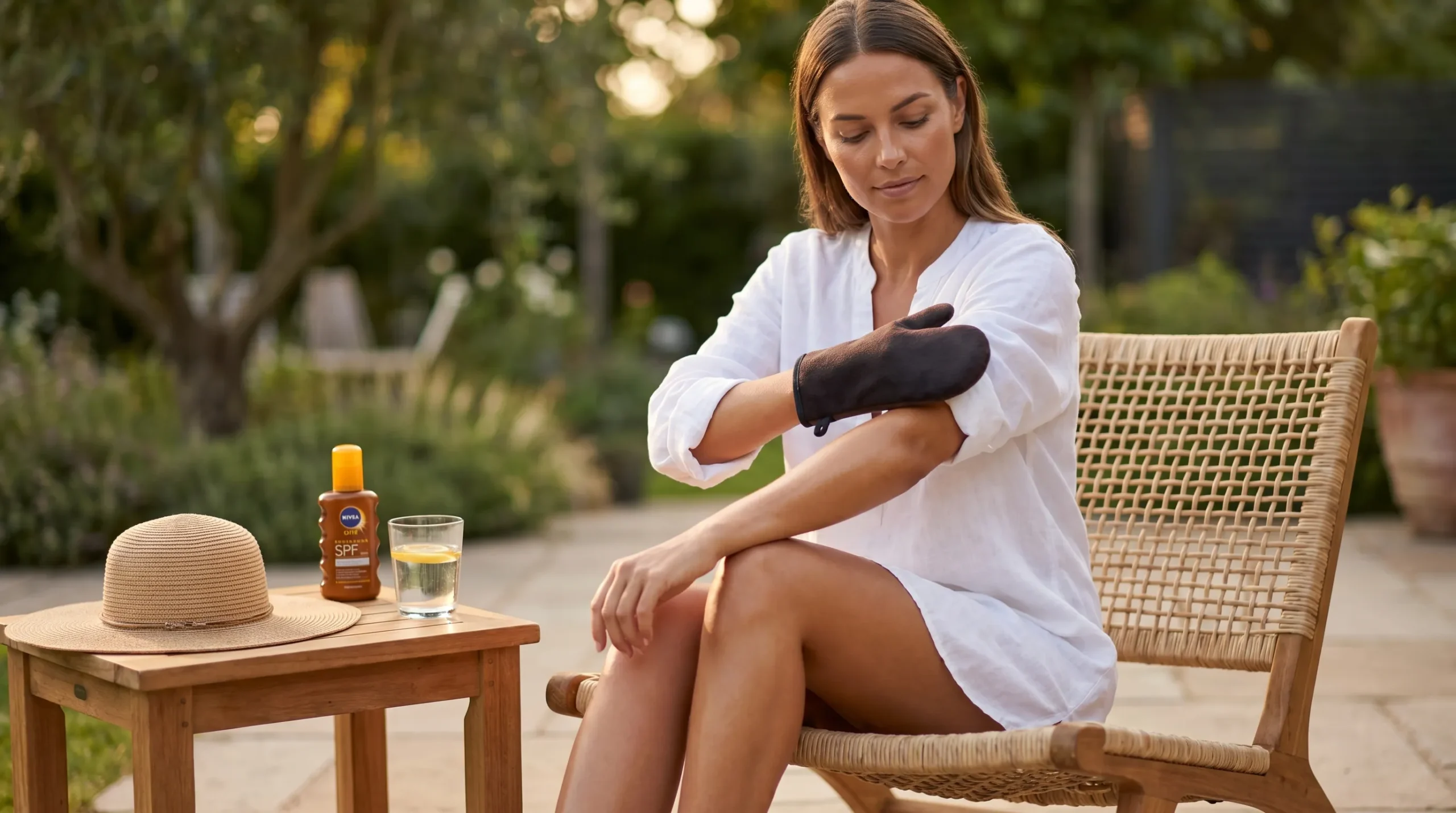
How to tan the fastest is a question a lot of people ask before a vacation, wedding, photoshoot, or any special event when they want a quick golden glow. The honest answer is that the fastest visible tan usually comes from a spray tan or an express self-tanner, not from spending long hours in the sun. A real tan from UV rays takes more time, depends heavily on skin type and melanin, and comes with real skin damage, premature aging, and skin cancer risk. Dermatology sources are very clear that there is no safe way to tan with UV exposure, and even a tan that happens while wearing sunscreen is still a sign of skin injury.
So, if your goal is a quick and beautiful tan, the smartest way to think about it is this: which method gives you the fastest result, which lasts the longest, and which causes the least harm? This guide breaks that down in a simple way, so you can get the look you want while understanding what actually works.
The Fastest Ways to Tan, Ranked From Quickest to Slowest
If you want the best ways to tan safely and quickly, here is the practical ranking.
| Method | How fast you see color | How long it lasts | Main tradeoff |
| Professional spray tan | Same day | About a week | Fastest visible result, needs prep and aftercare |
| Express self-tanning mousse | 1 to 3 hours for visible color | Several days to a week | Great for last-minute results, technique matters |
| Regular self-tanner / gradual tanners | Several hours to a few days | Several days | Safer, but not always instant |
| Tanning bed | Several sessions | Varies | Not safer; raises skin cancer risk |
| Outdoor sun tanning | Often multiple exposures | Varies | Slowest to control, easiest to overdo |
A professional spray tan is usually the fastest route to a sun-kissed glow because it gives instant cosmetic color and often deepens over several hours. Express self-tanning mousse is the next best option for a last-minute event, especially if you need results within one hour, two hours, or by the end of the day. Competitor pages lean heavily on spray tan, self tanner, and express self-tanning mousse for exactly this reason, and the broader dermatology guidance supports the same direction: sunless tanning gives the appearance people want without the same UV exposure.
By contrast, outdoor tanning and indoor tanning are not truly “fast” in a predictable way. They depend on your skin tone, UV index, time of day, product use, and how easily you burn. That makes them less reliable, even before you factor in the damage.
How Long Does It Take to Tan With Each Method?
This is where search intent gets very practical, because people want realistic timelines for getting a tan fast.
With a spray tan, you usually leave with visible color right away. Many formulas continue developing over four to eight hours, and some 1 Hour Express Tan products are designed to be rinsed after a shorter wait while still developing into a deeper shade later. That makes spray tan the top answer for how to get tan fast for an event. Competitor pages also use timelines like a week to 10 days or 7 days for how long the result lasts, depending on skin prep and aftercare.
With an express self-tanner, visible color may show up in one hour for a light tan, two for a medium tan, and three for your darkest tan, depending on the product. Regular self-tanners and gradual tanners may take a few hours or a couple of applications over three days to fully build a deeper bronze.
With outdoor tanning, there is no fixed timer. Some people may see a little color after 15 to 60 minutes in strong UV conditions, while others mostly burn. Lighter skin types may notice redness before any bronzed skin appears. Darker skin tones may develop tan more gradually. Cleveland Clinic notes that whether your skin burns, tans, or does both depends a lot on melanin and your natural skin characteristics.
With a tanning bed, competitor claims often talk about 3-4 sessions or 6-10 visits for more noticeable color. But faster does not mean safer. The American Academy of Dermatology says indoor tanning can increase the risk of squamous cell carcinoma by 58% and basal cell carcinoma by 24%, and using tanning beds before age 20 can increase melanoma risk by 47%.
What Makes You Tan Faster?
If you are asking what makes you tan faster, five things matter most: skin type, melanin, UV intensity, method, and prep.
The biggest factor is your natural skin type. Some people produce more melanin quickly, which means they tan more easily. Others burn sooner and tan slowly. That is why one person can get a soft bronze after moderate sun exposure while someone else ends up with painful sunburn and peeling instead. Cleveland Clinic explains that a tan is your body making more melanin to protect itself from UV damage, which is exactly why a tan is considered a sign of injury rather than a healthy goal.
The second factor is UV index. Stronger UV usually means faster skin darkening, but it also means faster damage. The EPA notes that UV exposure is influenced by time of day, latitude, altitude, and cloud cover, and that UV is strongest around midday.
The third factor is method. A spray tan does not depend on UV at all. A self-tanner depends on application quality. Outdoor tanning depends on sun conditions you cannot fully control. That is why self tanning products for a tanned look without UV rays are usually the better answer when people care about speed.
Finally, prep matters more than most people think. Dead skin cells, dry patches, and poor application can make even the best tanning products look uneven. A clean, exfoliated, moisturized base gives better color depth, better shade, and better longevity.
Outdoor Tanning: How to Tan Faster Without Burning
A lot of people still want to know how to tan without burning outdoors. The uncomfortable truth is that trying to force a fast outdoor tan often backfires. Burning does not help you build a better tan. It damages your skin barrier, can lead to peeling, and may leave you with uneven color.
If you still choose sun exposure, shorter, controlled sessions are safer than trying to push through 1-2 hours of direct sun exposure all at once. Peak UV periods such as 10 a.m. to 3 p.m. usually come with the highest overexposure risk. Cleveland Clinic and the EPA both note that midday sun is when UV is strongest, which is why sun safety advice consistently warns against long direct exposure during those hours.
This is also where the tanning vs burning distinction matters. A tan may look better than a burn, but both are still forms of sun damage. The Skin Cancer Foundation says plainly that tanning damages skin cells, speeds up skin aging, and can lead to skin cancer. So if your real goal is a fast result, outdoor tanning is rarely the best strategy. It is slower, harder to predict, and easier to overdo than spray tan or self tanner options.
Does Sunscreen Stop You From Tanning?
This is one of the most common questions around the keyword, and it deserves a direct answer.
No, sunscreen does not always stop you from tanning completely. Cleveland Clinic explains that sunscreen cannot block all UV rays, so some tanning can still happen. But that does not make tanning safe. Their guidance is also very clear that a suntan is a sign of skin damage, even when you wear sunscreen.
That means does sunscreen stop you from tanning is really the wrong question. The better question is whether it reduces harm, and the answer there is yes. Broad-spectrum SPF 30+ helps lower the amount of UV damage, sunburn, and long-term aging your skin takes on. The AAD says that every time you tan, you damage your skin and increase your risk for skin cancer. So, if someone is hoping to use sunscreen as a way to “tan slowly but safely,” it is still important to understand that there is no such thing as a healthy UV tan.
Best UV Conditions for Tanning: Time of Day, UV Index, Clouds, and Reflection
Many searchers assume the best UV conditions for tanning are just “the hottest part of the day.” That is exactly the mindset that leads to overexposure.
The EPA explains that UV radiation is strongest at midday, increases with altitude, and can still be significant through thin or broken clouds. Reflective surfaces such as water, sand, and even snow can increase exposure because they bounce UV back toward your skin.
That means you can still tan through clouds, and you can get more UV than expected at the beach. It also means the best UV index for tanning from a speed perspective is usually also the riskiest from a skin-damage perspective. The EPA’s UV Index scale notes that a reading of 6 to 7 is already considered high risk of harm from unprotected sun exposure.
From an SEO and user-help perspective, this is one of the most important myths to correct: stronger UV may speed tanning, but it also speeds harm.
Spray Tan vs Self-Tanner vs Sun Tanning
If you compare methods side by side, the best choice usually becomes obvious.
A spray tan is best for people who want immediate cosmetic payoff, especially before a wedding, vacation, or photoshoot. A self-tanner is ideal if you want control at home and are willing to spend a little extra time on application. Sun tanning and tanning beds are slower to control and come with more damage.
Here is a practical way to think about it. If you need to look tanned today, use a spray tan or instant self-tanner. If you want a buildable year-round glow, use a gradual tanner or a regular self-tanner. If you are tempted by a tanning bed because it seems faster, remember that it is not the safer shortcut many people assume. The Skin Cancer Foundation notes that tanning beds are not safer than lying in the sun, and that both UVA and UVB contribute to skin cancer.
How to Prepare Your Skin for a Faster, More Even Tan
This is the one area where almost every competitor is right: prepare your skin first.
Exfoliation removes dead skin cells and gives you a fresher surface, which helps create a more even tan. Moisturizing dry spots such as elbows, knees, ankles, and hands helps prevent streaks and blotchy patches. If you are using a self-tanner, a tanning mitt can make a huge difference in getting a smoother finish and avoiding orange hands.
For spray tan prep, clean skin matters. Heavy oils, deodorant, and residue can interfere with color development. For self-tanners, choosing a formula that matches your skin tone matters too. A very dark formula on fair skin can look unnatural, while a lighter formula may not give enough payoff if you want a deeper bronze.
Think of prep as the difference between a natural-looking tan and a rushed one. Fast results only look good when the base is right.
How to Tan Evenly and Make It Last Longer
Even color and longevity are what separate a nice glow from a disappointing one.
To tan evenly, do not rush application. Work in sections, blend carefully, and apply less product to dry or textured areas. If you are using a facial product such as a facial tanning serum or facial tanning mist, keep the face separate from the body formula when needed. Facial skin often behaves differently, and overdoing it can make the result obvious in the wrong way.
To make your tan last longer, moisture is everything. Competitor pages and common product guidance both point to hydration as the key to keeping a tan from fading too fast. Dry skin sheds faster, which means color disappears faster. Gentle cleansing, regular moisturizer, and avoiding over-exfoliation after application all help preserve the result.
This is especially true for spray tan aftercare and self-tanner aftercare. Rinse too early, scrub too hard, or skip moisturizer, and the tan may fade patchily rather than gradually.
Should You Use a Tanning Bed for Faster Results?
From a pure speed mindset, some people still think indoor tanning is the answer. From a health perspective, it is one of the worst options in the list.
The American Academy of Dermatology says indoor tanning increases the risk of squamous cell carcinoma by 58% and basal cell carcinoma by 24%, while using tanning beds before age 20 increases melanoma risk by 47%. The Skin Cancer Foundation also reports a 75% increased risk of melanoma if you start using indoor tanning beds before age 35. That matters because tanning beds are often marketed as a controlled shortcut. But the evidence does not support the idea that they are a safe way to get a golden summer tan. They are a faster route to UV exposure, not a smarter one.
What Dermatologists Would Recommend Instead
If you strip away all the marketing and fast-glow promises, the dermatologist-friendly answer is simple.
For the fastest visible result, choose a spray tan or express self-tanning mousse. For a controlled at-home option, use a self-tanner formulated for your skin type. For your face, use a dedicated facial tanning serum or facial tanning mist instead of overloading body formulas. For long-term skin health, use broad-spectrum sunscreen, avoid tanning beds, and think of a tan as a cosmetic result to create, not a UV process to chase.That gives you the best blend of speed, appearance, and lower risk.
A useful rule of thumb: if you need color today, use spray tan. If you need control at home, use self tanner. If you are relying on UV for fast results, you are usually accepting more damage for a less predictable outcome.
Quick FAQ
What is the fastest way to tan?
The fastest visible option is usually a professional spray tan or an express self-tanner, not outdoor tanning.
Can you tan faster with tanning oil?
Tanning oil may increase exposure, but it does not make UV tanning safe. Faster UV exposure can also mean faster damage.
Does sunscreen stop you from tanning?
Not completely, but it reduces UV damage. A tan while wearing sunscreen is still skin damage.
How long does a spray tan last?
Usually about a week to 10 days, depending on your prep, skin type, and aftercare.
How often should you tan?
If you mean UV tanning, less is better from a skin-health perspective. If you mean sunless tanning, follow product directions and reapply only as your color fades.
Final Takeaway
If your only goal is how to tan the fastest, the best answer is not “more sun.” It is spray tan first, self-tanner second, and UV tanning last. That is because the fastest-looking tan and the healthiest-looking tan are often the same thing: a tan you create without chasing skin damage.
For SEO and for real life, that is the most honest answer. You can still get the bronzed skin, golden glow, or sun-kissed tone you want. The smartest move is just choosing the method that gives you the result quickly without paying for it later in wrinkles, dark spots, photoaging, or worse.