

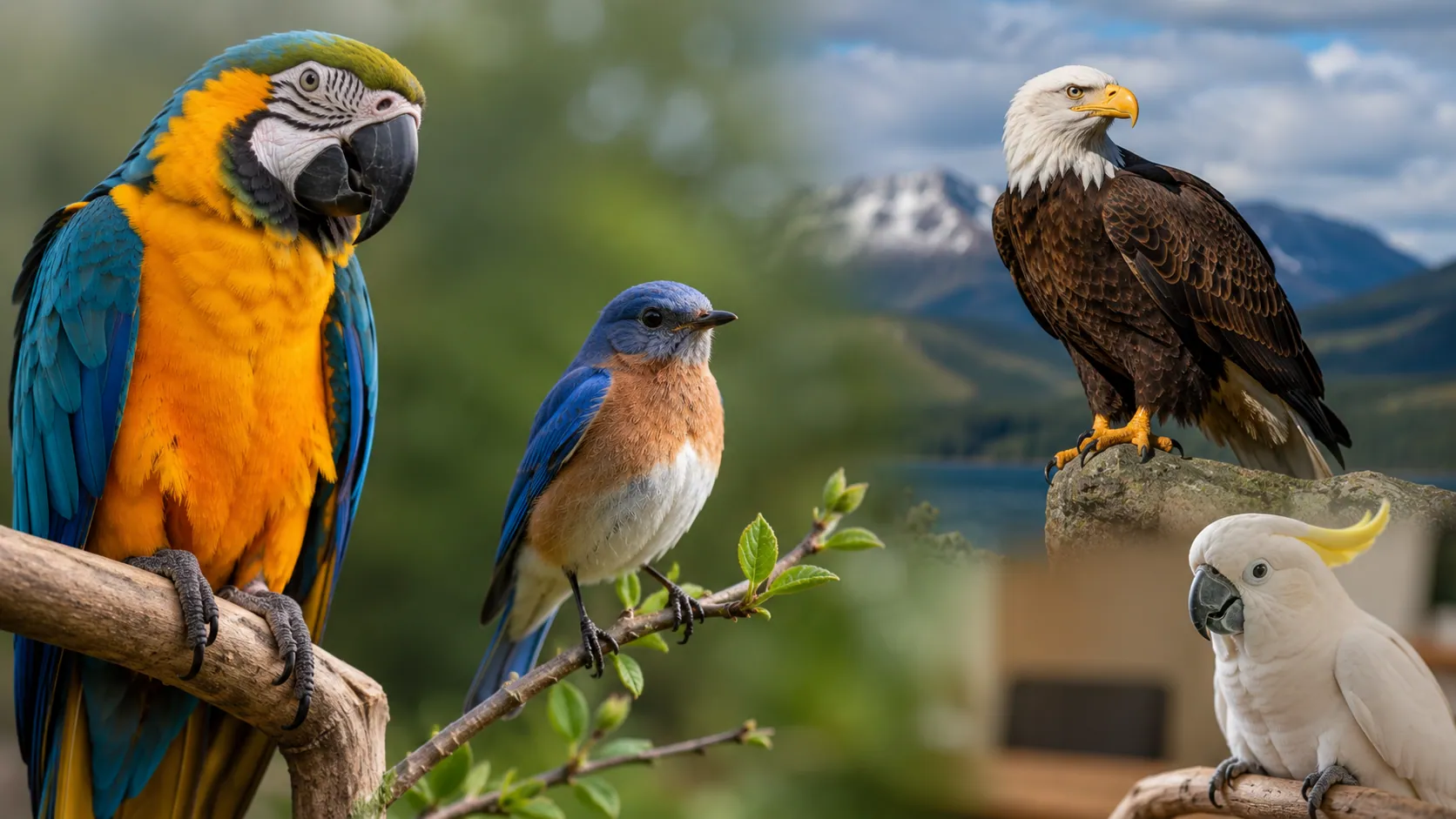
How long does the average bird live depends on the species, size, environment, and level of care, but most birds can live anywhere from a few years to several decades. A small wild songbird may only average 2–5 years in the wild, while a well-cared-for pet bird, large parrot, cockatoo, macaw, or albatross can live 30–50+ years. Some exceptional birds have even reached extreme ages close to 80+ years in captivity.
The reason bird lifespan varies so much is simple: “bird” is a very broad word. A hummingbird, sparrow, cardinal, pigeon, eagle, African grey parrot, and Laysan albatross all live very different lives. Their bird life expectancy is shaped by predators, disease, food scarcity, climate, migration, veterinary care, genetics, and whether they live in the wild or captivity.
In this guide, we’ll break down the average bird lifespan, compare wild birds vs pet birds, explain why some birds live longer than others, and share a practical bird lifespan by species chart.
Quick Answer: How Long Does the Average Bird Live?
The average lifespan of a bird can range from about 2–5 years for many small wild birds to 10–25 years for many pet birds and 30–80+ years for large parrots and some seabirds. So, when people ask, “how long do birds live?”, the most accurate answer is: it depends heavily on the bird species.
A small backyard bird like a house sparrow, warbler, finch, or Black-capped chickadee may have a short average lifespan because many wild birds face high early mortality. Predators, harsh weather, winter starvation, window collisions, disease, outdoor cats, and food scarcity can shorten their lives.
Larger birds usually live longer. Hawks, eagles, owls, crows, parrots, macaws, cockatoos, and albatrosses often have longer lifespans because they mature more slowly, face fewer predators as adults, and may have stronger survival advantages.
It is also important to understand the difference between average lifespan and maximum lifespan. A species may average only a few years in the wild, but one individual bird may survive for 15, 20, 50, or even 80+ years under ideal conditions.
Why Bird Lifespan Varies So Much
Bird lifespan varies because birds do not all age the same way. A tiny hummingbird and a large macaw are both birds, but their bodies, risks, and life patterns are completely different.
One major factor is bird size. In general, larger birds tend to live longer than small birds. Many small songbirds have fast metabolic rates and face heavy predator pressure. They may reproduce quickly and have multiple broods, but many do not survive to old age. Larger birds, especially parrots, seabirds, and raptors, often mature more slowly and can live much longer.
Environment also matters. Wild birds must deal with natural predators, habitat loss, climate change, disease, bad weather, pesticides, starvation, and fatal accidents. A bird may survive one breeding season but fail to make it through winter migration or food shortages.
By contrast, pet birds may live longer when they receive regular meals, clean water, safe housing, veterinary care, mental stimulation, and protection from predators. However, captivity does not automatically mean a longer life. A neglected bird kept in a tiny cage, fed a poor diet, or exposed to stress and household toxins may have a much shorter life than expected.
Bird Lifespan by Species: Quick Comparison Chart
A bird lifespan chart is one of the easiest ways to understand how different species compare. These ranges are general averages and can vary depending on care, location, genetics, and wild vs captive conditions.
| Bird Type | Common Examples | Typical Lifespan | Key Notes |
| Small songbirds | Sparrows, finches, warblers | 2–5 years | High wild mortality; many die young |
| Backyard birds | Robins, cardinals, chickadees, blue jays | 2–10 years | Records can be much higher than averages |
| Hummingbirds | Ruby-throated hummingbirds and others | 3–9 years | Small but surprisingly resilient |
| Pigeons and doves | Pigeons, doves | 5–15 years | Often live longer in safer environments |
| Crows and corvids | American crows, ravens, jays | 7–20+ years | Intelligent birds with longer potential lifespans |
| Raptors | Hawks, eagles, owls | 8–25+ years | Larger predators often live longer |
| Seabirds | Albatrosses, gulls, petrels | 20–50+ years | Some are among the longest-living birds |
| Small pet birds | Budgies, canaries, finches | 5–15 years | Diet and care strongly affect lifespan |
| Medium pet birds | Cockatiels, lovebirds | 10–25 years | Popular household birds with long care needs |
| Large parrots | Macaws, cockatoos, African greys | 30–80+ years | Can become lifelong commitments |
This table shows why the question “how long does the average bird live?” needs more than one answer. A canary lifespan is not the same as a macaw lifespan, and a wild robin is not living under the same conditions as a pet cockatiel.
Wild Birds vs Pet Birds: Which Live Longer?
In many cases, pet birds live longer than wild birds because they are protected from many daily survival risks. A pet bird with proper care may have access to clean food, fresh water, safe housing, warmth, enrichment toys, regular sleep, and an avian vet. Wild birds, on the other hand, must survive predators, accidents, bad weather, and food shortages.
For example, a wild house sparrow may average only 3–5 years, but some individuals can live much longer. A Blue jay may average around 7 years, while a Northern cardinal may average only a few years in the wild but can survive much longer in ideal conditions. This is why wild birds lifespan data often looks lower than maximum recorded ages.
Pet birds have different risks. A budgie, cockatiel, lovebird, parakeet, canary, or African grey parrot can live longer with good care, but poor housing and nutrition can shorten life. Birds are sensitive animals. Smoke, fumes, unsafe cookware, poor diet, stress, lack of exercise, and dirty cages can all harm their health.
So, do birds live longer in captivity? Often yes, but only when captivity includes proper care, safe housing, veterinary attention, exercise, and mental stimulation.
Common Backyard and Pet Bird Lifespans
Many people ask about birds they see at feeders, in gardens, or in their homes. Here are common examples of backyard birds lifespan and pet birds lifespan ranges.
| Bird | Wild or Pet? | Typical Lifespan |
| American robin | Wild backyard bird | 2–3 years average, records much higher |
| Northern cardinal | Wild backyard bird | Around 3 years average, sometimes longer |
| Black-capped chickadee | Wild backyard bird | 2–3 years average |
| Blue jay | Wild backyard bird | About 7 years, sometimes longer |
| American crow | Wild bird | 7–8 years average, can exceed 20 years |
| House sparrow | Wild/common bird | 3–5 years average |
| Canary | Pet bird | 5–10+ years |
| Budgie / parakeet | Pet bird | 5–15 years |
| Cockatiel | Pet bird | 10–25 years |
| Lovebird | Pet bird | 10–20 years |
| African grey parrot | Pet bird | 40–60+ years |
| Macaw | Pet bird | 50–80+ years |
| Cockatoo | Pet bird | 40–70+ years |
This is why a pet bird lifespan chart is useful for people thinking about adoption. A budgie or canary may be a moderate commitment, while a macaw, cockatoo, or African grey parrot can be a multi-decade commitment.
For backyard birdwatchers, the same bird may return to a feeder year after year, but it is hard to know without bird banding, bird ringing, or a visible marker. Scientists use bird bands, transmitters, serial numbers, and migration tracking to learn how long birds live.
Small Birds vs Large Birds: Which Live Longer?
In general, larger birds live longer than smaller birds, although there are exceptions. This pattern is one reason people ask, “do bigger birds live longer than smaller birds?”
Many small birds, such as warblers, sparrows, finches, and chickadees, face high mortality in the wild. They may have fast metabolic rates and many predators. They also deal with winter starvation, storms, nest failure, disease, and migration risks. Because so many young birds die early, their average lifespan can be short even when a few individuals live much longer.
Large birds, including eagles, hawks, owls, parrots, macaws, cockatoos, and albatrosses, often live longer. They may take more time to reach sexual maturity, produce fewer young, and invest more energy in survival. Some seabirds and parrots are famous for long lives because they combine slower maturation with strong adult survival.
Still, size is not the only factor. Habitat, predators, diet, genetics, disease, captivity, veterinary care, and human impact all affect bird life expectancy.
Average Lifespan vs Maximum Lifespan
One common source of confusion is the difference between average lifespan and maximum lifespan.
The average bird lifespan means the age most birds of a species typically reach. The maximum lifespan means the oldest known individual. These numbers can be very different.
For example, a small wild bird may have an average lifespan of 2–5 years, but a rare individual might survive 10, 15, or even 20+ years. This happens because many wild birds die before full maturity. A songbird may face a low chance of making it to its first birthday because of predators, starvation, disease, bad weather, or accidents.
Maximum records are still useful, but they should not be treated as normal expectations. When you see that a species has a record lifespan of 20 years, it does not mean most birds of that species live that long. It means one bird reached that age under unusually favorable conditions.
This distinction helps answer the question “why do most birds not die of old age?” Many birds die from survival pressures long before natural aging becomes the main issue.
Longest-Living and Shortest-Living Birds
Some of the longest-living birds include albatrosses, macaws, cockatoos, Amazon parrots, African grey parrots, and other large parrots. These birds can live for decades, and in some cases, they may outlive their owners.
The famous Laysan albatross Wisdom is often mentioned in discussions about bird longevity because she has survived for many decades and continued returning to breeding grounds. Long-lived parrots such as cockatoos and macaws are also known for reaching exceptional ages in captivity, especially when they receive proper care, nutrition, and veterinary support.
The shortest-living birds are usually small wild birds with high mortality rates. Warblers, small finches, sparrows, and some garden birds may average only a few years in the wild. For example, a blue tit average may be only a few years, while record ages can be much higher.
This is why both extremes are important. A bird can belong to a species with a short average life but still live longer than expected. Likewise, a parrot may have the potential to live 50+ years, but poor diet, stress, or unsafe housing can shorten that lifespan.
How Scientists Know How Long Birds Live
Scientists estimate bird survival rates through methods like bird banding, bird ringing, transmitter tracking, field observation, and captive records. These methods help researchers understand migration, breeding return, mortality, and lifespan.
With bird banding or ringing, a small band with a unique serial number is placed on the bird’s leg. If that bird is found or observed again later, researchers can compare dates and estimate age. Some birds are also tracked with transmitters, especially during migration.
This is how scientists answer questions like “how do we know how long birds live?” and “how does bird ringing help track lifespan?” Without these records, it would be almost impossible to know whether a bird at a feeder is young, middle-aged, or unusually old.
Captive records also help. Zoos, rescue centers, and long-term bird owners may keep detailed records of birds such as parrots, cockatoos, starlings, and other species. However, captive lifespan does not always reflect wild survival because captive birds avoid many natural risks.
What Shortens a Bird’s Lifespan?
Many things can shorten a bird’s life. For wild birds, the biggest risks include predators, starvation, disease, winter weather, habitat loss, climate change, pesticides, window collisions, outdoor cats, and accidents during migration.
Human activity plays a major role. Habitat destruction removes nesting sites and food sources. Pesticides can reduce insects and contaminate food chains. Outdoor cats kill large numbers of birds each year. Windows and buildings can cause fatal collisions, especially during migration. Climate change may also shift food availability, breeding timing, and habitat conditions.
For pet birds, lifespan can be shortened by poor diet, dirty cages, lack of exercise, stress, unsafe household fumes, loneliness, untreated illness, and lack of avian veterinary care. Birds often hide illness, so owners may not notice a problem until it becomes serious.
A simple rule is this: birds live longer when they have safe environments, proper nutrition, clean water, low stress, and protection from preventable risks.
How to Help Birds Live Longer
You can help both pet birds and wild birds live longer by reducing risks and supporting healthier environments.
For pet birds, focus on daily care. Provide a balanced diet, fresh water, a clean cage, safe perches, enrichment toys, and enough space for movement. Many birds also need exercise and flight time in a safe indoor area. Regular avian vet checkups are important because birds can hide signs of illness.
Good pet bird care also means avoiding hazards. Keep birds away from smoke, strong fumes, unsafe cookware, toxic plants, electrical cords, and stressful environments. A healthy sleep schedule, social interaction, and mental stimulation can support long-term bird welfare.
For wild birds, small changes can help. Keep feeders clean, offer clean water, plant native species, reduce pesticide use, protect natural shelter, make windows safer, and keep cats indoors. These steps support wild bird survival by reducing human-caused threats.
A helpful way to think about it is: pet birds need consistent care, while wild birds need safer habitats. Both benefit when humans reduce avoidable risks.
Expert care principle: “A bird’s lifespan is not only written in its genetics. It is shaped every day by food, safety, stress, environment, and care.”
Signs of Aging in Birds
It can be difficult to tell exactly how old a bird is just by looking at it. However, some clues can suggest whether a bird is young, adult, or aging.
Young birds may have juvenile feathers, softer colors, shorter tails, or less polished plumage. Adult birds often develop clearer markings, stronger colors, or mature feather patterns. In some species, eye color, beak appearance, or plumage changes can offer clues.
Older pet birds may show changes in activity, feather condition, balance, appetite, sleep patterns, or mobility. Some may become less playful or need easier access to food, water, and perches. Senior birds may benefit from softer landing areas, safer cage layouts, and more frequent health checks.
Still, visual signs are not always reliable. A bird band, rescue record, breeder record, or veterinary history is usually the best way to know a bird’s true age.
FAQs About Bird Lifespan
How long does the average bird live?
The average bird lifespan can range from 2–5 years for many small wild birds to 10–25 years for many pet birds and 30–80+ years for large parrots and some seabirds. The exact number depends on species, care, habitat, predators, and health.
Do pet birds live longer than wild birds?
Yes, many pet birds live longer than wild birds because they avoid predators, starvation, harsh weather, and many accidents. However, they only live longer when they receive proper food, clean housing, exercise, enrichment, and veterinary care.
What bird lives the longest?
Some of the longest-living birds include albatrosses, macaws, cockatoos, Amazon parrots, and African grey parrots. Large parrots and seabirds are especially known for long lifespans.
What bird has the shortest lifespan?
Many small wild birds, including some warblers, finches, sparrows, and small songbirds, have short average lifespans because of high mortality in the wild. However, individual birds can sometimes live much longer than the average.
How long do parrots live?
Parrot lifespan varies by species. Smaller parrots and parakeets may live around 5–15 years, while cockatiels may live 10–25 years. Large parrots such as macaws, cockatoos, Amazon parrots, and African grey parrots may live 40–80+ years.
How long do backyard birds live?
Many backyard birds live around 2–10 years, depending on the species. Robins, chickadees, cardinals, sparrows, blue jays, crows, and hummingbirds all have different lifespans, and record ages may be much higher than averages.
Can you tell a bird’s age by looking at it?
Sometimes you can estimate a bird’s age by looking at plumage, juvenile feathers, adult markings, eye color, behavior, or feather condition. But the most reliable age clues come from bird bands, records, or known hatch dates.
Conclusion
So, how long does the average bird live? The best answer is that birds can live from only a few years to many decades, depending on the species and conditions. Small wild birds often have shorter average lifespans because of predators, disease, food scarcity, bad weather, and first-year mortality. Larger birds, seabirds, parrots, macaws, cockatoos, and African grey parrots can live much longer.
For pet birds, proper care makes a major difference. Clean water, a healthy diet, safe housing, exercise, enrichment, low stress, and avian veterinary care can all support a longer life. For wild birds, safer windows, fewer pesticides, clean feeders, native plants, and protected habitats can improve survival.
In the end, bird lifespan is shaped by a mix of nature, environment, and care.
Disclaimer: This article is for general informational and educational purposes only. Bird lifespan can vary widely depending on species, genetics, environment, diet, predators, disease, and quality of care. Lifespan estimates are averages, not guarantees, and wild or captive conditions may significantly affect how long an individual bird lives.