

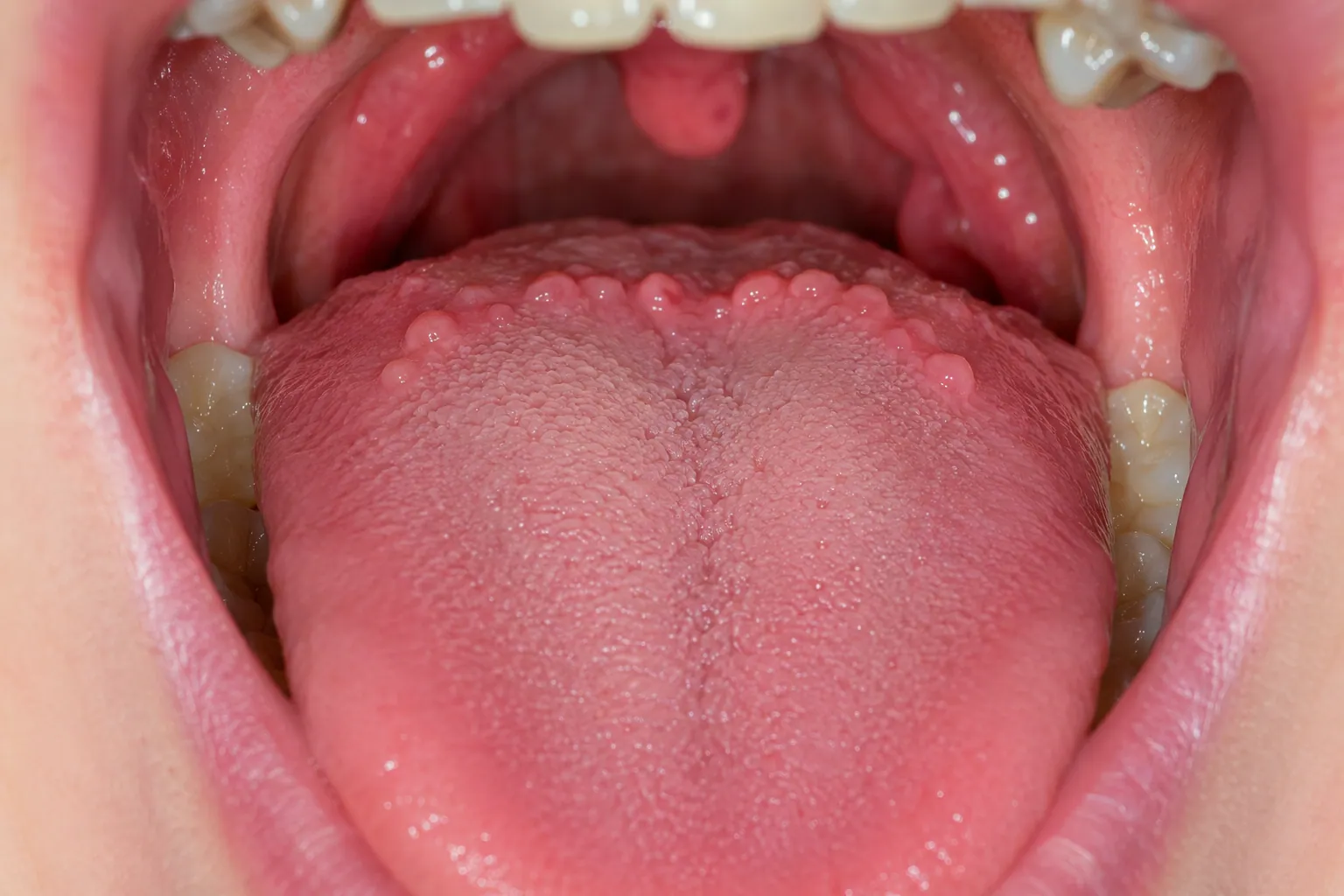
In many cases, the lumps on the back of your tongue are normal structures called papillae, especially circumvallate papillae, which are larger bumps near the back of the tongue that help with taste. These tongue bumps can look surprising when you first notice them, especially if you are checking your mouth because of a sore throat, irritation, white coating, or pain when swallowing.
Most bumps on the back of the tongue are harmless and may come from normal tongue anatomy, enlarged papillae, mild irritation, spicy foods, hot drinks, allergies, oral thrush, canker sores, or infections. However, some symptoms should not be ignored. A lump that lasts, grows, bleeds, feels hard or fixed, or appears with red or white patches, difficulty swallowing, difficulty speaking, or a lump in the neck should be checked by a dentist or doctor.
This guide explains what is normal, what can cause bumps at the back of the tongue, how to soothe irritation, and when to seek professional care.
Quick Answer: Are Lumps on the Back of the Tongue Usually Normal?
Yes, lumps on the back of the tongue are often normal. The back part of the tongue naturally has larger bumps called circumvallate papillae. These bumps can look like raised round lumps near the throat, but they are part of normal tongue anatomy. Cleveland Clinic explains that the small bumps on the back of the tongue are circumvallate papillae, which look larger than other types of papillae and contain approximately 250 taste buds.
So, if the bumps are fairly even, pinkish, painless, and located in a row near the back of your tongue, they may simply be normal taste buds or normal papillae. Many people only notice them after looking closely in the mirror, feeling something while swallowing, or worrying after a sore throat.
However, “normal” does not mean every tongue lump should be ignored. Abnormal tongue bumps may be painful, swollen, white, red, bleeding, growing, or one-sided. If you have a non-healing tongue lump, a red or white patch, or symptoms that continue for weeks, it is safer to get a dental evaluation or medical checkup.
What Are the Bumps on the Back of the Tongue Called?
The bumps on your tongue are called papillae. These tiny projections give the tongue its textured surface and help with taste, touch, and oral function. Not all papillae look the same. Some are small and spread across the tongue, while others are larger and sit farther back near the throat.
The main types include circumvallate papillae, fungiform papillae, and foliate papillae. Circumvallate papillae are the large bumps at the back of the tongue. Foliate papillae are found along the sides toward the back, while fungiform papillae are more common on the front and sides. Cleveland Clinic also notes that foliate papillae are located on each side of the back portion of the tongue and that each person has about 20 foliate papillae containing several hundred taste buds.
This is why large taste buds at the back of the tongue can be completely normal. They may become more noticeable when your tongue is dry, irritated, inflamed, or coated. In simple terms, not every raised area is a disease. Some of what you see is just normal tongue texture.
Normal Papillae vs Abnormal Tongue Lumps: How to Tell the Difference
It can be hard to know whether you are seeing normal papillae or something that needs attention. A helpful way to think about it is to look at location, shape, pain, color, and duration.
| What You Notice | More Likely Explanation | What to Do |
| Even, round bumps at the far back of the tongue | Normal circumvallate papillae | Usually no treatment needed |
| Tender red bump after spicy food, hot drinks, or biting | Inflamed taste buds or irritation | Avoid irritants and monitor |
| White creamy patches on tongue or inner cheeks | Possible oral thrush | See a dentist or doctor if persistent |
| A small painful sore | Canker sore or mouth ulcer | Usually temporary, but monitor healing |
| A hard, fixed, growing, or bleeding lump | Needs professional evaluation | Book a dental or medical visit |
| Red or white patch that does not heal | Possible irritation, leukoplakia, or other condition | Get checked |
Normal bumps are usually symmetrical and stable. Abnormal bumps may be new, painful, changing, bleeding, or linked with other symptoms such as difficulty swallowing, difficulty speaking, persistent pain, swollen glands, or a neck lump. If the bump looks different from the surrounding tissue or does not improve, do not try to diagnose it from appearance alone.
Common Causes of Lumps or Bumps on the Back of the Tongue
There are many possible reasons for bumps on the back of the tongue, and most are not serious. The cause often depends on whether the bumps are painful, white, red, swollen, temporary, or linked with other symptoms.
Enlarged or Irritated Papillae
Enlarged papillae or inflamed taste buds are among the most common reasons your tongue may feel bumpy. Irritation can happen after eating spicy foods, acidic foods, rough foods, or very hot foods. It can also follow accidental tongue biting, aggressive brushing, dehydration, dry mouth, or mouthwash irritation.
Some people call temporary inflamed taste buds lie bumps, while the medical term is often transient lingual papillitis. These bumps may feel sore or sharp, especially when eating or drinking. They often settle once the trigger is removed.
To help soothe irritated papillae, avoid spicy and acidic foods for a few days, drink plenty of water, use gentle oral hygiene, and avoid scraping the area hard.
Canker Sores or Mouth Ulcers
A canker sore can appear as a painful sore or bump inside the mouth, including near the tongue or throat area. Mayo Clinic describes canker sores, also called aphthous ulcers, as small shallow lesions that develop on soft tissues in the mouth or at the base of the gums; unlike cold sores, they are not contagious.
Canker sores can make eating, talking, and swallowing uncomfortable. They may be triggered by stress, minor injury, acidic foods, spicy foods, certain toothpastes, or nutritional issues. Most minor canker sores go away on their own in a week or two, but unusually large, painful, or non-healing sores should be checked.
Oral Thrush or Yeast Infection
Oral thrush is a fungal infection caused by an overgrowth of Candida yeast. It can cause white bumps, creamy patches, soreness, redness, and a cottony feeling in the mouth. Mayo Clinic states that oral thrush causes creamy white patches or spots, usually on the tongue or inner cheeks, and may spread to the roof of the mouth, gums, tonsils, or back of the throat.
Oral thrush may be more likely after antibiotic use, in people with diabetes, babies, older adults, people with lower immunity, or those using certain medicines. If you have white patches that scrape off, bleed, or keep returning, it is best to see a dentist or doctor.
Cold Sores, Viral Infections, or Sore Throat
Some tongue bumps appear with a sore throat, fever, swollen glands, or general illness. Viral infections can irritate the mouth and throat. Cold sores are caused by the herpes simplex virus, often called HSV, and usually appear around the lips but may affect nearby oral tissues.
A red, bumpy tongue can also happen with certain bacterial infections. For example, scarlet fever can cause a red “strawberry tongue” along with fever and rash. If bumps on the back of your tongue come with high fever, worsening sore throat, rash, pus on tonsils, or trouble swallowing, a medical checkup is important.
Allergies, Toothpaste, Mouthwash, or Food Irritation
Some people develop tongue irritation after using strong toothpaste, whitening products, flavored mouthwash, or eating certain foods. An allergic reaction or sensitivity may cause swelling, burning, redness, or bumps.
If the bumps started after switching toothpaste, mouthwash, dental products, or eating a new food, stop the possible trigger and monitor symptoms. Seek urgent help if you have swelling of the lips, face, or throat, wheezing, or trouble breathing.
Acid Reflux, Dry Mouth, or Postnasal Drip
Acid reflux and silent reflux can irritate the throat and back of the tongue. Postnasal drip may also make the tongue feel coated, bumpy, or irritated because mucus drains toward the throat. Dry mouth can make normal papillae feel rougher and more noticeable.
If you have bumps on the back of the tongue with bad breath, sour taste, throat clearing, cough, or burning, reflux or dryness may be part of the issue. Hydration, gentle oral care, and addressing reflux triggers may help, but persistent symptoms should be discussed with a healthcare professional.
HPV, Oral Squamous Papilloma, or Wart-Like Bumps
Some wart-like bumps in the mouth may be linked with human papillomavirus, or HPV. Oral squamous papilloma is often benign, but any new wart-like growth should be evaluated by a dentist or doctor because appearance alone is not enough for a reliable diagnosis.
If a bump is persistent, growing, one-sided, or unusual, a professional may recommend monitoring, removal, or biopsy depending on how it looks and your risk factors.
What Do Red, White, Pink, or Painful Tongue Bumps Mean?
The color and feeling of tongue bumps can give clues, but it cannot confirm a diagnosis on its own.
| Color or Feeling | Possible Meaning | Care Direction |
| Pink, even bumps | Often normal papillae | Usually harmless |
| Red and tender bumps | Irritation, inflamed papillae, viral illness | Avoid triggers and monitor |
| White coating | Dry mouth, buildup, oral thrush | Improve oral hygiene; check if persistent |
| Creamy white patches | Possible oral thrush | Dentist or doctor if lasting or painful |
| Thick white patch | Irritation, leukoplakia, other oral condition | Needs professional review |
| Painful sore-like bump | Canker sore, injury, ulcer | Monitor healing |
| Hard or bleeding lump | Needs evaluation | Book an appointment |
White bumps on the tongue may be simple coating, irritation, or oral thrush. Red bumps on tongue may come from inflammation, injury, infection, or irritation. Pink swollen bumps at the back may be normal papillae that look larger because the tongue is dry or irritated.
A key rule is this: if the bump changes, grows, bleeds, lasts, or comes with other warning symptoms, get it checked.
When Should You Worry About Lumps on the Back of Your Tongue?
You should worry less about even, painless bumps that look like normal circumvallate papillae, and more about bumps or patches that are persistent, changing, or causing functional symptoms.
The NHS lists several mouth cancer warning symptoms that should be checked, including a mouth ulcer lasting more than 3 weeks, a red or white patch inside the mouth, a lump inside the mouth or on the lip, mouth pain, difficulty swallowing, difficulty speaking or hoarseness, a lump in the neck or throat, or losing weight without trying.
Seek professional care if you notice:
- A tongue lump lasting more than 3 weeks
- A mouth ulcer that does not heal
- A hard, fixed, or growing lump
- A tongue lump that bleeds
- Red or white patches that do not go away
- Difficulty swallowing, speaking, or chewing
- A lump in the neck or throat
- Persistent hoarseness
- Unexplained weight loss
Most tongue bumps are not cancer, but oral cancer and tongue cancer are easier to treat when found early. A dentist, doctor, ENT, or oral surgeon can examine the area and decide whether treatment, monitoring, or a biopsy is needed.
Symptom Checker: Bumps With Sore Throat, Bad Breath, Swollen Glands, or Reflux
Many people do not search only for “tongue bumps.” They search for symptom combinations, such as bumps on back of tongue and sore throat or bumps on back of tongue when swallowing. These combinations can help narrow down possible causes.
If you have bumps with sore throat, fever, or swollen glands, an infection may be involved. If you have bumps with bad breath, white coating, dry mouth, or tonsil debris, oral hygiene, dry mouth, postnasal drip, or tonsil stones may contribute. If you have bumps with sour taste, throat clearing, or burning, acid reflux or silent reflux may be irritating the back of the tongue.
Bumps with postnasal drip may feel worse in allergy season or after a cold. Bumps after antibiotics may raise suspicion for oral thrush, especially if white creamy patches are present. Bumps after spicy food, hot food, or dental work may simply be irritation.
The most important detail is whether symptoms are improving. Temporary irritation usually settles. Symptoms that worsen, return often, or last for weeks deserve a professional exam.
How Long Do Tongue Bumps Usually Last?
The duration depends on the cause. Irritated papillae may improve within a day or two or within a few days once the trigger is gone. Minor canker sores often clear on their own in a week or two, according to Mayo Clinic.
If bumps last more than two weeks, keep returning, or are painful, it is wise to schedule a dental or medical checkup. If you have a mouth ulcer lasting more than 3 weeks, a persistent lump, or red or white patches, the NHS recommends getting checked because these can be warning symptoms.
Do not rely only on home care if a lump is hard, fixed, bleeding, growing, or affecting swallowing or speech.
How to Soothe Irritated Bumps at Home
If your bumps on the back of the tongue seem mild and linked to irritation, gentle care may help. The goal is to reduce friction, dryness, and inflammation while keeping the mouth clean.
You can try a warm saltwater rinse, drink more water, avoid spicy or acidic foods, avoid very hot drinks, and eat softer foods for a few days. Brush gently with a soft-bristle toothbrush and clean your tongue lightly. If a tongue scraper hurts, stop using it until the area feels better.
Good oral hygiene matters because bacteria and debris can build up on the tongue surface. Brush twice daily, floss daily, and keep regular dental checkups. Avoid tobacco, vaping, and alcohol if they make your mouth feel irritated or dry.
Home care is only for mild irritation. It should not replace professional care for suspected infection, oral thrush, persistent white patches, severe pain, or a lump that does not improve.
What Not to Do If You Notice Tongue Lumps
When people notice lumps near the throat on the tongue, they often panic and start poking, scraping, or searching images online. That can make irritation worse.
Do not scrape the back of the tongue aggressively. Do not try to pop, cut, burn, or remove a bump at home. Do not use harsh mouthwash repeatedly if it stings or worsens irritation. Do not self-diagnose HPV, leukoplakia, oral thrush, or cancer based only on appearance.
Also, avoid checking the area every few minutes. Constant rubbing or touching can make normal papillae swollen and more noticeable. If you are concerned, take note of when you first saw the bump, whether it is changing, and whether you have pain, white patches, fever, sore throat, or swallowing trouble. That information helps your dentist or doctor.
Dentist, Doctor, ENT, or Oral Surgeon: Who Should You See?
A dentist is often the best first choice for bumps, patches, ulcers, or irritation inside the mouth. Dentists can check your tongue, gums, cheeks, teeth, bite, oral hygiene, and dental appliances. They can also identify whether braces, dentures, sharp teeth, or plaque buildup may be irritating the tongue.
A doctor or GP may be better if your bumps come with fever, swollen glands, sore throat, rash, reflux symptoms, or signs of a wider infection. An ENT specialist may be appropriate if the issue feels deep near the throat or base of the tongue, or if you have persistent hoarseness, swallowing problems, or a neck lump.
An oral surgeon or oral medicine specialist may be involved if a lump needs removal or biopsy. Mayo Clinic notes that for oral thrush diagnosis, a medical or dental professional may look at the white patches or spots and may take a small scraping to study under a microscope when needed.
Can Lumps on the Back of the Tongue Be Cancer?
Most tongue bumps are not cancer. Many are normal papillae, irritation, minor injuries, canker sores, oral thrush, or temporary inflammation. Still, oral cancer and tongue cancer are important to mention because persistent mouth changes should not be ignored.
Cancer-related signs may include a non-healing sore, a hard or fixed lump, a lump that keeps growing, bleeding, red or white patches, pain that does not improve, difficulty swallowing, difficulty speaking, hoarseness, or a lump in the neck or throat. The NHS includes several of these symptoms in its mouth cancer warning list.
A balanced way to think about it is this: do not assume every bump is dangerous, but do not ignore a bump that clearly behaves differently from normal tissue. Early evaluation is much better than waiting for months and worrying.
How to Prevent Tongue Bumps From Coming Back
You may not be able to prevent every tongue bump, especially if they are normal papillae. But you can reduce irritation and lower the chance of recurring inflamed taste buds, coating, and mouth sores.
Keep a steady oral care routine: brush twice daily, floss daily, gently clean your tongue, and visit your dentist regularly. Drink enough water to reduce dry mouth. Limit triggers such as very spicy foods, acidic foods, very hot drinks, harsh mouthwash, tobacco, vaping, and alcohol if they irritate your mouth.
If you wear braces, dentures, retainers, or other dental appliances, make sure they fit properly. Poorly fitting appliances can rub the tongue and cause repeated irritation. If bumps keep coming back in the same place, ask your dentist to check for sharp edges, bite problems, or chronic irritation.
FAQs About Lumps on the Back of the Tongue
Are the big bumps at the back of my tongue taste buds?
They are usually circumvallate papillae, which contain taste buds. Cleveland Clinic states that circumvallate papillae are larger bumps at the back of the tongue and contain about 250 taste buds.
Why did I suddenly notice bumps near my throat?
You may have simply noticed normal anatomy for the first time. Bumps can also look larger when your tongue is dry, irritated, inflamed, or coated after illness, reflux, spicy food, or mouth breathing.
Are tongue bumps contagious?
Normal papillae, irritation, and canker sores are not contagious. Mayo Clinic notes that canker sores are not contagious, unlike cold sores. Some infections, such as oral herpes, can be contagious, so symptoms like blisters or recurring sores should be evaluated.
Can acid reflux cause bumps on the back of the tongue?
Acid reflux may irritate the throat and back of the tongue, making bumps feel more noticeable. It may also contribute to sour taste, throat clearing, cough, burning, or dryness.
Do tongue bumps go away on their own?
Many temporary tongue bumps improve on their own, especially if caused by irritation. If they last more than two weeks, keep returning, or come with warning signs, see a dentist or doctor.
What if I have white bumps on the back of my tongue?
White bumps or white patches may come from coating, dry mouth, oral thrush, irritation, or other conditions. Oral thrush can cause creamy white patches on the tongue and inner cheeks and may spread to the back of the throat.
Do tongue bumps mean oral cancer?
Usually, no. Most are harmless or temporary. But a persistent lump, red or white patch, bleeding sore, hard fixed lump, or swallowing difficulty should be checked.
Can poor oral hygiene cause tongue bumps?
Poor oral hygiene can allow bacteria, debris, and plaque to build up, which may irritate the tongue or make coating worse. Gentle brushing, flossing, hydration, and regular dental visits can help.
Conclusion
Lumps on the back of the tongue are often normal papillae, especially circumvallate papillae, and many people notice them only after looking closely. Temporary bumps on the back of the tongue may also come from irritation, spicy foods, dry mouth, oral thrush, canker sores, allergies, reflux, or infection.
The safest approach is to watch for changes. If the bumps are painless, even, and stable, they are often harmless. But if a lump lasts, grows, bleeds, feels hard, causes pain, or appears with red or white patches, difficulty swallowing, difficulty speaking, or a neck lump, book a visit with a dentist, doctor, ENT, or oral surgeon. Early evaluation can give peace of mind and help catch serious problems sooner.
Disclaimer: This article is for general informational and educational purposes only and does not constitute medical, dental, or healthcare advice. Lumps or bumps on the tongue can have many causes, ranging from normal anatomy to conditions requiring professional evaluation. Consult a qualified dentist or healthcare provider for persistent, painful, growing, or concerning oral symptoms.