

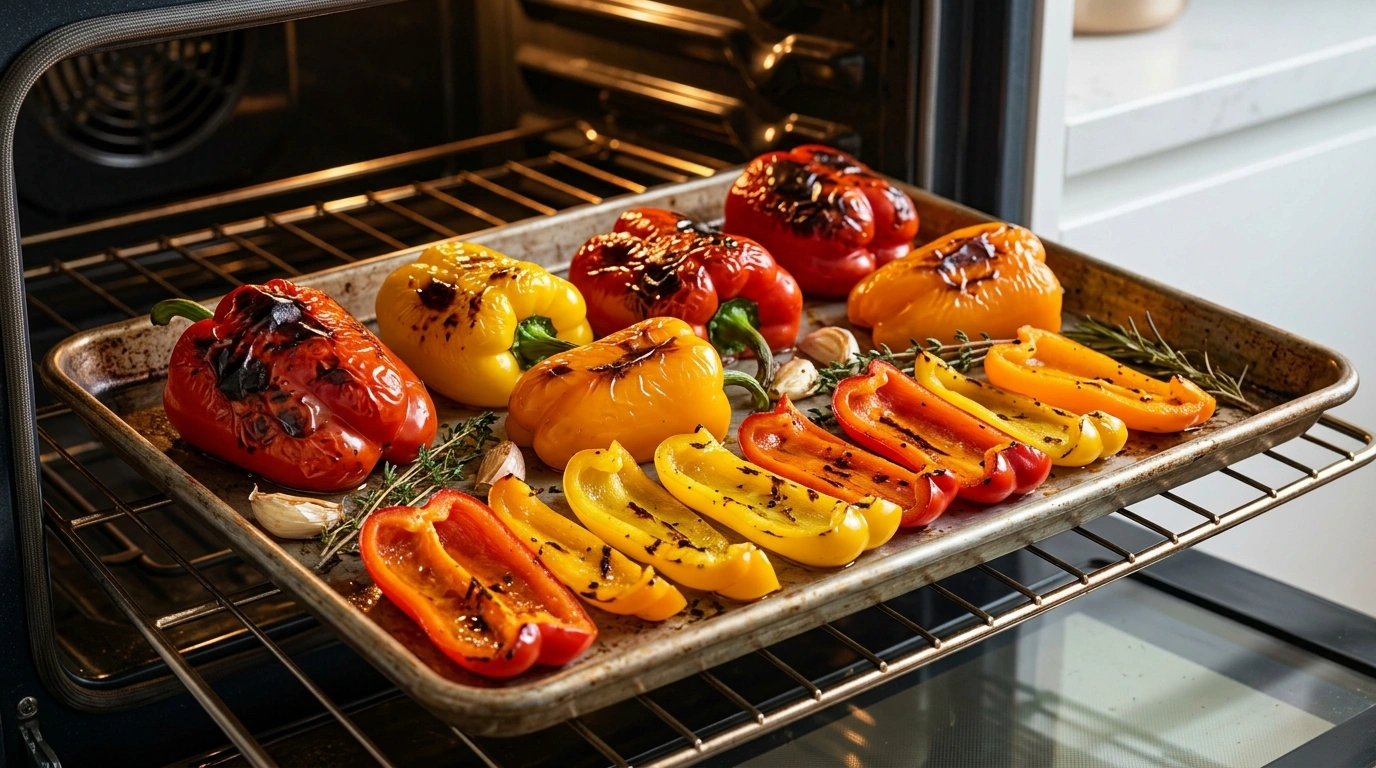
How to roast peppers in the oven is one of the easiest kitchen skills to learn, and once you know the method, you can make homemade roasted red peppers, oven roasted bell peppers, and even broiled peppers whenever you want. Whether you want whole peppers with blistered skin for easy peeling or pepper strips for a quick easy side dish, roasting transforms fresh peppers into something sweeter, softer, and more flavorful.
This guide covers the best way to roast peppers in the oven, including roast vs broil, the best temperature to roast peppers, how long to cook them, how to peel them, how to store them safely, and how to use them in everyday meals. By the end, you will know exactly how to make roasted peppers that are tender, smoky, and ready for sandwiches, salads, pasta, pizza, dips, and more.
Why Roast Peppers in the Oven?
Roasting peppers in the oven brings out their natural sweet flavor and gives them that rich, slightly smoky, charred-roasted flavor people love. Raw peppers can be crisp and grassy, but once they are roasted, they turn silky, tender, and more concentrated in taste. That is why roasted red peppers and roasted bell peppers work so well in both simple meals and special dishes.
Another reason oven roasting is so popular is convenience. You do not need a grill, open flame, or special equipment. A simple baking sheet, a hot oven, and a few bell peppers are enough. It is also a practical meal-prep method. You can roast several peppers at once, store them in an airtight container, and use them throughout the week.
For many home cooks, the best way to roast peppers in the oven is simply the method that fits the result they want. If you want peppers for peeling and storing, roast or broil them whole until the skins are blackened. If you want a fast vegetable side, roast sliced peppers with a little olive oil, salt and pepper, and maybe a pinch of garlic powder or dried oregano.
Best Peppers to Roast in the Oven
The most common choice is bell peppers, especially red bell peppers, because they become very sweet after roasting and are easy to find year-round. But green peppers, yellow peppers, and orange peppers also work well. Red, yellow, and orange peppers tend to taste sweeter, while green peppers have a sharper, more savory flavor.
If you are wondering about the best peppers for roasting, look for peppers that feel heavy for their size, have glossy skin, and still feel firm. Fresh, firm peppers roast more evenly and peel better than old peppers with wrinkled or dull skin. Thick-walled peppers are especially good if you want that classic peeled roasted pepper texture.
You can also roast other varieties, such as poblano or jalapeño, using a similar technique. So if you later want to learn how to roast poblano or jalapeño peppers, the same core rules apply: high heat, enough time to char, and a resting step to loosen the skin.
Roast vs Broil: Which Oven Method Works Best?
One of the biggest questions people have is oven roast vs broil peppers. Both methods work, but they are not exactly the same.
If you use the regular roast setting, usually around 400 degrees Fahrenheit, 425°F, or 450°F, the peppers cook with more surrounding heat. This is a great choice for oven roasted bell peppers that are sliced or quartered and meant to be served as a side dish. Roasting also works well if you want a bit more control and less risk of burning.
If you use the broiler, the heat comes intensely from above. This is often the fastest way to blister and blacken whole peppers for peeling. If your goal is how to roast peppers under the broiler for easy skin removal, this method is excellent. You usually place the peppers on the top rack, around 6 to 8 inches from the broiler, and turn them as the skin chars.
So, broil vs bake peppers comes down to purpose. Use broiling when you want strong char and faster blistering. Use oven roasting when you want more even cooking, especially for strips or quarters. For beginners, roasting feels a little more forgiving. For faster peeling, broiling often wins.
A good rule is this: whole peppers for peeled roasted peppers, cut peppers for a seasoned side dish.
What You Need Before You Start
Before you begin, gather a few basics: bell peppers, a rimmed sheet pan or baking sheet, parchment paper or aluminum foil, and long tongs if you are working with whole peppers. If you plan to steam them after roasting, you will also need a large bowl and a cover, such as foil, a plate, plastic wrap, a tea towel, or even a paper bag.
If you are roasting slices as a side dish, you may also want extra virgin olive oil, salt, black pepper, garlic powder, dried oregano, or red pepper flakes. This is where people often ask, do you need oil to roast peppers? The answer is not always. Whole peppers meant for peeling can be roasted plain. Sliced peppers for serving usually benefit from a little oil and seasoning.
How to Roast Whole Peppers in the Oven for Easy Peeling
If your goal is classic homemade roasted red peppers, this is the method to follow.
Start by preheating your oven to 450°F or setting the broiler to high. Line a parchment-lined baking sheet or foil-lined pan with whole peppers. You can roast 2 bell peppers, 3 bell peppers, or more, as long as they have some space around them.
For the roast method, place the pan in the oven and cook for about 20 to 30 minutes, turning the peppers every so often. Some larger peppers may take 30 to 40 minutes. If you are broiling, start checking around 6 minutes, then continue turning until all sides have charred skin, dark blisters, and some blackened skin. Many cooks rotate the peppers in ¼ turns or about 2–3 turns total so the skins blister on all sides.
You are not trying to dry the peppers out. You want the exterior to wrinkle and char while the inside turns soft and juicy. That combination is what makes the skin easy to remove later.
Once the peppers are done, transfer them to a bowl and cover it, or wrap them loosely in foil. Let them rest for 15 minutes resting time, or even at least 20 minutes if they are large. This steaming step helps steam to loosen skin, which makes peeling much easier.
After resting, the peppers should look slightly collapsed, or deflated and cool to the touch. Peel off the loosened skin with your fingers. Then open the peppers, remove seeds and white veins, and flatten or slice them as needed.
This is the classic answer to how to roast peppers in the oven at 450 F, how long to roast peppers at 450°F, and how to peel roasted peppers after roasting.
How to Roast Cut Peppers or Strips for a Side Dish
If you want peppers that are ready to eat right away, sliced peppers are ideal. This method works especially well for easy roasted peppers side dish, sheet pan roasted peppers, or oven roasted bell peppers recipe.
Slice the peppers into one inch wide strips or use quartered peppers. Spread them on a single layer baking sheet so they roast instead of steam. This matters more than people realize. Overcrowding is one of the biggest reasons peppers turn soft without developing those tasty browned edges.
Drizzle with about 2 tablespoons olive oil for a full tray, then season lightly. A simple mix of 1/4 teaspoon garlic powder, 1/4 teaspoon salt, 1/2 teaspoon dried oregano, and a pinch of 1/4 teaspoon red pepper flakes works well. Roast at 400 degrees Fahrenheit or 425°F for around 20 minutes, depending on thickness. For a slightly deeper finish, go closer to 25 minutes total.
The peppers are ready when they are fork tender, lightly caramelized, and have dark brown edges in spots. This method gives you tender and flavorful peppers that are perfect alongside chicken, fish, grain bowls, eggs, or sandwiches.
If someone asks how to cut bell peppers into strips for roasting or how to roast bell pepper strips on a sheet pan, this is the answer.
How to Peel Roasted Peppers the Easy Way
Peeling is simple once the peppers are roasted properly. The secret is not fancy technique. It is enough char plus enough resting time.
There are a few popular ways to do it. The most common is the bowl-and-cover method: place the hot peppers in a bowl and cover it tightly. Another is the foil packet method. Another is how to peel roasted peppers in a paper bag, which works because the trapped steam softens the skin. Any of these can work.
When you peel the peppers, do not worry about removing every tiny bit of skin. The goal is to remove most of the tough outer layer, not to make the pepper perfectly smooth. Also, avoid rinsing the peppers under lots of water unless needed, because that can wash away flavor.
If you have ever wondered how to steam and peel roasted peppers or how to remove the skins from roasted red peppers, remember this simple formula: char well, rest well, peel gently.
Common Mistakes to Avoid When Roasting Peppers
A lot of roasting problems come from a few predictable mistakes.
The first is not using enough heat. If the oven is too cool, the peppers soften slowly instead of blistering. This often leads to the question, why won’t roasted pepper skins peel off? Usually, the answer is that the skin never charred enough in the first place.
The second mistake is overcrowding the pan. If sliced peppers are piled too closely together, they release moisture and start steaming. That is the most common cause behind why are my roasted peppers soggy and how to keep roasted peppers from steaming. Give them room.
The third mistake is skipping the turning or resting step. Whole peppers need to be rotated for even char, and they need that covered resting time after cooking. Without those steps, you lose the easy-peel effect.
The fourth mistake is overcooking. Yes, peppers should be soft, but they should not collapse into mush. Good roasted peppers still have structure. If you want to know how to roast peppers evenly, watch for charred in spots, softened flesh, and good color rather than obsessing over an exact minute count.
Do You Need Oil, Salt, or Seasoning?
This depends on how you plan to use the peppers. Whole peppers roasted for peeling do not need oil at all. In fact, roasting them plain can make peeling easier.
But sliced peppers meant for serving are different. A little olive oil helps with browning and flavor, and it lets seasonings stick better. That is why oven roasted bell peppers often include extra virgin olive oil, garlic powder, dried oregano, and a little salt and pepper.
So, should you salt peppers before roasting? For slices, yes, lightly. For whole peppers being peeled, salt is better added after roasting. The same logic applies to seasoning in general. Keep it simple at first and adjust based on the dish. Roasted peppers pair well with herbs like fresh basil, parsley, and chives, and they also work beautifully with a splash of vinegar or a spoonful of garlic herb oil after peeling.
How Long to Roast Peppers in the Oven
Timing depends on size, thickness, and method.
Whole peppers roasted at 450°F often take 20 to 30 minutes, though very large ones can go 30 to 40 minutes. Under the broiler, they may blister in 8 to 10 minutes total if turned regularly, though you should start checking around 6 minutes because broilers vary a lot.
Sliced peppers at 400 degrees Fahrenheit usually take around 20 minutes, sometimes a little longer if they are thicker. The best sign is visual. Whole peppers should have deep blistering and loose skin. Slices should be tender with some browning around the edges.
If you are searching how long to bake bell peppers at 400 degrees, how long to roast peppers at 450°F, or even best temperature to roast peppers, the most practical answer is this: use a hot oven, then judge by texture and color, not just the clock.
How to Store and Freeze Roasted Peppers Safely
Once peeled, roasted peppers should be cooled and stored promptly. In the refrigerator, plain roasted peppers usually keep for about 3–4 days in an airtight container. Some people store them olive oil-packed, and that can extend quality, but use care and keep them cold.
If you want longer storage, freezing works very well. Spread the peppers flat on a tray first, then freeze and transfer them to a bag or container. This is the easiest answer to how to freeze roasted peppers flat on a baking sheet and can you freeze roasted peppers. They often keep good quality for up to three months, and many home cooks use them even longer, sometimes up to 6 months depending on packaging.
If you packed them in oil for the fridge, use clean containers and do not leave them at room temperature. This is where food safety for roasted peppers matters. Homemade roasted peppers are delicious, but they are not the same as commercially preserved jars.
To thaw frozen peppers, move them to the fridge overnight or use them directly in cooked dishes. Because roasted peppers soften naturally, thawed peppers are especially good in soups, sauces, egg dishes, pasta, and blended spreads.
Best Ways to Use Roasted Peppers
One of the best things about roasted peppers is how flexible they are. You can layer them into sandwiches, chop them into salads, toss them with pasta, or add them to pizza. They also work beautifully in egg dishes like omelets, quiche, scrambled eggs, or shakshuka-style meals.
If you want stronger flavor, blend them into roasted pepper sauce, roasted pepper dip, romesco sauce, or red pepper crema. You can also serve them with cheese, olives, and bread as part of an antipasti-style plate. A spoonful of roasted peppers can completely change a simple grain bowl, hummus plate, or potato salad.
This is why how to use roasted peppers in recipes is such an important part of the topic. Once you make them, they rarely go to waste.
A good batch of roasted peppers is one of those fridge staples that makes ordinary meals feel finished.
Frequently Asked Questions About Roasting Peppers
Do you peel roasted peppers?
If you roast whole peppers until the skins blister and blacken, peeling is usually worth it because the skin can be tough. If you roast pepper strips as a side dish, peeling is usually unnecessary.
Can you roast peppers without a broiler?
Yes. If you need how to roast peppers without a broiler, use a hot oven at 450°F and allow more time. You may not get the exact same fast char, but the result is still very good.
Is it better to roast peppers whole or sliced?
Whole is best for peeled peppers you plan to store or use in recipes. Sliced is best for an easy side dish.
Can you roast mini sweet peppers?
Yes. Mini sweet peppers roast beautifully, though they cook faster and are usually served without peeling.
Can you freeze roasted peppers?
Yes. Freeze them in a single layer first, then transfer to storage containers.
Why are my peppers not blistering?
Usually the heat is too low, the peppers are too far from the broiler, or the pan is overcrowded.
Final Tips for Perfect Oven-Roasted Peppers Every Time
If you remember just a few things, make them these: use high heat, give the peppers enough space, let the skins blister, and always let whole peppers rest before peeling. That combination is the best way to roast peppers in the oven for both flavor and texture.
Use whole peppers when you want peeled, silky roasted red peppers. Use sliced peppers when you want a quick, seasoned side dish. Store leftovers in an airtight container, and make extra when you can because roasted peppers are one of the easiest ingredients to turn into better meals all week long.