

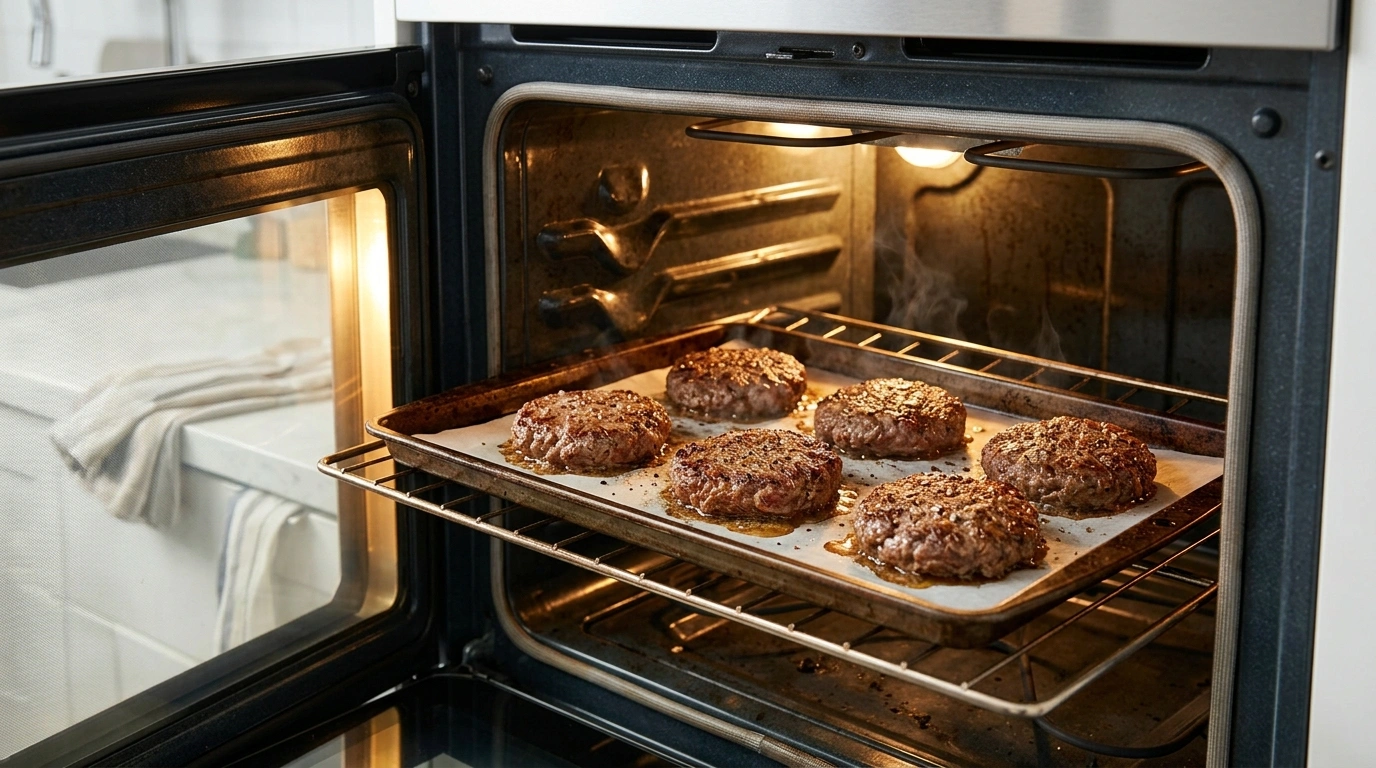
Can you bake burgers in the oven? Yes, you can, and it is one of the easiest ways to make juicy, flavorful burgers indoors without a grill, smoky backyard setup, or messy stovetop splatter. Oven-baked burgers are especially helpful when the weather is bad, you live in an apartment, you are cooking for a crowd, or you simply want a more hands-off dinner.
The key is knowing the right oven temperature for burgers, how long to bake them, and when they are safely done. Most ground beef burgers should reach an internal temperature of 160°F, and the best way to check that is with an instant-read thermometer.
This guide explains exactly how to cook burgers in the oven, how to keep them juicy, whether you need to flip them, how to bake frozen burgers, when to add cheese, and how to get better browning with a quick broil at the end.
Yes, You Can Bake Burgers in the Oven
Yes, burgers in the oven are not only possible, but they can also be delicious when cooked the right way. While grilled burgers have that smoky outdoor flavor and pan-fried burgers often get a strong crust, oven baked burgers are easier, cleaner, and more practical for everyday cooking.
Baking burgers works well because the oven provides steady heat around the patties. This makes it easier to cook several ground beef burgers at the same time. Instead of standing over a skillet and dealing with grease splatter, you can place the patties on a rimmed baking sheet, put them in the oven, and let them cook evenly.
Oven burgers are also a smart option for family burger night, game day meals, winter cooking, or rainy days when grilling is not convenient. You can bake fresh patties, frozen patties, cheeseburgers, sliders, turkey burgers, chicken burgers, and even some veggie burgers.
The only thing to remember is that baking alone may not create the same deep char as a grill or cast iron skillet. For better color and texture, you can use the bake then broil method near the end.
Best Oven Temperature for Burgers
The best oven temperature for burgers depends on your goal. Do you want slower, even cooking? Faster cooking? Better browning? Different recipes use different temperatures, but the most common options are 375°F, 400°F, 425°F, and 450°F.
For most home cooks, 400°F to 425°F is the best range. It cooks the burgers quickly enough to keep them juicy while giving the outside a better texture than a low-temperature bake.
| Oven Temperature | Best For | Result |
| 375°F | Thicker patties and gentle cooking | Evenly cooked, less browning |
| 400°F | Most homemade burgers | Balanced cooking and texture |
| 425°F | Juicier burgers with better browning | Faster cook time, better exterior |
| 450°F | Thin patties or quick cooking | Fast, but easier to overcook |
If you are making ¼-lb burger patties, 400°F or 425°F is usually the sweet spot. A lower temperature like 375°F can work, but it may take longer. A higher temperature like 450°F can brown better, but thin patties may dry out quickly if you are not careful.
No matter what temperature you choose, the most important number is the burger’s safe internal temperature. Ground beef should reach 160°F in the thickest part of the patty.
How Long to Bake Burgers in the Oven
The answer to how long to bake burgers depends on patty thickness, oven temperature, whether the patties are fresh or frozen, and how accurate your oven runs. As a general rule, fresh ¼-lb burgers take about 15–25 minutes in the oven.
Here is a helpful burger oven temperature chart:
| Oven Temperature | Fresh ¼-lb Patties | Thicker Patties | Frozen Patties |
| 375°F | 20–25 minutes | 25+ minutes | Add 5–8 minutes |
| 400°F | 15–20 minutes | 20–25 minutes | Add 5–8 minutes |
| 425°F | 15–18 minutes | 18–22 minutes | Add 5–8 minutes |
| 450°F | 12–15 minutes | 15–18 minutes | Add 5–8 minutes |
These times are useful, but they are still estimates. Burgers can cook faster or slower depending on their size. A thin patty may finish quickly, while a thick, hand-formed burger may need several extra minutes.
The safest answer is simple: bake burgers until the center reaches 160°F. Let them rest for about 5 minutes before serving so the juices settle back into the meat.
Safe Internal Temperature for Oven-Baked Burgers
The safest way to know when baked hamburgers are done is to use an instant-read thermometer. For ground beef burgers, the safe internal temperature is 160°F. For ground turkey or ground chicken burgers, the safe internal temperature is 165°F.
Do not rely only on color. Some burgers may still look slightly pink even when they are safe, while others may turn brown before reaching the proper temperature. That is why a meat thermometer is more reliable than guessing.
Insert the thermometer into the thickest part of the patty, ideally from the side if the burger is thin. Make sure the probe reaches the center and does not touch the pan or rack.
Food safety matters because ground meat is different from a steak. With steak, bacteria are mostly on the surface. With ground beef, bacteria can be mixed throughout the meat. Cooking the center to 160°F helps reduce the risk of foodborne illness, including bacteria such as E. coli.
A simple rule: time tells you when to check, but temperature tells you when the burger is done.
How to Bake Burgers in the Oven Step by Step
Making baked burgers is simple. You do not need fancy equipment, but a few smart choices can help your burgers cook better and stay juicy.
Start by preheating the oven to 400°F or 425°F. Line a rimmed baking sheet with aluminum foil or parchment paper for easier cleanup. If you have a wire rack or oven-safe cooling rack, place it on top of the sheet pan. This helps air circulate around the patties and keeps them from sitting in grease.
Use 80/20 ground beef if you want the juiciest burgers. Leaner meat like 90/10 ground beef or 93/7 ground beef can work, but it dries out more easily. Gently shape the meat into even patties, about ½ inch to 1 inch thick. Try not to overmix or pack the meat too tightly because that can make the burgers tough.
Season both sides with kosher salt, black pepper, garlic powder, or your favorite burger seasoning. You can also add a little Worcestershire sauce for deeper flavor.
Place the patties on the prepared pan and bake until they reach 160°F. If you are making baked cheeseburgers, add the cheese during the last 1–2 minutes of cooking. After baking, let the burgers rest for 5 minutes before placing them on buns.
Wire Rack vs Baking Sheet: Which Is Better for Oven Burgers?
You can bake burgers directly on a baking sheet, but using a wire rack usually gives better results. A rack lifts the patties above the pan, allowing heat to move around the burgers more evenly. It also lets grease drip away instead of pooling around the meat.
A baking sheet alone is easier because almost everyone has one. It still works, especially if you line it with foil or parchment paper. However, burgers cooked directly on the pan may be a little softer on the bottom and can sit in their own juices and grease.
A broiler pan is another good option because it is designed to let fat drain while exposing food to heat. If you are worried about grease, smoke, or cleanup, a rimmed pan is important. Do not use a flat cookie sheet without edges because burger grease can run off and create a mess or even a fire risk.
For the best balance, use a rimmed baking sheet plus an oven-safe wire rack. For the simplest method, use a lined sheet pan and flip the burgers halfway through cooking.
Should You Flip Burgers in the Oven?
You do not always need to flip burgers in the oven. If the patties are on a wire rack, hot air can circulate around them, so a no-flip method often works well.
If the burgers are sitting directly on a baking sheet, flipping halfway through cooking can help both sides cook more evenly. It can also prevent one side from getting too soft or greasy. Frozen burgers usually benefit from flipping because they release more moisture as they cook.
The main thing is not to press the burgers with a spatula. Pressing may seem helpful, but it squeezes out juices and can make the patties dry. If you flip them, do it gently and only once if possible.
So the easy answer is this: use a wire rack if you do not want to flip, or flip halfway if the burgers are directly on the pan.
How to Keep Oven Burgers Juicy
The biggest worry with oven baked hamburgers is dryness. The good news is that juicy oven burgers are easy if you avoid a few common mistakes.
First, choose the right beef. 80/20 ground beef is ideal because the fat adds flavor and moisture. Leaner beef can still taste good, but it needs more care because it dries out faster. The phrase fat equals flavor is especially true with burgers.
Second, handle the meat gently. Overmixing and overhandling can make the texture dense and tough. Shape the patties just enough to hold together. A small thumbprint in the center can also help reduce puffing and shrinkage.
Third, do not overcook the burgers. Once they reach 160°F, remove them from the oven. Cooking far beyond that point can dry them out, especially if the patties are thin.
Finally, let the burgers rest for 5 minutes. This short resting period helps the juices redistribute. Add cheese near the end of cooking, not at the beginning, so the meat does not stay in the oven longer than needed.
How to Brown Burgers in the Oven
A common complaint is that burgers in the oven can look gray or pale compared with grilled burgers. That happens because baking uses surrounding heat, while grilling and pan-frying use more direct high heat.
To get better browning, use the broiler for the final 1–3 minutes of cooking. This gives the tops of the burgers stronger heat and can help create a better burger crust. The browning effect comes from the Maillard reaction, which happens when proteins and sugars react under high heat.
For the best results, bake the burgers until they are almost done, then switch to broil briefly. Watch them closely because broilers work fast. One extra minute can mean the difference between browned and overcooked.
A wire rack can also help because it improves air circulation. Avoid overcrowding the pan, and if the patties are very wet, pat them lightly before seasoning. Moisture on the surface can slow down browning.
The goal is a juicy center with a slightly caramelized exterior, not a dry burger.
Baking Burgers vs Broiling Burgers
Baking and broiling are both oven methods, but they work differently. Oven baking burgers uses steady surrounding heat. Broiling burgers uses strong direct heat from above.
| Method | Best For | Main Benefit | Watch Out For |
| Baking | Easy indoor cooking | Even, hands-off cooking | Less browning |
| Broiling | Better crust and char | Stronger exterior color | Can overcook quickly |
| Bake then broil | Best balance | Juicy center and browned top | Needs close attention |
If you want the easiest method, baking is better. If you want more char, broiling is better. If you want both, bake the burgers first and broil them briefly at the end.
Broiling can also make oven burgers taste closer to grilled burgers because it uses direct heat. It will not add smoky flavor like charcoal briquettes or wood pellets, but it can improve texture.
Can You Bake Frozen Burgers in the Oven?
Yes, you can bake frozen burger patties in the oven without thawing them first. This is one of the easiest ways to make a quick dinner when you forgot to defrost the meat.
Place the frozen patties on a lined baking sheet or wire rack. Do not stack or overlap them. Bake at 400°F or 425°F, and expect them to take about 5–8 minutes longer than fresh patties.
Frozen burgers usually benefit from flipping halfway through cooking, especially if they are directly on a sheet pan. If seasoning does not stick well at first, let the surface warm for a few minutes, then season the patties.
As with fresh burgers, the most important step is checking the internal temperature. Frozen hamburgers in the oven should still reach 160°F in the center before serving.
This method works well for packaged patties, including warehouse-style frozen burgers, but thickness matters. A thick frozen patty will need more time than a thin one.
When to Add Cheese to Oven Burgers
For baked cheeseburgers, add cheese near the end of cooking. The best time is usually the final 1–2 minutes, after the patties are almost done.
If you add cheese too early, it may melt too much, slide off, or burn before the burger reaches the right temperature. American cheese melts smoothly, cheddar gives a sharper flavor, Swiss cheese is mild and creamy, and smoked Gouda adds a deeper taste.
To melt cheese quickly, place a slice on each burger and return the pan to the oven for a minute or two. You can also turn on the broiler briefly, but watch closely because cheese can go from melted to burnt very fast.
This simple timing keeps the burger juicy while still giving you a warm, melted cheese layer.
Oven Burgers vs Grilled Burgers vs Pan-Fried Burgers
Each burger cooking method has strengths. The best one depends on what you want.
| Cooking Method | Best For | Pros | Cons |
| Oven-baked burgers | Easy indoor meals | Less mess, batch-friendly | Less smoky flavor |
| Grilled burgers | Outdoor flavor | Char, smoky taste | Weather-dependent |
| Pan-fried burgers | Strong sear | Great crust | Grease splatter |
| Broiled burgers | Indoor browning | Char-like top | Needs close attention |
Oven burgers vs grilled burgers is mostly about convenience versus flavor. Grilling gives smoky flavor and stronger char, but the oven is easier and works year-round.
Oven burgers vs pan-fried burgers is mostly about mess. A skillet or cast iron pan can create a beautiful crust, but it also creates more splatter. Oven burgers are cleaner and easier when cooking several patties at once.
For everyday home cooking, the oven is a practical winner. For maximum crust, use a pan or broiler. For smoky outdoor flavor, use a grill.
Should You Bake Burgers Covered or Uncovered?
Bake burgers uncovered for the best texture. Covering burgers with foil traps steam, which can make the patties softer and reduce browning. If your goal is a better exterior, uncovered is the better choice.
You can still use aluminum foil on the pan for cleanup. Just line the baking sheet with foil instead of covering the burgers themselves. Parchment paper can also help reduce sticking.
The only time covering makes sense is when reheating leftovers. A loose cover can help prevent already-cooked burgers from drying out. But for the original bake, uncovered is usually best.
So if you are wondering whether to bake burgers covered or uncovered, choose uncovered for better browning, better texture, and less steaming.
Common Mistakes When Baking Burgers in the Oven
One of the most common mistakes is using beef that is too lean. 90/10 or 93/7 ground beef may sound healthier, but it can produce dry burgers if overcooked. For juicier results, 80/20 ground beef is usually better.
Another mistake is overmixing the meat. Burgers should not be handled like meatloaf. The more you mix and press the beef, the tougher the texture can become.
Many people also skip the thermometer. This leads to either undercooked burgers or dry, overcooked burgers. A quick temperature check solves both problems.
Overcrowding the pan is another issue. If the patties are too close together, steam builds up and browning becomes harder. Leave space between each burger.
Grease management also matters. Use a rimmed baking sheet, and avoid letting grease collect near high heat for too long. If you broil, watch carefully to reduce smoke and fire risk.
Finally, do not serve the burgers immediately after baking. A 5-minute rest helps keep them juicy.
What to Serve With Oven-Baked Burgers
Oven-baked burgers are easy to turn into a full meal. Classic sides like French fries, potato chips, coleslaw, pickles, and oven bacon all work well. If you are already using the oven, you can bake fries or roast vegetables while the burgers cook.
For toppings, keep it simple with lettuce, tomato, red onion, pickles, ketchup, mustard, and mayonnaise. A toppings bar is great for game day or family burger night because everyone can build their own burger.
You can also make the meal fit different diets. Use gluten-free buns if needed, or serve a bunless burger over lettuce for a low-carb option. Avocado, guacamole, sautéed mushrooms, or grilled onions can make oven burgers feel more special without much extra work.
How to Store and Reheat Oven-Baked Burgers
Oven burgers are good for meal prep and leftovers. Let cooked patties cool, then store them in an airtight container in the refrigerator. Keep the buns, toppings, and sauces separate so the burgers do not become soggy.
To reheat, use a low oven, toaster oven, air fryer, skillet, or microwave. The oven or toaster oven gives better texture, while the microwave is fastest. Reheat gently because cooked burgers can dry out if heated too long.
If you plan to add cheese, it is often better to add it during reheating instead of storing the burger with melted cheese already on top.
Leftover oven burgers can be used in sandwiches, chopped into salads, added to rice bowls, or served bunless with vegetables.
Can You Bake Turkey, Chicken, or Veggie Burgers in the Oven?
Yes, you can bake turkey burgers, chicken burgers, and veggie burgers in the oven, but the rules are slightly different.
Ground turkey and ground chicken are leaner than beef, so they dry out faster. They also need to reach 165°F for food safety. Use a thermometer and avoid overbaking.
Veggie burgers and plant-based burgers can also be baked, but timing depends on the ingredients and brand. Some plant-based patties brown well, while others stay softer. Always follow package directions when using store-bought veggie or plant-based burgers.
If you are making homemade black bean burgers, salmon burgers, or vegetable patties, use parchment paper or a lightly greased baking sheet to reduce sticking. These patties are usually more delicate than beef burgers, so flip them carefully if needed.
Quick Answer: The Best Way to Bake Burgers in the Oven
The best way to bake burgers in the oven is to place seasoned ¼-lb patties on a wire rack over a rimmed baking sheet, bake at 400°F to 425°F until they reach 160°F, add cheese during the last 1–2 minutes, and rest for 5 minutes before serving.
For the juiciest result, use 80/20 ground beef, avoid overmixing, do not press the patties, and check the center with an instant-read thermometer. If you want better browning, broil the burgers briefly at the end.
This method gives you easy, reliable, mess-free burgers without needing a grill or stovetop skillet.
Frequently Asked Questions About Baking Burgers in the Oven
Can you bake burgers in the oven instead of grilling?
Yes, you can bake burgers in the oven instead of grilling. Oven baking is a great option for indoor cooking, rainy days, cold weather, apartments, or cooking several patties at once.
How long do burgers take in the oven?
Most fresh ¼-lb burgers take about 15–25 minutes, depending on the oven temperature and patty thickness. At 400°F, many burgers take around 15–20 minutes. Always check for 160°F internally.
What temperature should burgers be baked at?
A good temperature is 400°F or 425°F. These temperatures cook burgers quickly while helping them stay juicy. You can use 375°F for gentler cooking or 450°F for faster cooking, but watch carefully.
Do you need to flip burgers in the oven?
You do not need to flip burgers if they are on a wire rack. If they are directly on a baking sheet, flipping halfway can help them cook more evenly.
Can you bake frozen burgers in the oven?
Yes, frozen burgers can be baked in the oven without thawing. Add about 5–8 minutes longer than fresh patties and cook until the center reaches 160°F.
Can oven burgers be pink inside?
Color is not the best way to judge doneness. Some burgers may look slightly pink even when safe, while others may brown before they are fully cooked. Use a thermometer and cook ground beef to 160°F.
Should you bake burgers covered or uncovered?
Bake burgers uncovered. Covering traps steam and can make the burgers softer. Use foil on the pan for cleanup, but do not cover the patties while they bake.
How do you keep oven burgers juicy?
Use 80/20 ground beef, avoid overmixing, do not press the patties, cook only to 160°F, and let the burgers rest for 5 minutes before serving.
Conclusion: Oven-Baked Burgers Are Easy, Juicy, and Practical
So, can you bake burgers in the oven? Absolutely. Oven-baked burgers are simple, convenient, and perfect when you want an indoor burger recipe without grill setup or stovetop mess. The best method is to bake patties at 400°F to 425°F, use a wire rack if possible, cook ground beef to 160°F, add cheese near the end, and rest the burgers before serving.
This article is for general informational purposes only. Cooking times and temperatures may vary depending on your oven, patty thickness, and meat type. Always use a meat thermometer to ensure food safety, and follow USDA guidelines for proper internal temperatures before serving.